Analyse IA
6 sujetsSujet 1
Violences policières dans les favelas de Rio
searchpolice militaire Rio opération favela
description
Sémantique · description
(10)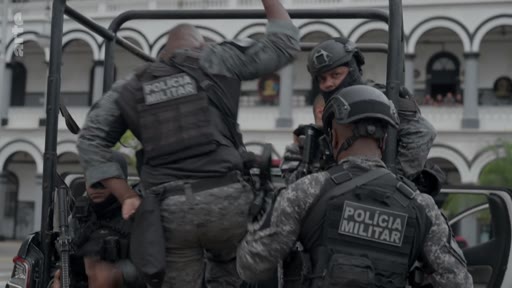
78%
00:12:47
Brésil : la revanche des mères
ARTE ReportageA group of police officers in camouflage uniforms and tactical gear are inside a military vehicle. The officers are wearing helmets and vests with "POLÍCIA MILITAR" written on the back. One officer is raising his arm, while others are holding weapons and looking forward. The scene is set outdoors in front of a large building with arched windows, suggesting a public square or government building. The lighting is natural, indicating it is daytime. The image has a documentary or news report style, with a clear focus on the officers and their actions.
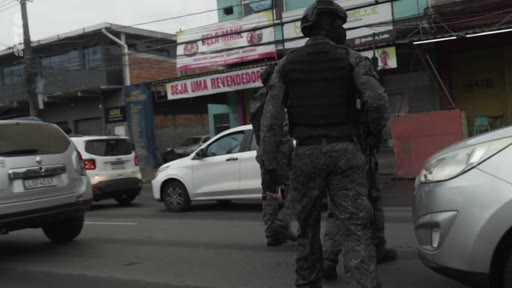
77%
00:06:19
Brésil : la revanche des mères
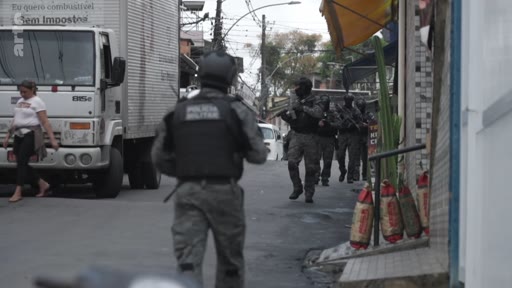
ARTE ReportageA group of police officers in full tactical gear, including black vests and camouflage uniforms, are walking through a busy street in a city. They are moving from right to left, with one officer in the foreground wearing a helmet and carrying a weapon. The street is lined with parked cars and storefronts, including a sign that reads "SEJA UMA REVENDEDO" (Be a Revendo). The scene is set during the day, with natural light illuminating the street. The visual style is documentary, with a steady, wide-angle shot capturing the officers and the surrounding environment.
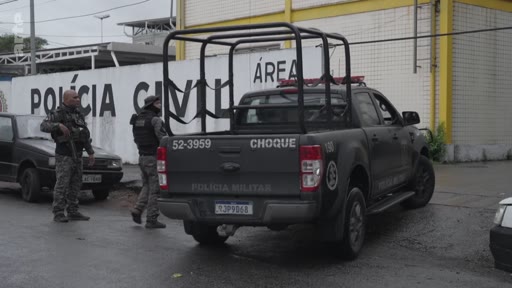
77%
00:15:18
Brésil : la revanche des mères
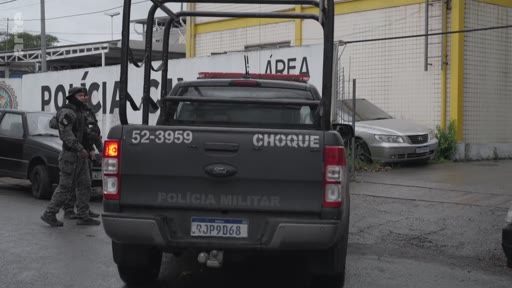
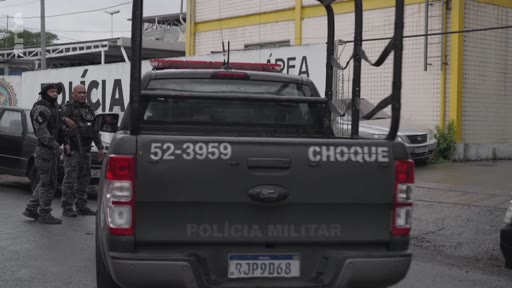
ARTE ReportageTwo police officers in camouflage uniforms and tactical gear stand in a paved area next to a black pickup truck. The truck is marked "POLÍCIA MILITAR" and "ÁREA" and has the number "52-3959" on its rear. The officers are standing near a white wall with "POLÍCIA CIVIL" written on it. The scene is set outdoors in the daytime, with a building and a parked car visible in the background. The image is a still from a documentary-style video, with a medium shot framing the officers and the truck. The lighting is natural, and the overall tone is serious.
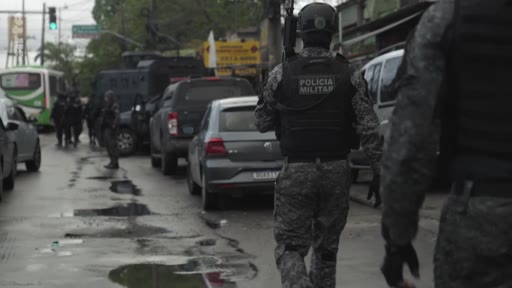
76%
00:06:22
Brésil : la revanche des mères
ARTE ReportageA group of police officers in full camouflage uniforms, including one with a "POLICIA MILITAR" vest, are standing on a wet, paved street. They are surrounded by several other officers and vehicles, including a black SUV and a silver sedan, with a bus visible in the background. The scene appears to be an outdoor urban setting during the day, with the ground reflecting the light. The visual style is documentary, with a wide shot capturing the group and their surroundings.
75%
00:06:37
Brésil : la revanche des mères
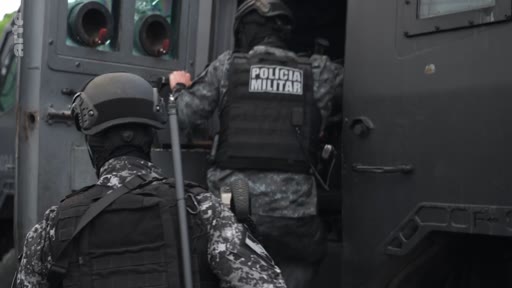
ARTE ReportageTwo police officers in full tactical gear are seen from behind, with one officer in a camouflage uniform and a helmet, and the other in a black uniform with "POLICIA MILITAR" written on the back, both standing in front of a large armored vehicle. The scene is set outdoors during the day, with the officers appearing focused and ready. The visual style is documentary, with a close-up framing and natural lighting.
75%
00:06:20
Brésil : la revanche des mères
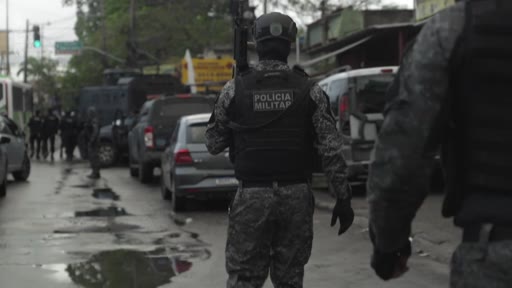
ARTE ReportageTwo police officers in camouflage uniforms are walking down a wet, paved street. The officer in the foreground is wearing a black vest with "POLICIA MILITAR" written on it and a helmet with a mounted weapon. The second officer is partially visible on the right. The street is lined with parked cars and other vehicles, and there are several people in the background, some standing and others walking. The scene is set in an urban environment during the day, with a slightly overcast sky. The image is a still from a documentary-style video, with a medium shot framing the officers and a natural, slightly dim lighting.
75%
00:05:57
Brésil : la revanche des mères
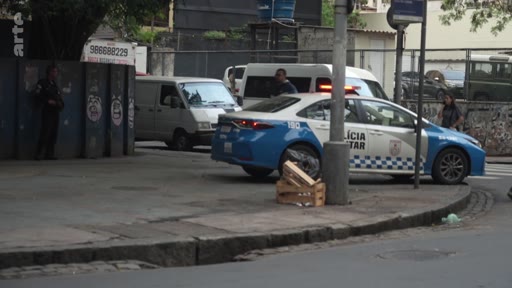
ARTE ReportageA police car with "POLICIA" written on the side is parked on a city street corner, with a wooden crate placed on the curb in front of it. A man in a dark shirt and dark pants stands near the car, while another man in a white shirt and dark pants is visible in the background. A police officer in a dark uniform stands near a blue trash can on the left side of the frame. The scene is set in an urban environment with buildings, a fence, and a sidewalk. The lighting is natural, suggesting it is daytime. The visual style is documentary, with a straightforward, unembellished framing.
75%
00:15:11
Brésil : la revanche des mères
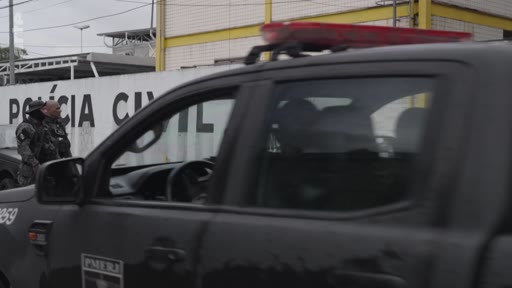
ARTE ReportageA police officer in a dark uniform stands beside a black pickup truck, which has a red light bar on the roof. The officer is looking toward the camera, and the truck is parked in front of a white wall with the words "POLICÍA CIVIL" written on it. The scene is set outdoors during the day, with a building and a yellow and white structure visible in the background. The image has a documentary-style feel, with a close-up framing focusing on the officer and the truck.
75%
00:13:13
Brésil : la revanche des mères
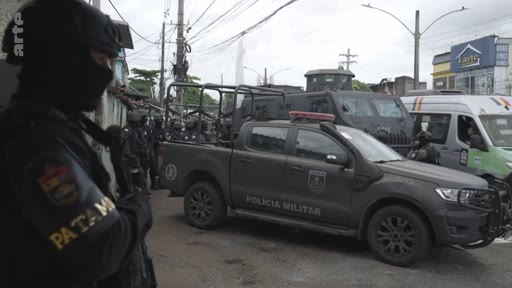
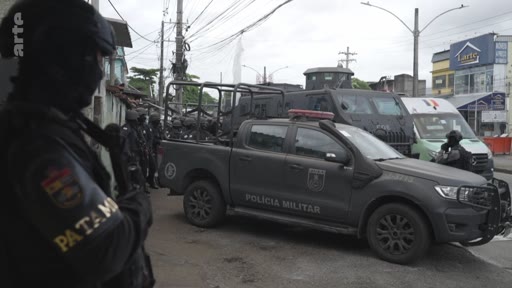
ARTE ReportageA group of police officers in black tactical gear, including a man in a black balaclava and a black uniform with a "PATAM" patch, stand in a street. They are positioned in front of a black pickup truck with "POLICIA MILITAR" written on the side, and a large armored vehicle is visible in the background. The scene is set outdoors in a city environment, with buildings, power lines, and a white van with a green stripe in the background. The lighting is natural, suggesting it is daytime. The image has a documentary feel, with a close-up framing focusing on the officers and the truck.
75%
00:24:22
ARTE Regards
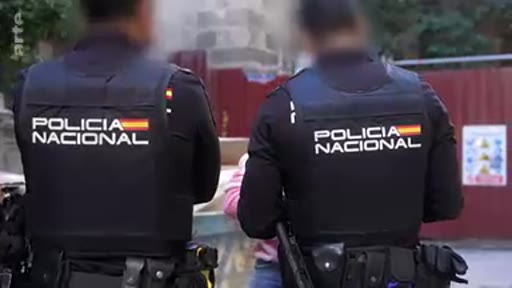
En Espagne, des brigades anti-squatteursTwo police officers in black uniforms with "POLICIA NACIONAL" and the Spanish flag on their vests are standing with their backs to the camera. The officers are wearing tactical vests and have equipment on their belts. A small child in a pink shirt is partially visible between them. The scene is outdoors, with a red fence and a building in the background. The image is a still from a documentary or interview, with a clear, natural lighting and a medium shot framing the officers.
image
Sémantique · image
(10)
83%
00:15:15
Brésil : la revanche des mères
ARTE ReportageA police officer in camouflage uniform stands to the left of a black military pickup truck, which has "POLICIA MILITAR" and "CHOQUE" written on its back. The truck is parked in a paved lot in front of a building with a white tiled wall and a yellow stripe. A silver car is parked behind the truck. The scene is set during the day under natural light, with a documentary-style, wide-angle shot capturing the scene.
82%
00:15:18
Brésil : la revanche des mères
ARTE ReportageTwo police officers in camouflage uniforms and tactical gear stand in a paved area next to a black pickup truck. The truck is marked "POLÍCIA MILITAR" and "ÁREA" and has the number "52-3959" on its rear. The officers are standing near a white wall with "POLÍCIA CIVIL" written on it. The scene is set outdoors in the daytime, with a building and a parked car visible in the background. The image is a still from a documentary-style video, with a medium shot framing the officers and the truck. The lighting is natural, and the overall tone is serious.
82%
00:12:52
Brésil : la revanche des mères
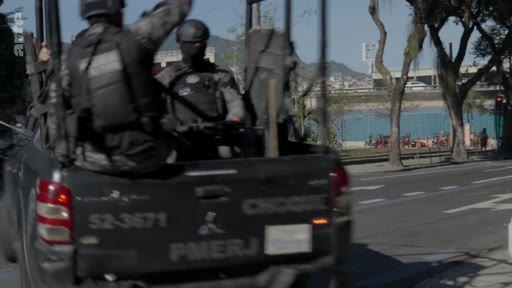
ARTE ReportageA group of armed police officers in tactical gear are seated in the back of a black pickup truck, with one officer raising his arm. The truck is parked on a city street with trees and a fence in the background, and the scene is set during the day. The image is a still from a documentary-style video, with a close-up framing focusing on the officers and the truck, and the lighting is natural and even.
81%
00:15:14
Brésil : la revanche des mères
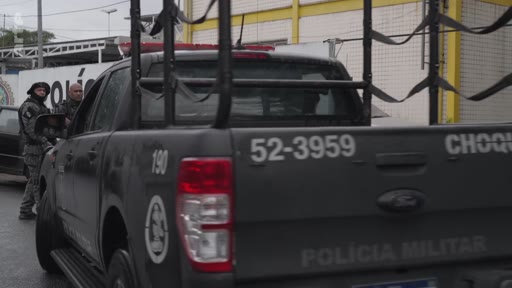
ARTE ReportageTwo men in military camouflage uniforms stand on the left side of a dark gray pickup truck. The truck is a Ford Ranger with the words "POLÍCIA MILITAR" and the number "52-3959" on the back, and the word "CHOQUE" is written on the side. The truck has a red light bar on top and a license plate that reads "SJP9D68". The men are standing in front of a yellow and white building with a sign that says "ÁFA". The scene is set outdoors in a parking lot during the day. The image is a still from a documentary-style video, with a wide shot framing the truck and the men, and the lighting is natural daylight.
81%
00:14:01
Brésil : la revanche des mères
ARTE ReportageA group of armed police officers in camouflage uniforms and helmets are walking down a narrow street in a residential area. The officers are carrying weapons and appear to be on patrol. The street is lined with houses and a white car is parked on the side. The scene is set during the day with natural light. The visual style is documentary, with a wide shot framing the officers and the street.
81%
00:15:13
Brésil : la revanche des mères
ARTE ReportageTwo men in military camouflage uniforms stand beside a black pickup truck marked "POLÍCIA MILITAR" (Military Police) and the number "52-3959". The man on the right, with a bald head and a beard, is holding a clipboard and looking at the man on the left, who is wearing a black beanie and has a serious expression. The truck is parked in an outdoor area with a yellow and white building in the background. The scene is shot in a documentary style with a close-up framing and natural lighting.
80%
00:13:25
Equateur : en proie au narcotrafic
ARTE Reportage80%
00:12:47
Brésil : la revanche des mères
ARTE ReportageA group of police officers in camouflage uniforms and tactical gear are inside a military vehicle. The officers are wearing helmets and vests with "POLÍCIA MILITAR" written on the back. One officer is raising his arm, while others are holding weapons and looking forward. The scene is set outdoors in front of a large building with arched windows, suggesting a public square or government building. The lighting is natural, indicating it is daytime. The image has a documentary or news report style, with a clear focus on the officers and their actions.
80%
00:14:02
Brésil : la revanche des mères
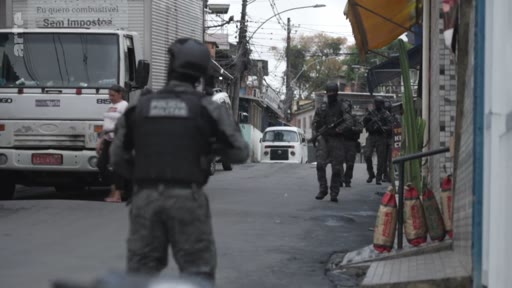
ARTE ReportageA group of armed police officers in camouflage uniforms and helmets are walking down a street, with one officer in the foreground facing the camera. A woman in a white shirt and dark pants stands on the sidewalk next to a large white truck. The scene is set in a street in a city, with buildings and a yellow umbrella visible in the background. The image is a documentary-style, wide-angle shot with natural lighting.
80%
00:13:12
Brésil : la revanche des mères
ARTE ReportageA police officer in a black tactical uniform with a face mask stands in the foreground, holding a firearm. Behind him, a black military pickup truck is parked on a paved street, with a large armored vehicle and a green van visible in the background. The scene is set in an urban environment with buildings, power lines, and a cloudy sky. The visual style is documentary, with a wide shot framing the scene and natural, diffused lighting.
searchscène crime favela traces impact balles
description
Sémantique · description
(10)
78%
00:07:41
Brésil : la revanche des mères
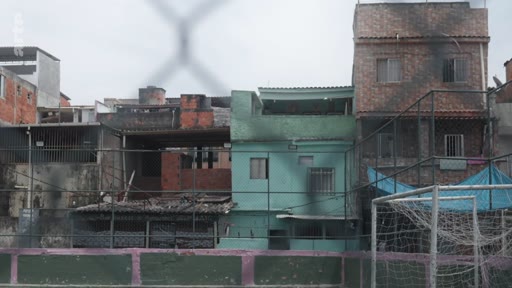
ARTE ReportageThis is a documentary-style, static shot from an outdoor, urban environment, likely a neighborhood in Brazil. The scene is viewed through a chain-link fence, with a soccer goal in the foreground on the right. The background features a row of tightly packed, weathered buildings, including a prominent turquoise building and a brick structure. The sky is overcast, and the lighting is flat and diffused. The people are not visible in the frame.
77%
00:45:20
ARTE Reportage
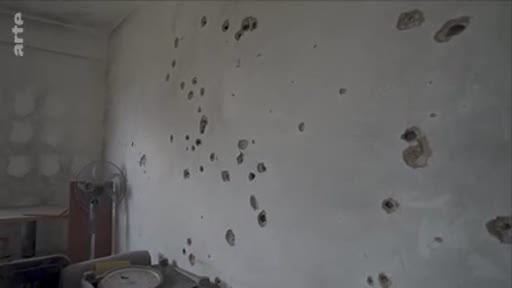
Venezuela, l'après Maduro / Liban, un nouvel exodeThis is a still from a documentary, likely an archive footage, showing a room with a wall covered in numerous bullet holes. The room appears to be indoors, possibly a makeshift or abandoned space, with a fan and a table visible in the background. The people are not visible in the frame. The visual style is documentary, with a straightforward, unembellished framing and natural lighting.
76%
00:00:04
Sources
Trafic de Fentanyl : le double jeu de la ChineThis is a still from a documentary-style video, likely an archive or news report, showing a street scene in an urban neighborhood. Several people are on the ground, appearing to be injured or unconscious, with one person in a blue shirt and red shorts sitting on the pavement. Another person in a blue shirt is lying on the ground, and a third person is standing nearby. The setting is an outdoor alleyway with colorful buildings, and the scene is captured in daylight. The visual style is documentary, with a straightforward framing and natural lighting.
75%
00:29:31
Géorgie : l’État contre le peuple
This is a low-resolution, grainy, and shaky video clip from a documentary-style interview, likely from an archive or news source, showing a nighttime street scene. A person with dark hair is lying on the ground, seemingly injured or unconscious, while several other people stand around them. The individuals are dressed in dark clothing, and their expressions are serious. The setting is an outdoor paved area with scattered debris, possibly a street or plaza, under artificial lighting. The camera is positioned at a high angle, looking down at the scene, and the overall visual style is raw and unpolished, suggesting a real-time, unedited recording.
75%
00:10:37
Géorgie : l’État contre le peuple
This is a grainy, low-resolution, and shaky video clip from a documentary-style interview or archive footage, likely from a news report. The scene is set outdoors at night, with several people in dark clothing, including police officers in full gear, moving quickly and appearing to be in a confrontation or pursuit. The setting is a dimly lit urban street with a stone building and a small green shrub in the background. The lighting is dark and harsh, with a red light visible on a vehicle in the background. The framing is a close-up, possibly handheld, capturing the action from a low angle, and the overall visual style is raw and unpolished, consistent with a news report or an archive footage.
75%
01:11:47
Déchets toxiques, une bombe sous nos pieds
This is a still from a documentary-style video, likely an archive or interview, showing a circular view of a concrete wall. A small yellow object is on the wall, and a red mark is visible on the wall. The scene is dark, with the only light coming from the circular view, suggesting it is a close-up shot from a camera lens. The person is not visible in the frame.
75%
00:12:16
La caméra du docteur Morris
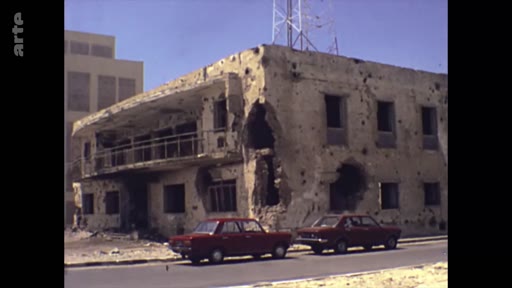
This is a still from a documentary-style archival footage, likely from the 1980s, showing a war-torn urban street. The scene is set in a ruined, concrete building with bullet holes and broken windows, suggesting a conflict zone. Two red cars are parked on the street in front of the building. The people in the frame are not visible. The visual style is documentary, with a static, wide-angle shot, natural lighting, and a clear, slightly grainy quality typical of older film.
75%
00:14:41
Argentine : Milei et la rivière en sursis
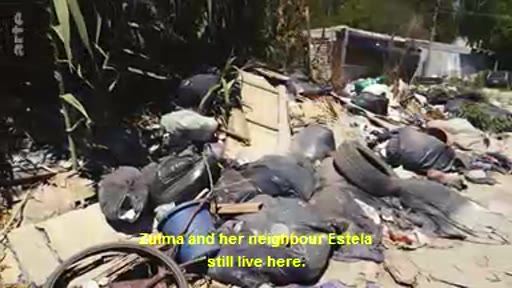
ARTE ReportageThis is a documentary-style frame from an outdoor, daytime scene. The setting is a cluttered, outdoor area with a large pile of trash, including black plastic bags, tires, and discarded materials, suggesting a neglected or impoverished area. A few people are visible in the background, but they are not the focus of the shot. The visual style is a raw, unfiltered documentary, with natural lighting and a wide, candid framing that captures the scene in its entirety.
75%
00:57:06
Israël, les ministres du chaos
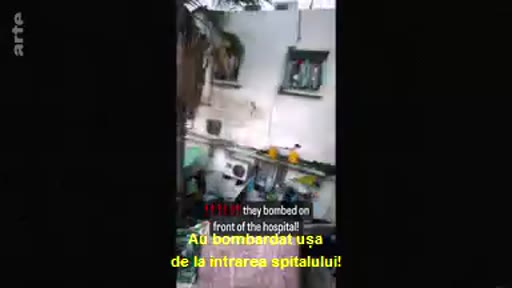
This is a shaky, handheld video clip from a documentary-style interview, likely from the ARTE channel, showing a chaotic scene in an outdoor, possibly urban, setting. The frame is blurry and appears to be taken from a low angle, capturing a cluttered area with a white wall, a window with clothes hanging, and a makeshift structure with a red and white patterned mat on the ground. A person is visible in the lower left, wearing a dark shirt and dark pants, and appears to be in distress, possibly crying or shouting. The text overlay reads "!!!!!! they bombed on front of the hospital!!!" indicating a traumatic event. The lighting is natural daylight, and the overall visual style is raw and unpolished, suggesting a real-life, unedited recording.
75%
00:54:04
Israël, les ministres du chaos
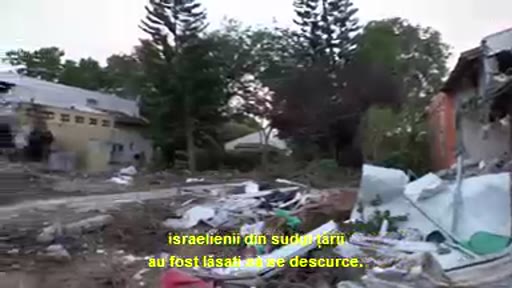
This is an outdoor, documentary-style frame showing a devastated area with rubble and debris. A few people are visible in the background, standing among the wreckage of buildings. The scene is set in a residential area with trees and a clear sky, suggesting it is daytime. The visual style is raw and unfiltered, capturing the aftermath of destruction.
image
Sémantique · image
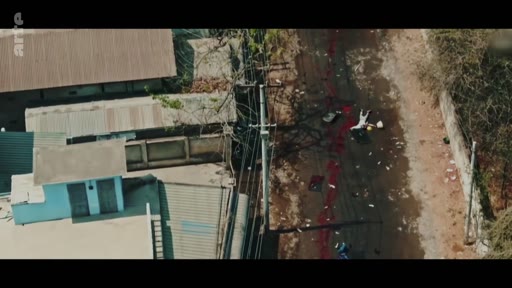
(10)
80%
00:41:45
Birmanie : le rappeur qui défia la junte
79%
00:23:16
Planète finance
Catastrophe à vendre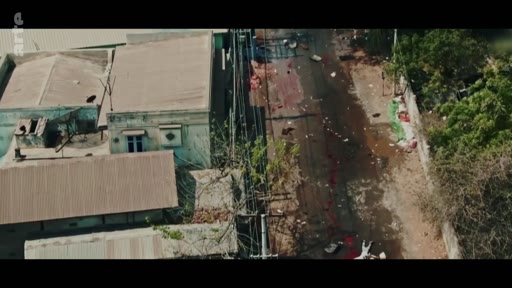
79%
00:41:41
Birmanie : le rappeur qui défia la junte
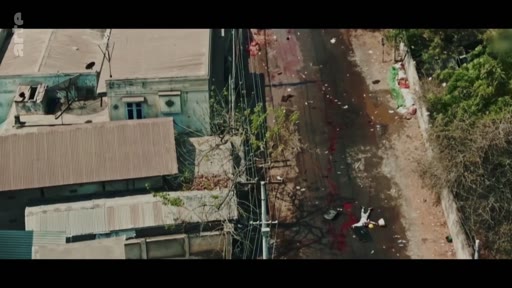
79%
00:41:42
Birmanie : le rappeur qui défia la junte
79%
00:16:02
Terrorisme d'ultradroite (1/2)
This is a low-angle, nighttime, outdoor shot from a high vantage point, likely a balcony or window, looking down onto a street. The scene is illuminated by a yellowish, artificial light, possibly from a streetlamp or building, casting long shadows. A group of people are gathered on the street, some standing and others moving, with a few individuals in the foreground appearing to be in motion. The people are dressed in casual clothing, and their expressions are difficult to discern due to the distance and lighting. The setting appears to be a residential or urban area, with buildings and a parked car visible in the background. The image has a grainy, documentary-style quality with a white border and a textured black background.
79%
00:16:03
Terrorisme d'ultradroite (1/2)
This is a still from a documentary-style video, likely an archive or interview, showing a nighttime scene in an urban environment. The frame is a high-angle shot from a balcony or elevated position, looking down at a street with a few people standing and walking. The people are dressed in dark clothing, and their expressions are mostly neutral or focused. The setting is a dimly lit, narrow street with buildings and a fence in the foreground. The lighting is warm and yellow, suggesting artificial streetlights, and the overall visual style is gritty and realistic, with a vintage, slightly grainy quality.
78%
00:16:01
Terrorisme d'ultradroite (1/2)
This is a low-resolution, grainy, and darkly lit nighttime video clip, likely from a surveillance camera, showing a street scene. A person in a dark, possibly black, jacket and pants is seen walking from the right side of the frame toward the left, moving past a parked car and a building. The setting is an urban street at night, with a wooden fence and a car visible in the foreground. The image has a documentary or archival feel, with a white border and a dark, textured background.
78%
00:41:44
Birmanie : le rappeur qui défia la junte
78%
00:03:26
RDC : les gangs de Kinshasa (2022)
ARTE Reportage
78%
00:04:05
Inde : le temple de la discorde
ARTE Reportagesearchjeunes hommes favela quotidien difficile
description
Sémantique · description
(10)
77%
00:24:02
Nigeria : le fléau des enlèvements
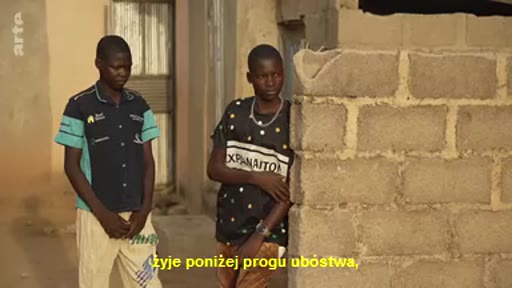
ARTE ReportageTwo young Black men stand in an outdoor alleyway. The man on the left wears a dark blue and teal short-sleeved shirt with a logo, light-colored pants, and a white cloth tied around his waist. The man on the right wears a black t-shirt with a white graphic, a silver chain, and brown pants. Both appear to be looking at the camera with serious expressions. The scene is set in a narrow, sunlit alley with a rough concrete wall on the right. The lighting is natural, and the image is a still frame from a documentary-style video, with a simple framing and a clear focus on the two individuals. The subtitle at the bottom reads, "żyje poniżej progu ubóstwa," which translates to "lives below the line of poverty."
77%
00:00:10
Colombie : le retour des enfants tueurs
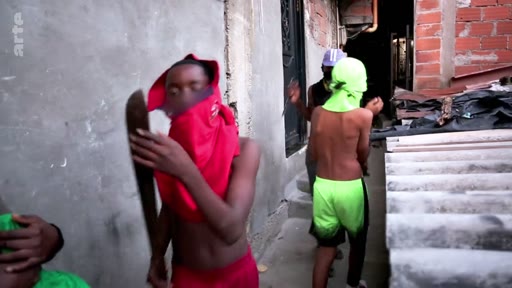
ARTE ReportageThis is a still from a documentary-style interview, likely from a Brazilian television program, featuring a group of young people in a narrow, weathered alleyway. One boy in the foreground, wearing a red shirt and a red hood, holds a wooden stick and looks toward the camera with a serious expression. Another boy in bright neon green shorts and a green hood stands near a doorway, while a third person is partially visible on the far left. The scene is set in a dimly lit, outdoor urban environment with concrete walls and a staircase, suggesting a residential area. The lighting is natural and subdued, with a focus on the subjects' faces and upper bodies.
76%
00:14:25
ARTE Reportage
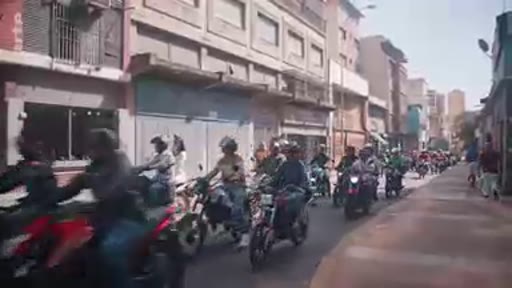
Venezuela, l'après Maduro / Liban, un nouvel exodeA busy street scene in a city, likely in Latin America, with a large number of people riding motorcycles and scooters. The people are dressed in casual, practical clothing, with many wearing helmets, and appear to be in a state of motion, suggesting a busy, active environment. The setting is an urban street with buildings of varying heights and conditions, and the time of day is likely midday, with bright, natural light. The visual style is documentary, with a handheld camera perspective, capturing the scene in a realistic, unfiltered manner.
76%
00:06:44
Colombie : le retour des enfants tueurs
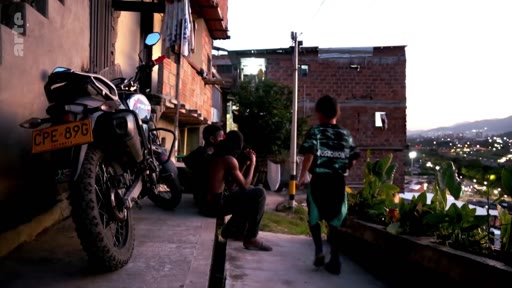
ARTE ReportageA group of young men are gathered on a concrete walkway in a densely built, residential area, with a motorcycle parked nearby. One man is sitting on the ground, while another stands with his back to the camera, wearing a green and black patterned shirt. The setting is an urban neighborhood with brick buildings, a small garden, and a distant cityscape visible at dusk. The scene is shot in a documentary style with natural lighting, capturing the casual, everyday life of the people in the area.
76%
00:20:56
Irak : le retour des chrétiens à Mossoul ?
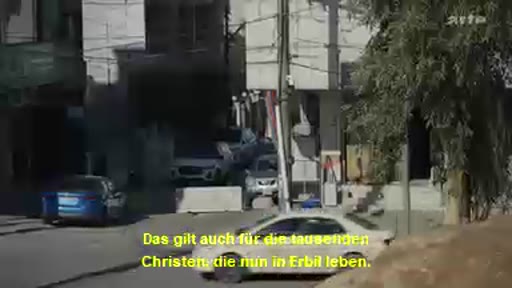
ARTE ReportageA group of people are gathered in a narrow, sunlit alleyway in a densely populated urban area. The individuals, dressed in casual clothing, appear to be engaged in a conversation or activity, with some standing and others seated. The scene is set in a residential neighborhood with buildings, parked cars, and a tree on the right side. The visual style is documentary, with a naturalistic framing and soft, natural lighting.
75%
00:03:33
Nigeria : le fléau des enlèvements
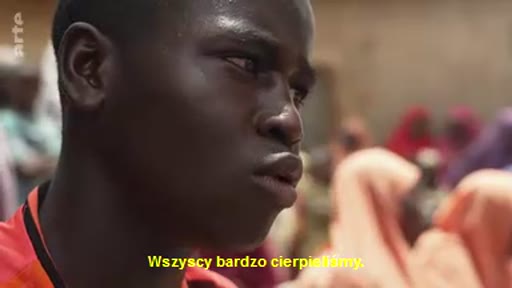
ARTE ReportageA close-up shot captures a young Black man in a red and orange shirt, looking off to the side with a serious expression. In the background, other people are visible but blurred, wearing colorful clothing. The scene is set outdoors in a sunny, dusty environment, likely a village or market. The visual style is documentary, with a tight framing on the man's face and a natural, bright lighting. The subtitle reads, "Wszyscy bardzo cierpieliśmy," which translates to "All of us were suffering."
75%
00:21:48
Inde : les malgré-nous de l'armée russe
Two young men are walking through a narrow, cluttered alleyway. The man on the left wears a yellow sports jersey with "KAFD" and "SHG" on the front, while the man on the right wears a plain yellow t-shirt. Both have dark hair and beards, and their expressions are serious and contemplative. The setting is an outdoor, urban environment with weathered buildings and a gritty, somewhat dilapidated appearance, suggesting a slum or underdeveloped area. The lighting is natural and diffused, with a muted, slightly overcast tone. The camera is at a medium distance, capturing the two men from the waist up, and is framed to show them walking from left to right. The visual style is documentary, with a realistic and unembellished aesthetic.
75%
00:13:26
Chine-Philippines : la bataille de la mer
ARTE ReportageThis is a documentary-style, wide-angle shot of a busy street in a densely populated, informal settlement, likely in the Philippines. The scene is set during the day, with a mix of people engaged in daily activities. Several individuals are visible: a man in a white tank top rides a motorcycle, a man in a blue shirt sits on the ground, and others are seen near a small boat and a tuk-tuk. The setting is an outdoor, urban environment with makeshift homes, corrugated metal roofs, and a network of utility poles and wires. The visual style is raw and unfiltered, capturing the authentic, lived-in atmosphere of the community.
75%
00:01:06
Argentine : Milei et la rivière en sursis
ARTE ReportageThis is a still from a documentary, showing a group of people in a modest, makeshift home in a slum. The people are dressed in simple, practical clothing, and their expressions suggest a mix of hardship and resilience. The main activity appears to be daily life, with a person visible in the doorway of the house, possibly engaged in work or household chores. The setting is an outdoor, informal neighborhood, with a wooden structure and a red brick house, and the scene is captured in natural, overcast daylight. The visual style is documentary, with a handheld, slightly shaky camera and natural lighting.

75%
00:12:53
Dans Gaza
A group of men and boys are walking through a crowded, chaotic scene, likely a refugee or displacement crisis. The men are dressed in casual clothing, including t-shirts and jeans, and appear to be in a state of distress or urgency. The setting is an outdoor, possibly urban environment with a large crowd and a net-like structure in the background, suggesting a crowded, possibly makeshift, area. The image is a grainy, documentary-style photograph with a low resolution and a slightly tilted, handheld feel, indicating it is likely an archive or news footage.
image
Sémantique · image
(10)
81%
00:02:28
Panama-Colombie : dans l’enfer du Darien
ARTE Reportage
81%
00:02:10
Panama-Colombie : dans l’enfer du Darien
ARTE Reportage
81%
00:07:41
RDC : les Galaxionautes (2022)
Grand prix des DIG Awards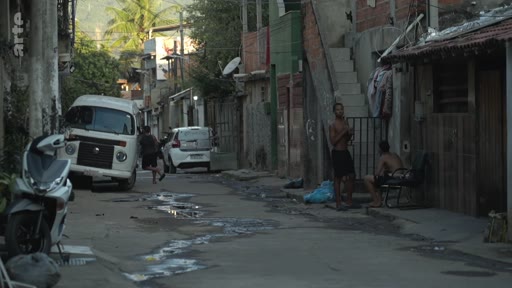
81%
00:06:46
Brésil : la revanche des mères
ARTE ReportageA man in a dark shirt and shorts stands on a narrow, paved street in a densely populated, slum-like neighborhood, with another man sitting on a bench nearby. A white van and a scooter are parked on the left, and a white car is visible in the distance. The scene is set in a narrow alleyway with weathered buildings, a concrete staircase, and laundry hanging on a line. The lighting is dim, suggesting late afternoon or early evening, with a warm, golden glow from the sun. The visual style is documentary, with a wide, slightly tilted shot capturing the environment and the people within it.
80%
00:02:14
Panama-Colombie : dans l’enfer du Darien
ARTE Reportage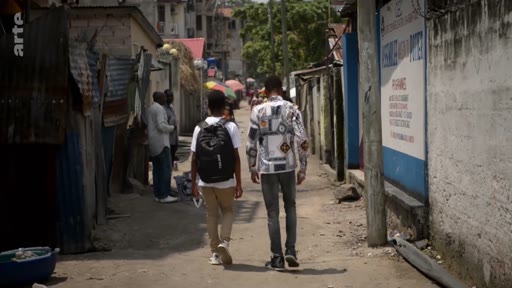
80%
00:07:30
RDC : les Galaxionautes (2022)
Grand prix des DIG Awards
80%
00:02:27
Panama-Colombie : dans l’enfer du Darien
ARTE Reportage
80%
01:12:35
Pédocriminels, la traque
80%
00:07:58
RDC : les Galaxionautes (2022)
Grand prix des DIG Awards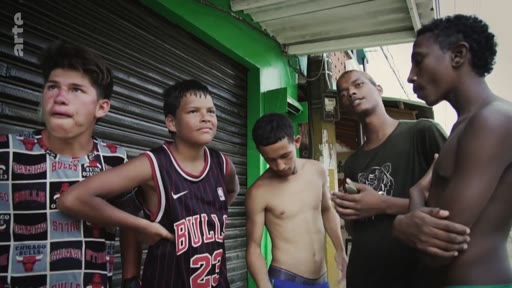
80%
00:02:11
Panama-Colombie : dans l’enfer du Darien
ARTE ReportageSujet 2
Mères en deuil et lutte contre l'impunité
searchmères favela manifestant photos enfants décédés
description
Sémantique · description
(10)
80%
00:20:02
Mexique : la guerre des cartels
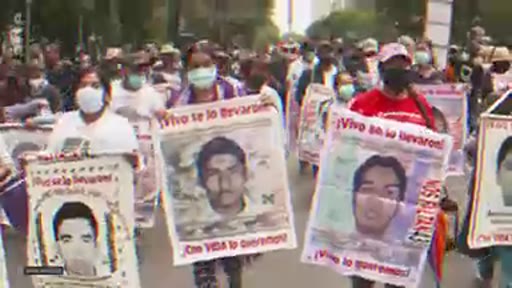
A group of people, mostly wearing face masks and casual clothing, are marching in a public street. They are holding large posters with the faces of individuals and the text "Vivo se lo llevaron!" and "¡Vivo lo queremos!" which translates to "I am alive, they took him!" and "I want him alive!" The scene is outdoors during the day, with trees and buildings visible in the background. The image is a grainy, low-resolution video clip, likely from a news report or documentary, with a handheld camera perspective and natural lighting.
76%
00:10:18
Terrorisme d'ultradroite (1/2)
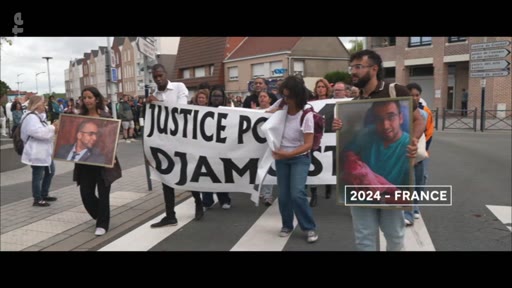
A group of people are gathered on a paved street in a residential area in France, holding a large banner that reads "JUSTICE PO D'JAMAS" and carrying portraits of individuals. The participants are dressed in casual clothing, and their expressions are serious and determined. The scene is set during the day in an outdoor urban environment with buildings and a crosswalk visible in the background. The image is a documentary-style photograph with a clear, natural lighting and a straightforward, unembellished framing.

76%
01:08:26
Dans Gaza
A group of women, many wearing headscarves and casual clothing, are gathered outdoors in a protest. They are holding up posters with photographs and text, and appear to be engaged in a demonstration or public gathering. The scene is set in a natural, outdoor environment with trees and greenery visible in the background, suggesting a park or public square. The lighting is natural and diffused, indicating it is daytime. The visual style is documentary, with a handheld, intimate framing that captures the group from a slightly low angle.
76%
01:07:24
Liban : anatomie d'une guerre
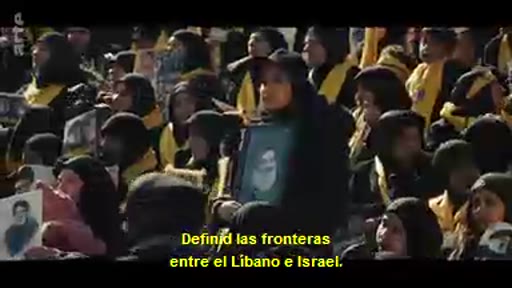
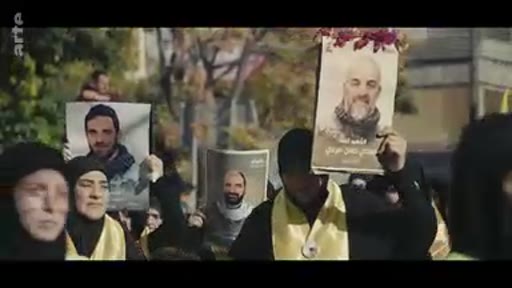
A large group of women, mostly wearing black headscarves and yellow shirts, are gathered in a crowded outdoor setting, likely a public square or protest. They are holding framed portraits of a man, and their expressions are serious and solemn. The scene is captured in a documentary-style, wide-angle shot with natural lighting, focusing on the women and their collective presence.
76%
00:02:41
Liban : anatomie d'une guerre
A group of people, mostly women wearing black headscarves and yellow vests, are gathered outdoors in a public space. They are holding up large posters with photographs of men, one of whom is a bald man with a scarf, and Arabic text. The scene is set in a public square or street, with trees and buildings visible in the background, suggesting a daytime gathering. The visual style is documentary, with a close-up framing focusing on the individuals and their expressions, and natural lighting.
76%
00:25:19
ARTE Regards
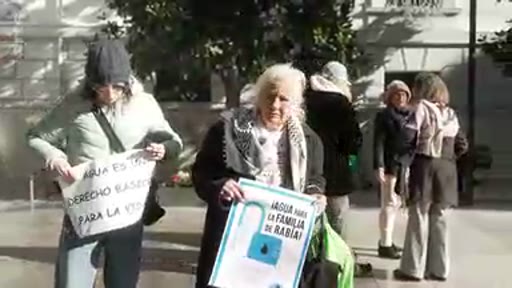
En Espagne, des brigades anti-squatteursA group of people are gathered outdoors in a public space, likely a plaza or street, in front of a building. Two women in the foreground are holding signs with the message "AGUA ES UN DERECHO BÁSICO PARA LA VIDA" and "AGUA PARA LA FAMILIA DE RÁBIA!" in Spanish, advocating for basic water rights. The women are dressed in casual, practical clothing suitable for a cool day, with one wearing a beanie and the other a scarf. The scene is well-lit by natural sunlight, suggesting it is daytime. The visual style is that of a documentary or news report, with a clear, straightforward framing and natural lighting.
76%
00:21:29
ARTE Reportage
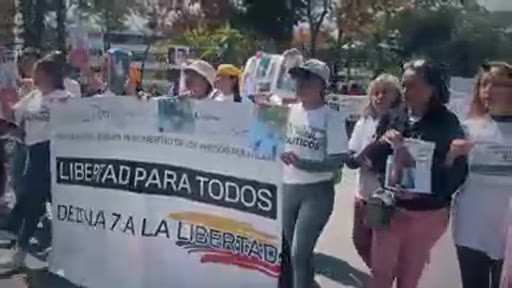
Venezuela, l'après Maduro / Liban, un nouvel exodeA group of women, mostly in casual clothing like t-shirts and pants, are walking in a line during a protest. They are holding signs with photos of people and messages like "LIBERTAD PARA TODOS" and "DEIN 7A LA LIBERTAD." The scene is outdoors on a paved path with trees and a clear sky, suggesting it is daytime. The image is a documentary-style photograph with natural lighting and a candid, unposed framing.
75%
00:21:00
Brésil : la revanche des mères
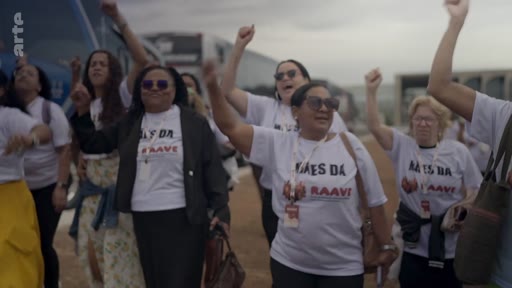
ARTE ReportageA group of women are marching in a protest, raising their fists in the air. They are wearing white t-shirts with the text "Mães da Raiva" (Mothers of Rage) printed on them, and many are wearing sunglasses. The scene is outdoors on a dusty, unpaved road, with a large blue vehicle and a white truck visible in the background. The lighting is natural daylight, suggesting it is daytime. The image is a still from a documentary, with a medium shot framing the women from the waist up, and the camera is positioned at a slightly low angle.

75%
01:08:23
Dans Gaza
A group of people, mostly older women, are gathered outdoors in a protest. They are holding up posters with photos and text, some of which appear to be political or social in nature. The women are dressed in a mix of casual and traditional clothing, including headscarves and coats. The scene is set in a public space, possibly a park or street, with trees and a fence visible in the background. The lighting is natural and appears to be from an overcast day. The camera is at a medium distance, capturing the group from the front, and the image has a documentary feel with a slightly grainy quality.
75%
00:10:26
Terrorisme d'ultradroite (1/2)
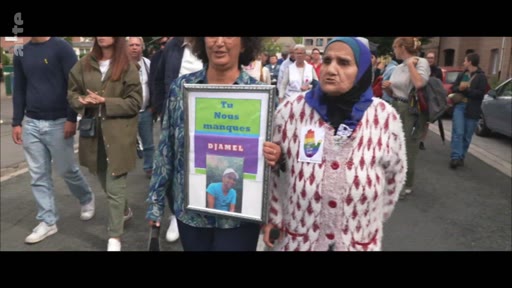
A group of people are walking down a street, likely in a city, as they participate in a protest or demonstration. The central figures are two women in the foreground; one holds a framed poster with the text "Tu Nous manques" and a photo of a man, and the other wears a white and red patterned sweater and a blue headscarf. The crowd is diverse, with several individuals wearing casual clothes, and their expressions appear serious and focused. The scene is set outdoors during the day, with buildings and a car visible in the background. The visual style is that of a documentary or news footage, with a straightforward, unembellished framing and natural lighting.
image
Sémantique · image
(10)
82%
00:09:50
Brésil : la revanche des mères
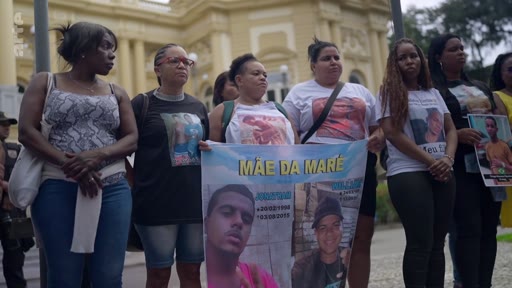
ARTE ReportageA group of women, dressed in casual clothing, stand in a line holding a large banner with the text "Mãe da Maré" and images of a young man. They appear solemn and serious, with some looking forward and others slightly away. The scene is outdoors in front of a large, light-colored building, likely a government or public building, under natural daylight. The image is a documentary-style photograph with a candid, unposed framing, capturing the group in a moment of collective action.
81%
00:09:58
Brésil : la revanche des mères
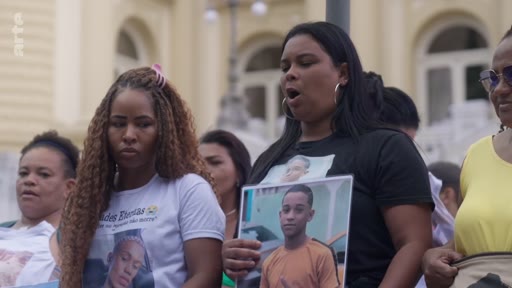
ARTE ReportageA group of women are gathered outdoors in front of a large, light-colored building with arched windows. The central woman, wearing a black t-shirt, is holding a photograph of a young boy and appears to be speaking or singing with her mouth open. To her left, another woman with long, braided hair wears a white t-shirt with a graphic of a child's face. The group is dressed in casual clothing, and their expressions are serious and somber. The scene is lit by natural daylight, suggesting it is daytime. The image has a documentary feel, with a close-up framing focusing on the women and their expressions.
81%
00:14:38
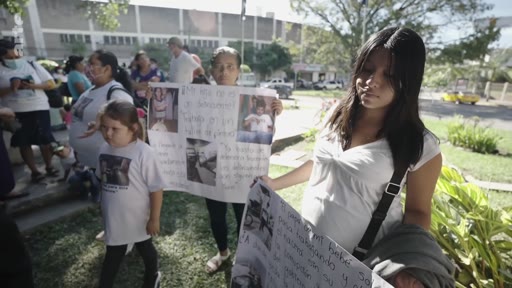
Salvador : vivre sous Bukele
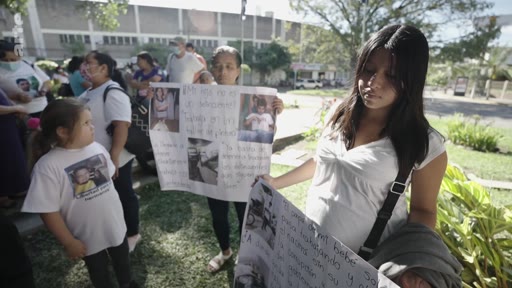
ARTE Reportage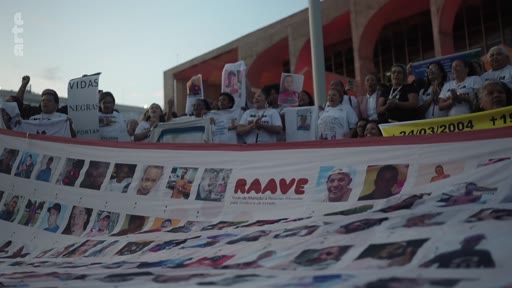
81%
00:06:29
Brésil : la revanche des mères
ARTE ReportageA group of people, mostly women, are gathered outdoors in front of a large building with arched windows. They are holding up signs and a large banner that features numerous photographs of children and the text "RAAVE" and "VIDAS NEGRAS" (Black Lives). The people are dressed in casual clothing, with many wearing white shirts. The scene is set during the day, with natural light illuminating the group. The visual style is documentary, with a low-angle shot capturing the banner and the crowd.
81%
00:14:41
Salvador : vivre sous Bukele
ARTE Reportage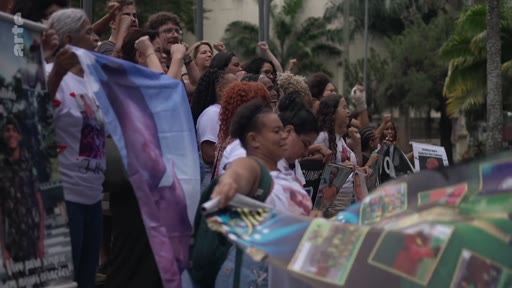
81%
00:09:35
Brésil : la revanche des mères
ARTE ReportageA large group of people, mostly women, are gathered outdoors in a public space, likely a park or plaza, with palm trees and a building in the background. They are holding up signs and flags, and many are wearing white t-shirts with images on them, suggesting a protest or demonstration. The crowd appears to be emotionally charged, with some individuals raising their fists and others holding up signs with text, indicating a collective, passionate action. The scene is captured in a documentary-style, handheld shot with natural lighting, focusing on the people and their expressions.
81%
00:18:59
Brésil : la revanche des mères
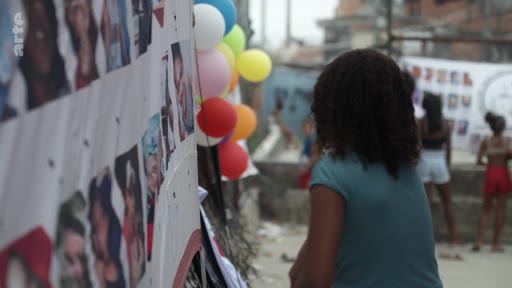
ARTE ReportageA young woman with dark, curly hair, wearing a teal t-shirt, stands with her back to the camera, looking at a large white poster covered in photographs and colorful balloons. In the background, other people are visible in a crowded, outdoor setting, possibly a street or community gathering, with buildings and a banner in the distance. The scene is shot in a documentary style with natural lighting, focusing on the woman and the poster.
81%
00:09:56
Brésil : la revanche des mères
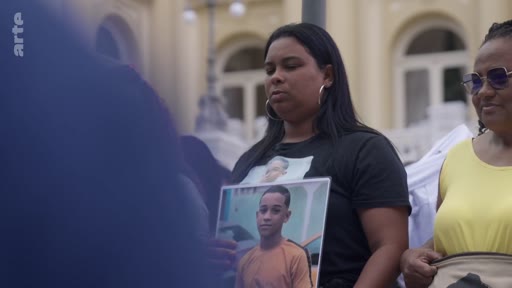
ARTE ReportageA woman with long dark hair and a black t-shirt holds a photograph of a young man in an orange shirt. She is standing in a public space, likely a plaza or street, with a large building in the background. Another woman in a yellow top and sunglasses stands beside her, smiling. The scene appears to be a public gathering or protest, with the woman holding the photo looking solemn. The image is a still from a documentary, with a close-up framing focusing on the woman and the photo, and natural, slightly overcast lighting.
80%
00:10:05
Brésil : la revanche des mères
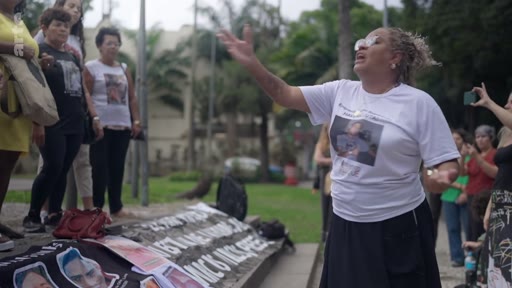
ARTE ReportageA woman with a white t-shirt and black skirt stands in a park, gesturing with her right hand as she speaks to a group of people. She has a photograph of a child on her shirt and appears to be speaking passionately. The group, consisting of several women and men, stands in a line, some holding signs and others looking on. The setting is outdoors in a park with trees and a building in the background, and the scene is lit by natural daylight. The image is a candid, documentary-style photograph, likely taken during the day.
80%
00:15:17
Salvador : vivre sous Bukele
ARTE Reportagesearchmilitantes droits humains favela pancartes
description
Sémantique · description
(10)
80%
00:21:28
ARTE Reportage
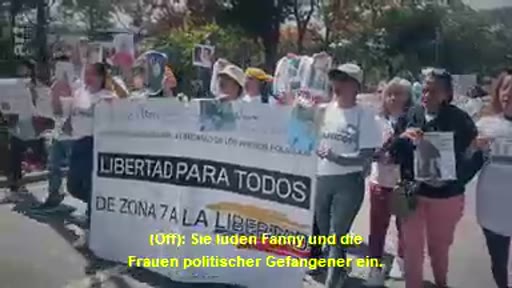
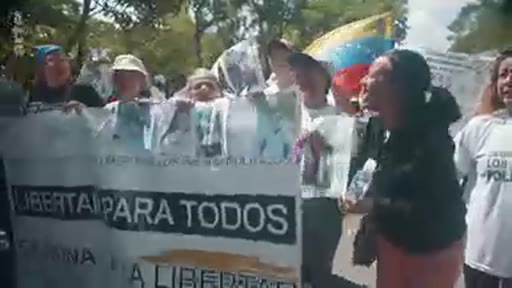
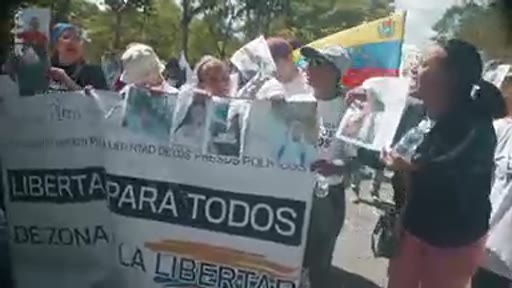
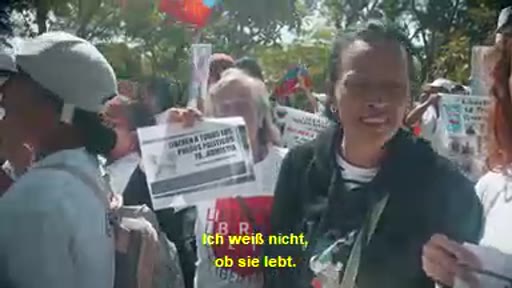
Venezuela, l'après Maduro / Liban, un nouvel exodeA group of people, mostly women, are gathered outdoors in a public space, likely a park or street, holding signs and banners. They are dressed in casual clothing, with some wearing hats and t-shirts. The central banner reads "LIBERTAD PARA TODOS DE ZONA 7A LA LIBERTAD" and features images of individuals, suggesting a protest or demonstration. The scene is well-lit by natural daylight, and the people appear to be standing in a line, holding their signs and banners, with some looking forward and others looking at the camera. The visual style is documentary, with a straightforward, unfiltered shot capturing the event.
79%
00:20:18
Venezuela : après Maduro, le prix du deal
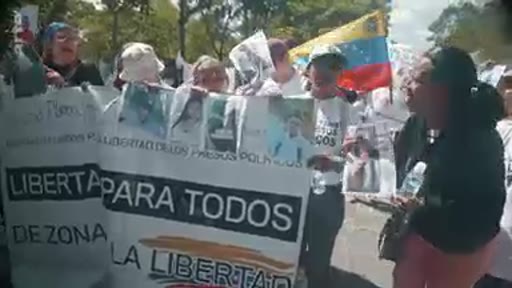
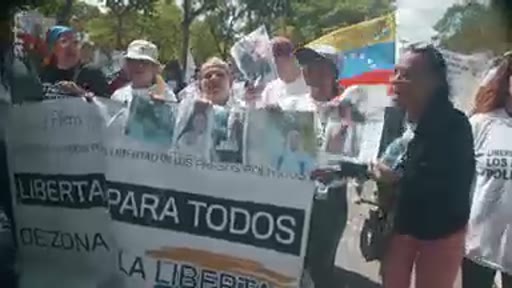
ARTE ReportageA group of people, mostly women, are gathered outdoors in a public space, holding up a large banner with the text "LIBERTAD PARA TODOS" and "DE ZONA TALA LIBERTAD" and displaying several photographs of individuals. They are wearing casual clothing, with some in hats and others in t-shirts, and appear to be engaged in a protest or demonstration. The scene is set in a sunny, outdoor environment with trees and a flag in the background, suggesting a public park or plaza. The visual style is documentary, with a handheld camera capturing the scene in a natural, unfiltered manner.
78%
00:21:36
ARTE Reportage
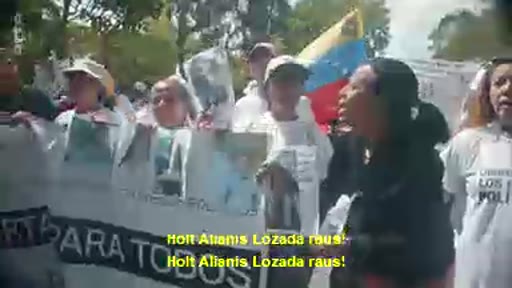
Venezuela, l'après Maduro / Liban, un nouvel exodeA group of people, mostly women, are gathered outdoors in a public space, holding signs and banners. They are dressed in casual clothing, with some wearing hats and one person holding a water bottle. The signs feature photographs of individuals, the text "LIBERTAD PARA TODOS" and "ESTUDIANTES UNIDOS PA LIBERTAD DE LOS PRESOS POLÍTICOS," and a Venezuelan flag. The scene is set in a sunny, outdoor environment with trees and a paved ground, suggesting a protest or demonstration. The visual style is documentary, with a natural, candid framing and bright, even lighting.
78%
00:21:32
ARTE Reportage
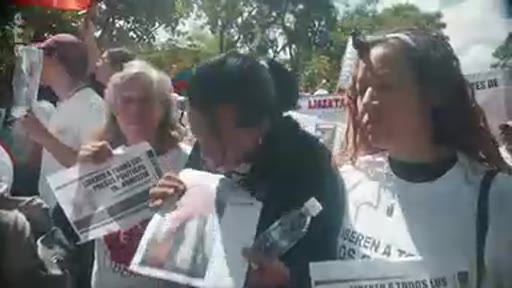
Venezuela, l'après Maduro / Liban, un nouvel exodeA group of people, mostly women, are gathered outdoors in a public park or plaza. They are holding large white signs with photos of people and the text "LIBERTAD DE LOS PRESOS POLICIALES PARA TODOS" (Freedom of the imprisoned police for all). The individuals are wearing casual clothing, including hats and t-shirts, and appear to be emotionally engaged in the demonstration. The scene is set during the day under bright sunlight, with trees and a flag in the background. The visual style is documentary, with a handheld camera perspective and natural lighting.
78%
00:21:37
ARTE Reportage
Venezuela, l'après Maduro / Liban, un nouvel exodeA group of people are gathered outdoors in a public space, likely a park or plaza, holding signs and banners with the word "LIBERTAD" (liberty) and images of a person. The individuals are dressed in casual clothing, with some wearing white t-shirts and others in more varied attire. The scene is set during the day under bright sunlight, with trees and a clear sky visible in the background. The visual style is documentary, with a handheld camera capturing the moment from a close, slightly low angle, focusing on the people's faces and their expressions of determination and emotion.
78%
00:20:21
Venezuela : après Maduro, le prix du deal
ARTE ReportageA group of people, mostly women, are gathered outdoors in a public space, holding signs and banners. They are dressed in casual clothing, with some wearing hats and t-shirts. The women appear to be passionate and determined, with expressions of anger and resolve as they hold up photos of individuals, likely victims, and signs that read "LIBERTAD PARA TODOS" and "LIBERTAD DE ZONA." The scene is set in a sunny, open area with trees and a flag in the background, suggesting a protest or demonstration. The visual style is documentary, with a candid, unfiltered shot capturing the moment.
78%
00:20:20
Venezuela : après Maduro, le prix du deal
ARTE ReportageA group of people, mostly women, are gathered outdoors in a public space, holding signs and banners. They are dressed in casual clothing, with some wearing hats and t-shirts, and appear to be engaged in a protest or demonstration. The main action is the display of signs with photos of individuals and the message "LIBERTAD PARA TODOS" (Freedom for All). The setting is a sunny day in a park or plaza, with trees and a flag visible in the background. The visual style is documentary, with a handheld camera capturing the scene in a natural, unfiltered manner.
77%
00:21:42
ARTE Reportage
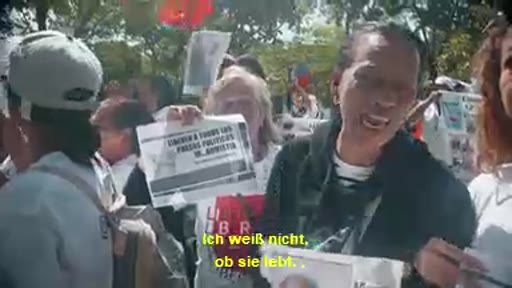
Venezuela, l'après Maduro / Liban, un nouvel exodeA group of people are gathered outdoors in a protest, holding signs with the message "LIBERAR A TODOS LOS PRESOS POLÍTICOS YA ADMISTRA" (Free all political prisoners, already released). The crowd is diverse, with individuals wearing casual clothing, including a man in a black hoodie and a woman in a white t-shirt. The scene is brightly lit by natural sunlight, suggesting it is daytime. The visual style is documentary, with a handheld camera capturing the moment from a close, slightly angled perspective.
77%
00:15:55
Mexique : la guerre des cartels
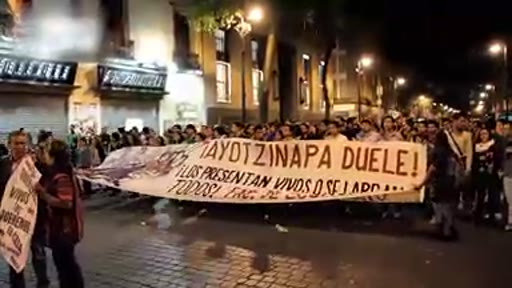
A large group of people are marching down a city street at night, holding a large banner that reads "AYDITZINAPA DUELE!" and "TODOS (TODOS) (TODOS) (TODOS) (TODOS) (TODOS) (TODOS) (TODOS) (TODOS) (TODOS) (TODOS) (TODOS) (TODOS) (TODOS) (TODOS) (TODOS) (TODOS) (TODOS) (TODOS) (TODOS) (TODOS) (TODOS) (TODOS) (TODOS) (TODOS) (TODOS) (TODOS) (TODOS) (TODOS) (TODOS) (TODOS) (TODOS) (TODOS) (TODOS) (TODOS) (TODOS) (TODOS) (TODOS
77%
00:21:43
ARTE Reportage
Venezuela, l'après Maduro / Liban, un nouvel exodeA group of people are gathered outdoors in a public space, likely a park or plaza, holding signs and banners. A woman in the center, wearing a black jacket and a white t-shirt, is visibly crying with her eyes closed. She is holding a sign that reads "LIBERAR A TODOS LOS PUEBLOS PANTERAS" (Free all the people of the Panthers). The crowd is diverse, with people of various ages and appearances, many wearing casual clothing. The scene is set during the day under natural sunlight, with trees and other people visible in the background. The visual style is documentary, with a handheld camera perspective and natural lighting.
image
Sémantique · image
(10)
79%
01:04:00
Pesticides : l’hypocrisie européenne
79%
01:03:59
Pesticides : l’hypocrisie européenne
78%
00:12:03
ARTE Reportage
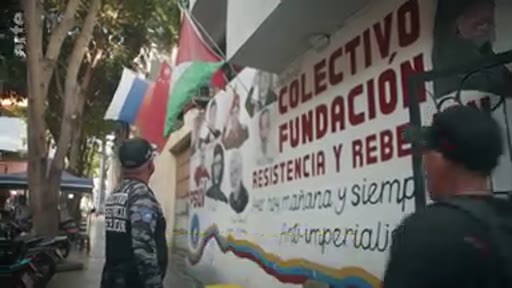
Venezuela, l'après Maduro / Liban, un nouvel exodeA man in a camouflage uniform and a black cap stands on a sidewalk, looking at a large mural on a wall. The mural features the text "COLECTIVO FUNDACIÓN RESISTENCIA Y REBELDÍA" and several portraits of people. Another man, wearing a black t-shirt and a black cap, is seen from behind, standing in front of the mural. The scene is set outdoors on a street, with trees, a motorcycle, and a small blue tent visible in the background. The lighting is natural, suggesting it is daytime. The visual style is documentary, with a candid, unedited feel.
78%
00:34:40
L'exode des Chinois vers le rêve américain (2/3)
78%
00:20:07
Venezuela : après Maduro, le prix du deal
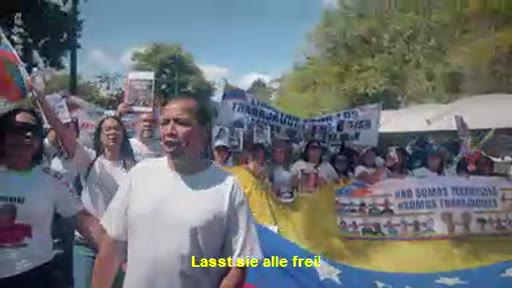
ARTE ReportageA large group of people are gathered outdoors in a sunny, tree-lined area for a protest. The central figure is a man in a white t-shirt, speaking passionately with his mouth open, while others around him hold signs and banners. The banners feature text in Spanish, including "NO SOMOS TERRORISTAS" and "TRABAJAMOS EN EL SISTEMA," and a large Venezuelan flag is prominently displayed. The crowd is diverse, with people wearing casual clothing, and the scene is captured in bright daylight with natural lighting. The visual style is documentary, with a wide, eye-level shot that captures the group in a natural, unfiltered manner.
78%
00:09:37
Brésil : la revanche des mères
ARTE ReportageA group of people, mostly women, are gathered outdoors in a public space, likely a park or plaza, with palm trees and a building in the background. They are holding signs and banners, some with text like "Quem é o presidente?" (Who is the president?) and "Não vamos mais viver com isso!" (We will no longer live with this!). The crowd appears to be engaged in a protest or demonstration, with many individuals looking forward and raising their hands, suggesting a moment of collective action. The scene is captured in a documentary-style, candid shot with natural lighting and a wide framing that includes the crowd and the surrounding environment.
78%
00:21:32
ARTE Reportage
Venezuela, l'après Maduro / Liban, un nouvel exodeA group of people, mostly women, are gathered outdoors in a public park or plaza. They are holding large white signs with photos of people and the text "LIBERTAD DE LOS PRESOS POLICIALES PARA TODOS" (Freedom of the imprisoned police for all). The individuals are wearing casual clothing, including hats and t-shirts, and appear to be emotionally engaged in the demonstration. The scene is set during the day under bright sunlight, with trees and a flag in the background. The visual style is documentary, with a handheld camera perspective and natural lighting.
78%
00:24:27
ARTE Regards
Les irréductibles de Venise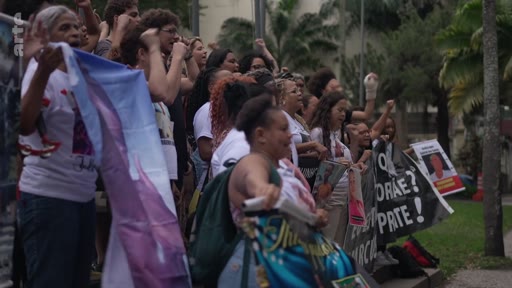
77%
00:09:38
Brésil : la revanche des mères
ARTE ReportageA group of people, mostly women, are gathered outdoors in a public space, likely a park or street, with palm trees and buildings in the background. They are actively participating in a protest, holding signs and banners with messages like "O DRAKE! PARE!" and raising their fists in solidarity. The crowd is dressed in casual clothing, with many wearing white t-shirts and some carrying backpacks. The scene is captured in a documentary-style, wide-angle shot with natural lighting, suggesting it is daytime.
77%
00:01:32
Venezuela : après Maduro, le prix du deal
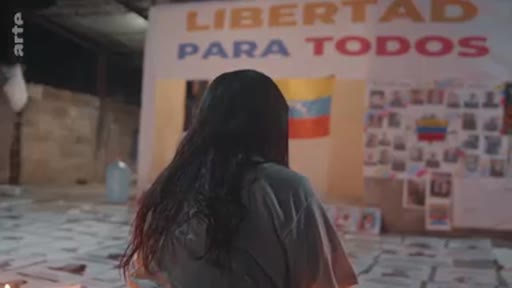
ARTE ReportageA woman with long dark hair, wearing a grey t-shirt, stands with her back to the camera in a dimly lit outdoor space. She is positioned in front of a large white banner that reads "LIBERTAD PARA TODOS" (Liberty for All) in bold orange and red letters, with a Venezuelan flag and a collage of photos pinned to the wall behind her. The ground is covered in a pattern of white paper or posters. The scene appears to be an archive or protest setting, with the lighting focused on the woman and the banner, suggesting a documentary or interview-style footage.
searchPriscilla Menezes témoignage favela
description
Sémantique · description
(10)
77%
00:19:03
Nigeria : le fléau des enlèvements
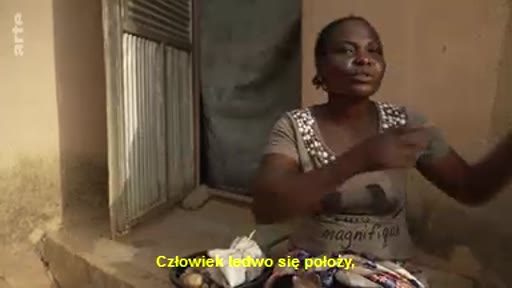
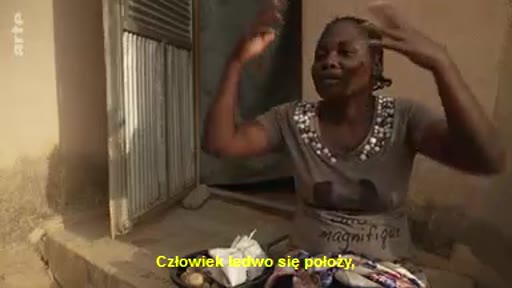
ARTE ReportageA woman with dark skin and short, dark hair is sitting on a concrete step, speaking and gesturing with her hands. She is wearing a grey t-shirt with a white beaded pattern on the shoulders and a white apron with the words "le petit magnifique" printed on it. She appears to be in a modest, weathered outdoor setting, with a metal shuttered window behind her and a large, dark tarp covering the wall. The scene is lit by natural daylight, suggesting it is daytime. The visual style is that of a documentary or interview, with a close-up framing and a clear focus on the woman. The subtitle at the bottom of the screen reads, "Czlowiek ledwo sie polozy."

76%
01:03:52
Mondialisation - Les nouvelles règles du jeu
A woman with long, light brown hair, wearing a black sleeveless top, is speaking. She appears to be in an indoor setting, possibly a room with a wooden wall and some greenery in the background. The lighting is soft and natural, suggesting it is daytime. The video is a documentary-style interview, with a close-up shot of the woman, and the text overlay identifies her as Cecilia Oldne, an investigator.
75%
00:45:25
28 minutes
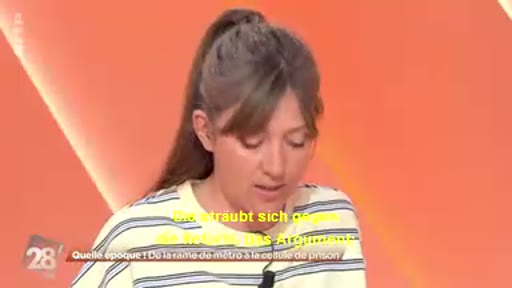
Vieillesse et folie / Le peuple iranien sacrifié ? (09/04/2026)A woman with brown hair tied back in a ponytail, wearing a yellow and blue striped shirt, is speaking. She is looking down and appears to be in the middle of a conversation or interview. The setting is an indoor studio with a bright orange background. The video is a documentary-style interview, with a close-up shot of the woman's face and upper body. The text on the screen is in French, indicating the topic is about the journey from the metro to a prison cell.
75%
01:31:24
Religieuses abusées, l'autre scandale de l'Église
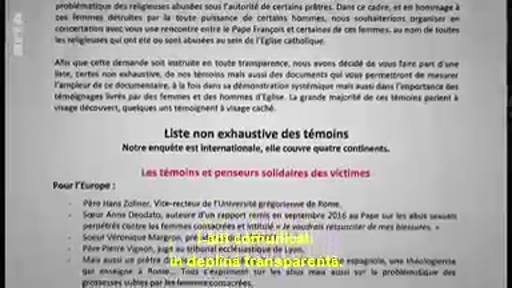
This is a screenshot of a French-language text, likely from a documentary or interview, discussing a list of "témoin" (witnesses) who have been persecuted by the Catholic Church. The text lists several individuals, including Sœur Anna Zolnier, Sœur Veronique Marguerite, and Sœur Pierre Vignon, who are described as having been victims of abuse. The text is presented in a formal, documentary-style format with a clear, readable font and a structured layout, indicating it is part of a larger narrative or report.
75%
01:31:40
Religieuses abusées, l'autre scandale de l'Église
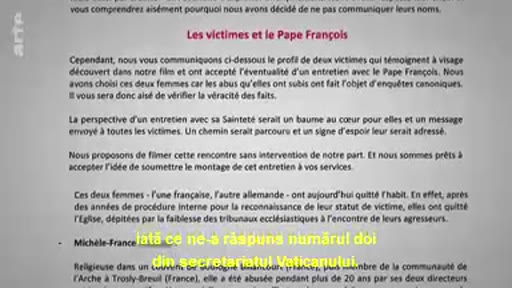
This is a screenshot of a French-language text document, likely from an interview or a news report. The text is a formal statement from a group, identifying two women as victims of a film, and stating they are being interviewed for a documentary. The document is written in French and includes a name, "Michèle-France," and a description of her as a religious woman in Boulange, France. The text is presented in a clean, typewritten format, with a clear heading and body text. The document is likely part of a larger interview or report, and the visual style is that of a formal, written document.
75%
01:31:32
Religieuses abusées, l'autre scandale de l'Église
This is a still from a documentary-style interview, likely an archive or news report, featuring a single person speaking. The speaker is a woman with short, dark hair, wearing a dark-colored top. She is seated and appears to be speaking directly to the camera, with a serious and focused expression. The background is a plain, light-colored wall, and the lighting is even and professional, typical of a studio or interview setting. The text on the screen is in French and discusses the topic of religious abuse in Africa, specifically focusing on the victims of the "Pape François" and the "victimes" (victims) of the "téméngotages" (tremendous) in the region.
75%
00:19:04
Nigeria : le fléau des enlèvements
ARTE ReportageA woman with dark skin and braided hair, wearing a grey t-shirt with a beaded necklace and a patterned skirt, sits on a concrete step in front of a weathered wall and a corrugated metal door. She is speaking, her hands raised and gesturing as she talks, and her expression is one of concern or explanation. The scene is set outdoors in a simple, possibly rural environment, with natural light illuminating her. The visual style is that of a documentary interview, with a close-up framing and a clear focus on the woman's face and upper body. The subtitle at the bottom of the screen reads "Człowiek leżę się położy," which is Polish for "A man lies down."
74%
00:18:55
Nigeria : le fléau des enlèvements
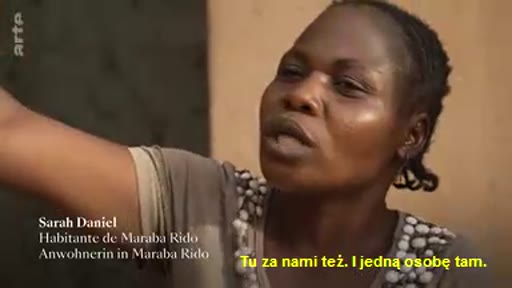
ARTE ReportageA close-up shot features a woman, Sarah Daniel, who appears to be speaking. She has dark skin, braided hair, and is wearing a brown top with a white beaded necklace. Her expression is serious as she looks slightly off-camera. The text on the screen identifies her as a resident of Maraba Rido and provides a subtitle in Croatian: "Tu za nami tez. I jedna osobu tam." The scene is set outdoors against a plain, earth-toned wall, and the lighting is natural and even. The visual style is that of a documentary or interview, with a static, close-up framing.
74%
00:23:41
Nigeria : le fléau des enlèvements
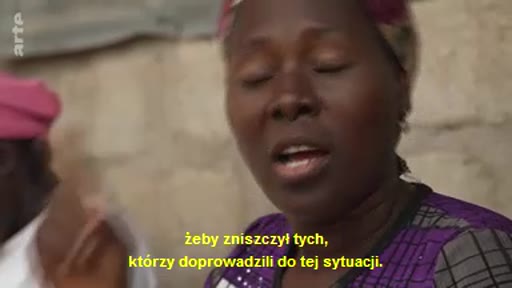
ARTE ReportageA close-up shot features a woman with dark skin, wearing a purple and black patterned top and a pink headscarf, speaking with her eyes closed. To her left, a man in a pink hat is partially visible. The scene is set outdoors against a weathered stone wall, suggesting a rural or informal environment. The lighting is natural and even, typical of daylight. The visual style is documentary, with a focus on the woman's face and a clear, unobstructed framing. The subtitle in Polish reads, "to help those who are leading to my situation."
74%
00:02:14
Venezuela : après Maduro, le prix du deal
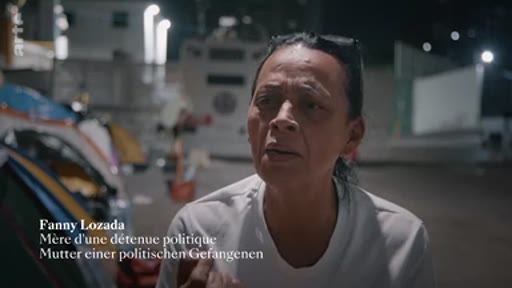
ARTE ReportageA woman, identified as Fanny Lozada, is shown in a close-up shot, speaking directly to the camera. She is wearing a white t-shirt and has dark hair pulled back, with sunglasses resting on her head. Her expression is serious and her mouth is slightly open as if in mid-sentence. The setting is an outdoor, nighttime environment, likely a camp or detention center, with tents and other structures visible in the background. The lighting is artificial, with bright lights from the background creating a contrast with the darker foreground. The video is a documentary-style interview, with a clear focus on the woman's face and expression.
image
Sémantique · image
(10)
79%
00:07:34
Brésil : la revanche des mères
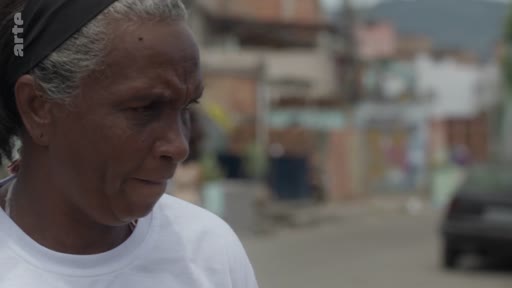
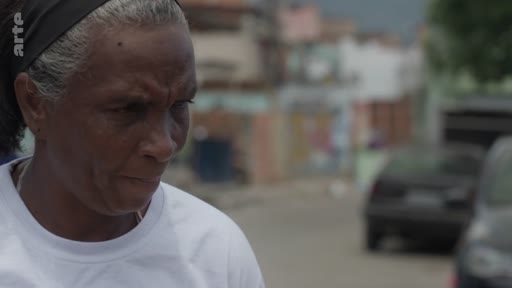
ARTE ReportageA close-up shot captures a woman with graying hair and a black headband, wearing a white t-shirt. She has a serious expression and is looking down, her face showing signs of age and wear. The background is out of focus, showing a street scene with buildings and a car, suggesting an outdoor, urban environment. The lighting is natural and even, typical of an overcast day. The image has a documentary feel, with a soft focus on the woman and a blurred background, indicating a candid, observational style.
79%
00:07:33
Brésil : la revanche des mères
ARTE ReportageA close-up shot of an elderly Black woman with gray hair pulled back in a black headband, wearing a white t-shirt. She has a serious, contemplative expression, looking down and to her left. The background is a blurry street scene with parked cars and buildings, suggesting an outdoor, urban environment. The image has a documentary feel, with natural lighting and a shallow depth of field focusing on the woman.
79%
00:08:29
Brésil : la revanche des mères
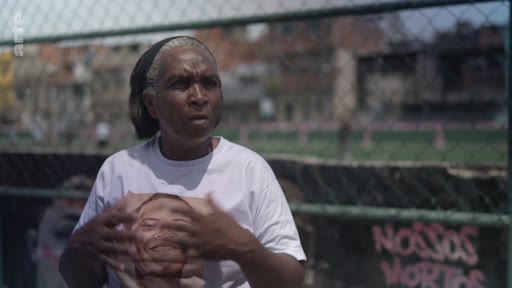
ARTE ReportageA woman with a grey headscarf and a white t-shirt with a graphic of a face on it stands in front of a chain-link fence. She is holding her hands together in front of her chest and appears to be speaking or expressing emotion. The setting is outdoors, with a blurred background showing a cityscape and a sign with the words "NOSSOS MORTOS" (our dead) on the fence. The lighting is natural daylight, and the image has a documentary feel with a close-up framing and a slightly soft focus.
79%
00:25:02
Mexique : le chant des cartels
ARTE Reportage
79%
00:14:50
Amazonie, le barrage de trop (2017)
ARTE Reportage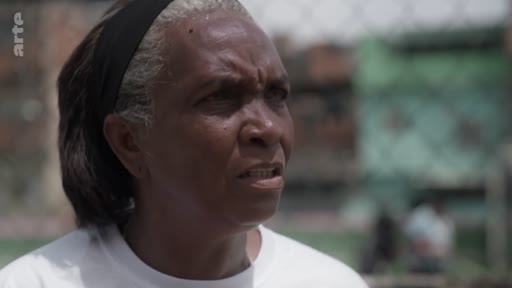
78%
00:08:32
Brésil : la revanche des mères
ARTE ReportageA close-up shot captures a woman with graying hair pulled back with a black headband, wearing a white t-shirt. Her face is contorted in a grimace, suggesting she is speaking with intense emotion. The background is blurred, showing a chain-link fence and indistinct figures, indicating an outdoor setting. The image is a documentary-style interview, with a tight framing focusing on her face and a natural, soft lighting that highlights her expression.
78%
01:06:54
Pesticides : l’hypocrisie européenne
78%
00:14:38
Amazonie, le barrage de trop (2017)
ARTE Reportage
78%
00:13:27
Colombie : les enfants disparus de la frontière
ARTE Reportage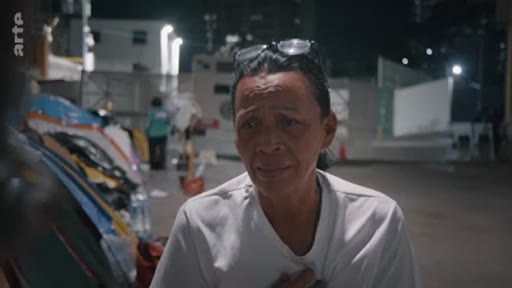
78%
00:05:32
ARTE Reportage
Venezuela, l'après Maduro / Liban, un nouvel exodeA woman with dark skin and a white t-shirt, her hair pulled back and sunglasses resting on her head, is shown in a close-up shot. She has a distressed expression, with her mouth slightly open and her eyes looking directly at the camera. She is standing in an outdoor, nighttime setting, likely a street or market area, with bright lights and a pile of colorful clothes visible to her left. The background is slightly blurred, showing other people and buildings, suggesting a busy urban environment. The image has a documentary feel, with natural lighting and a candid, unposed framing.
Sujet 3
Entraînement et quotidien des unités d'élite policières
searchcaserne police militaire Rio Choque
description
Sémantique · description
(10)73%
00:15:14
Brésil : la revanche des mères
ARTE ReportageTwo men in military camouflage uniforms stand on the left side of a dark gray pickup truck. The truck is a Ford Ranger with the words "POLÍCIA MILITAR" and the number "52-3959" on the back, and the word "CHOQUE" is written on the side. The truck has a red light bar on top and a license plate that reads "SJP9D68". The men are standing in front of a yellow and white building with a sign that says "ÁFA". The scene is set outdoors in a parking lot during the day. The image is a still from a documentary-style video, with a wide shot framing the truck and the men, and the lighting is natural daylight.
73%
00:15:18
Brésil : la revanche des mères
ARTE ReportageTwo police officers in camouflage uniforms and tactical gear stand in a paved area next to a black pickup truck. The truck is marked "POLÍCIA MILITAR" and "ÁREA" and has the number "52-3959" on its rear. The officers are standing near a white wall with "POLÍCIA CIVIL" written on it. The scene is set outdoors in the daytime, with a building and a parked car visible in the background. The image is a still from a documentary-style video, with a medium shot framing the officers and the truck. The lighting is natural, and the overall tone is serious.
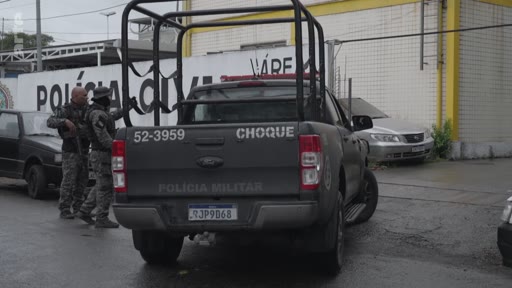
73%
00:15:16
Brésil : la revanche des mères
ARTE ReportageTwo soldiers in camouflage uniforms stand on a wet pavement, looking toward the camera. A dark gray pickup truck with "POLÍCIA MILITAR" and "CHOCQUE" written on its back is parked in the foreground. The scene is set outdoors in a paved area in front of a building with a yellow and white tiled wall, and a silver car is parked nearby. The lighting is flat and natural, suggesting an overcast day. The image is a still from a documentary-style video, with a wide, centered framing and a slightly grainy quality.
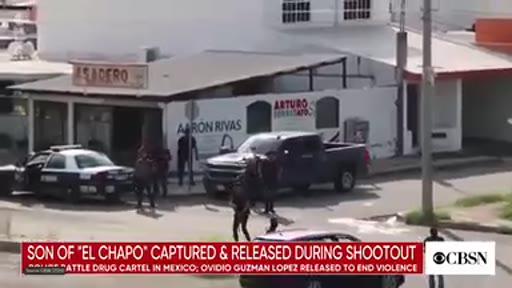
73%
00:18:16
Mexique : la guerre des cartels
A group of people, including several men in dark clothing and one man in a white shirt, are gathered on a street in front of a building with a sign that reads "ASADERO" and "ARTURO DE TORREZ." A police car is parked on the left, and a black pickup truck is parked in front of the building. The people appear to be standing and talking, with some looking at the camera. The scene is set outdoors during the day, with a clear sky and bright sunlight. The visual style is that of a news report, with a lower third graphic displaying the text "SON OF 'EL CHAPO' CAPTURED & RELEASED DURING SHOOTOUT IN MEXICO" and the CBS logo.
73%
00:12:47
Brésil : la revanche des mères
ARTE ReportageA group of police officers in camouflage uniforms and tactical gear are inside a military vehicle. The officers are wearing helmets and vests with "POLÍCIA MILITAR" written on the back. One officer is raising his arm, while others are holding weapons and looking forward. The scene is set outdoors in front of a large building with arched windows, suggesting a public square or government building. The lighting is natural, indicating it is daytime. The image has a documentary or news report style, with a clear focus on the officers and their actions.
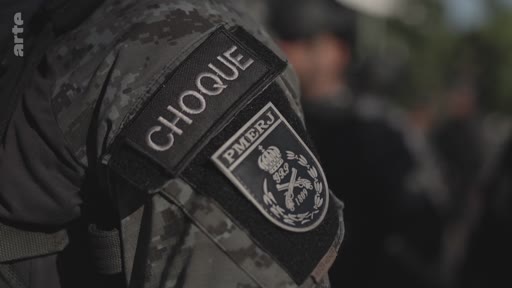
72%
00:16:41
Brésil : la revanche des mères
ARTE ReportageA close-up shot focuses on the back of a person's military uniform, showing a black patch with the name "CHOQUE" and a larger patch with the emblem "PUEBLA" and a crossed rifle and sword. The person is wearing a digital camouflage uniform, and the background is blurred, showing other figures in similar attire. The scene is set outdoors, likely in a military or police environment, with natural light. The visual style is documentary, with a tight framing and natural lighting.
72%
00:04:31
Mexique : la guerre des cartels
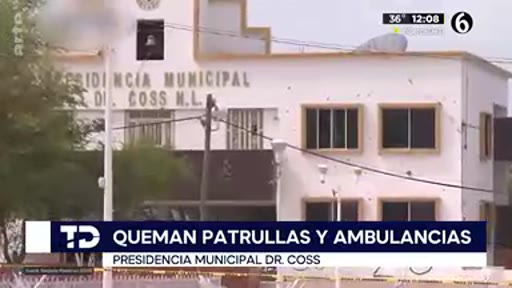
A news report shows a white building with the sign "PRESIDENCIA MUNICIPAL DR. COSS N.L." and a small figure in a dark uniform standing in the window. The building is in a city, with a yellow tape and a police car visible in the background. The scene is outdoors during the day, with a clear sky. The visual style is a news broadcast with a lower third graphic and a timestamp.
72%
00:12:35
Brésil : la revanche des mères
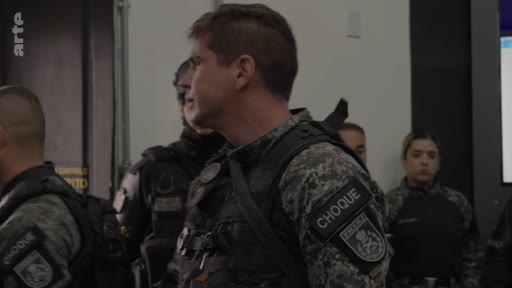
ARTE ReportageA group of uniformed personnel, including a man in a camouflage vest with a "CHOQUE" patch on his right arm, are standing in a dimly lit indoor space. The man in the foreground is looking to his left with a serious expression, while others in the background appear to be waiting or observing. The setting appears to be a secure area, possibly a military or police facility, with plain walls and a door visible in the background. The image is a still from a documentary-style video, with a tight framing focusing on the man in the foreground and a shallow depth of field blurring the background.
71%
00:15:11
Brésil : la revanche des mères
ARTE ReportageA police officer in a dark uniform stands beside a black pickup truck, which has a red light bar on the roof. The officer is looking toward the camera, and the truck is parked in front of a white wall with the words "POLICÍA CIVIL" written on it. The scene is set outdoors during the day, with a building and a yellow and white structure visible in the background. The image has a documentary-style feel, with a close-up framing focusing on the officer and the truck.
71%
00:12:04
Justice à Vegas
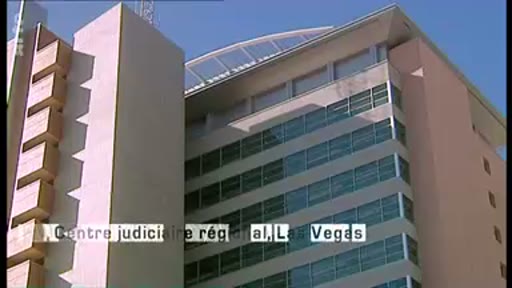
Misérable solitude (1/2)This is a documentary-style, outdoor shot of the Centre judiciaire régional, Las Vegas. The building is a modern, multi-story structure with a beige and pink facade and a glass curtain wall. The scene is bright and sunny, with a clear blue sky. The camera is positioned at a low angle, looking up at the building. The text overlay identifies the location.
image
Sémantique · image
(10)80%
00:15:15
Brésil : la revanche des mères
ARTE ReportageA police officer in camouflage uniform stands to the left of a black military pickup truck, which has "POLICIA MILITAR" and "CHOQUE" written on its back. The truck is parked in a paved lot in front of a building with a white tiled wall and a yellow stripe. A silver car is parked behind the truck. The scene is set during the day under natural light, with a documentary-style, wide-angle shot capturing the scene.
79%
00:15:18
Brésil : la revanche des mères
ARTE ReportageTwo police officers in camouflage uniforms and tactical gear stand in a paved area next to a black pickup truck. The truck is marked "POLÍCIA MILITAR" and "ÁREA" and has the number "52-3959" on its rear. The officers are standing near a white wall with "POLÍCIA CIVIL" written on it. The scene is set outdoors in the daytime, with a building and a parked car visible in the background. The image is a still from a documentary-style video, with a medium shot framing the officers and the truck. The lighting is natural, and the overall tone is serious.
77%
00:15:16
Brésil : la revanche des mères
ARTE ReportageTwo soldiers in camouflage uniforms stand on a wet pavement, looking toward the camera. A dark gray pickup truck with "POLÍCIA MILITAR" and "CHOCQUE" written on its back is parked in the foreground. The scene is set outdoors in a paved area in front of a building with a yellow and white tiled wall, and a silver car is parked nearby. The lighting is flat and natural, suggesting an overcast day. The image is a still from a documentary-style video, with a wide, centered framing and a slightly grainy quality.
77%
00:15:14
Brésil : la revanche des mères
ARTE ReportageTwo men in military camouflage uniforms stand on the left side of a dark gray pickup truck. The truck is a Ford Ranger with the words "POLÍCIA MILITAR" and the number "52-3959" on the back, and the word "CHOQUE" is written on the side. The truck has a red light bar on top and a license plate that reads "SJP9D68". The men are standing in front of a yellow and white building with a sign that says "ÁFA". The scene is set outdoors in a parking lot during the day. The image is a still from a documentary-style video, with a wide shot framing the truck and the men, and the lighting is natural daylight.
76%
00:15:13
Brésil : la revanche des mères
ARTE ReportageTwo men in military camouflage uniforms stand beside a black pickup truck marked "POLÍCIA MILITAR" (Military Police) and the number "52-3959". The man on the right, with a bald head and a beard, is holding a clipboard and looking at the man on the left, who is wearing a black beanie and has a serious expression. The truck is parked in an outdoor area with a yellow and white building in the background. The scene is shot in a documentary style with a close-up framing and natural lighting.
75%
00:12:14
Brésil : la revanche des mères
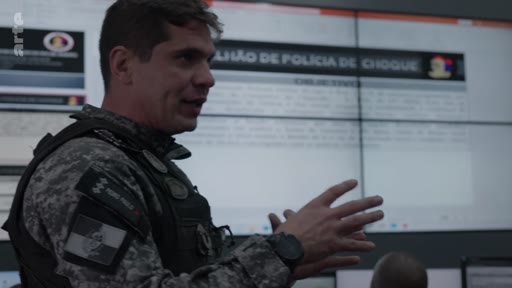
ARTE ReportageA man in a military-style camouflage uniform with a tactical vest is speaking and gesturing with his hands. He has short dark hair and is wearing a watch on his left wrist. He is standing in front of a large screen displaying a document with the text "POLÍCIA DE CHIQUE" and other text in Portuguese. The setting appears to be an indoor office or command center, with a dim, focused lighting. The camera is positioned at a medium close-up, capturing the man from the chest up.
75%
00:09:57
Nigeria : le fléau des enlèvements
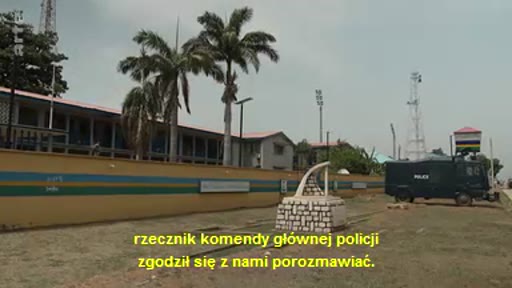
ARTE ReportageA group of people are gathered in front of a police station, with a police vehicle parked nearby. The people are dressed in casual clothing, and their expressions are serious. The scene is set outdoors on a grassy area with palm trees and a building in the background. The visual style is documentary, with a wide shot framing the scene and natural lighting.
75%
00:12:45
Brésil : la revanche des mères
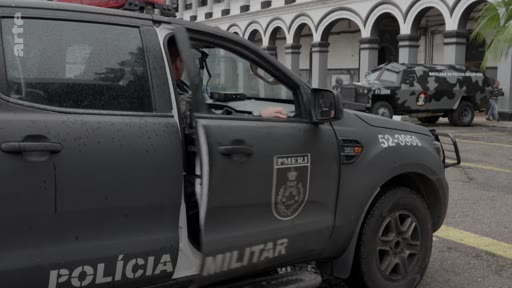
ARTE ReportageA man in a dark uniform is sitting in the driver's seat of a dark grey military police truck, which is parked in a paved area in front of a large, white building with arched columns. The truck has "POLICIA MILITAR" written on the side and a "FMI" emblem. Another military vehicle is parked in the background. The scene is outdoors during the day, with natural light and a clear sky. The image is a still from a documentary-style video, with a close-up shot of the truck and the man, and the lighting is natural and even.
74%
00:13:12
Brésil : la revanche des mères
ARTE ReportageA police officer in a black tactical uniform with a face mask stands in the foreground, holding a firearm. Behind him, a black military pickup truck is parked on a paved street, with a large armored vehicle and a green van visible in the background. The scene is set in an urban environment with buildings, power lines, and a cloudy sky. The visual style is documentary, with a wide shot framing the scene and natural, diffused lighting.
74%
00:10:31
Salvador : vivre sous Bukele
ARTE Reportagesearchpoliciers brésiliens équipement tactique gilet
description
Sémantique · description
(10)78%
00:06:37
Brésil : la revanche des mères
ARTE ReportageTwo police officers in full tactical gear are seen from behind, with one officer in a camouflage uniform and a helmet, and the other in a black uniform with "POLICIA MILITAR" written on the back, both standing in front of a large armored vehicle. The scene is set outdoors during the day, with the officers appearing focused and ready. The visual style is documentary, with a close-up framing and natural lighting.
78%
01:07:23
Trump contre la loi
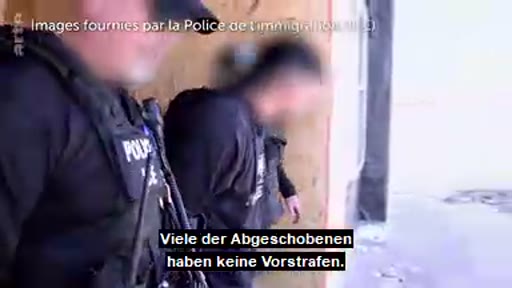
This is a low-angle, close-up shot of two police officers in black tactical uniforms with "POLICE" visible on their vests. Their faces are blurred. The officers are standing in a dimly lit, outdoor area with a wooden wall and a concrete ground. The lighting is harsh, with a bright light source to the right, creating strong shadows. The image has a documentary feel, with a text overlay in French at the top.
77%
00:24:22
ARTE Regards
En Espagne, des brigades anti-squatteursTwo police officers in black uniforms with "POLICIA NACIONAL" and the Spanish flag on their vests are standing with their backs to the camera. The officers are wearing tactical vests and have equipment on their belts. A small child in a pink shirt is partially visible between them. The scene is outdoors, with a red fence and a building in the background. The image is a still from a documentary or interview, with a clear, natural lighting and a medium shot framing the officers.
76%
00:12:58
Brésil : la revanche des mères
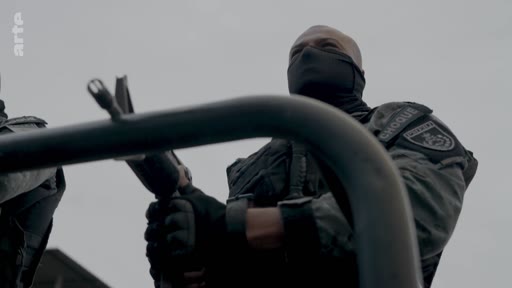
ARTE ReportageA close-up shot shows a police officer in full tactical gear, including a black balaclava and a dark uniform with a "POLICE" patch, holding a rifle. The officer is positioned behind a curved metal railing, with another officer partially visible on the left. The scene is set outdoors under a gray, overcast sky, suggesting a bleak or tense atmosphere. The visual style is that of a documentary or news report, with a low-angle shot and a muted color palette.
76%
00:15:18
Brésil : la revanche des mères
ARTE ReportageTwo police officers in camouflage uniforms and tactical gear stand in a paved area next to a black pickup truck. The truck is marked "POLÍCIA MILITAR" and "ÁREA" and has the number "52-3959" on its rear. The officers are standing near a white wall with "POLÍCIA CIVIL" written on it. The scene is set outdoors in the daytime, with a building and a parked car visible in the background. The image is a still from a documentary-style video, with a medium shot framing the officers and the truck. The lighting is natural, and the overall tone is serious.
76%
00:03:30
USA : Minneapolis en résistance
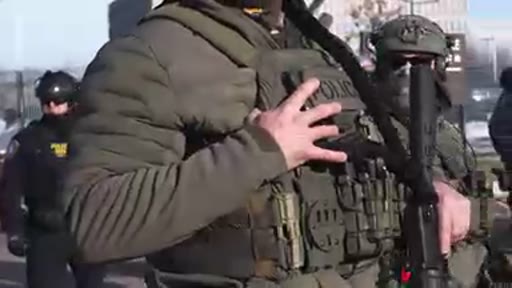
ARTE ReportageA close-up shot shows a police officer in a green tactical vest with "POLICE" written on it, standing in a line of other officers in similar gear. The officer in the foreground is wearing a puffy, olive-green jacket and has a hand on their chest, while another officer in a helmet and dark uniform stands behind them. The scene is outdoors in a public area with buildings in the background, suggesting a city environment, possibly during the day. The visual style is documentary, with a tight framing focusing on the officer's torso and face, and natural, even lighting.
76%
00:16:41
Brésil : la revanche des mères
ARTE ReportageA close-up shot focuses on the back of a person's military uniform, showing a black patch with the name "CHOQUE" and a larger patch with the emblem "PUEBLA" and a crossed rifle and sword. The person is wearing a digital camouflage uniform, and the background is blurred, showing other figures in similar attire. The scene is set outdoors, likely in a military or police environment, with natural light. The visual style is documentary, with a tight framing and natural lighting.
75%
00:14:26
Brésil : la revanche des mères
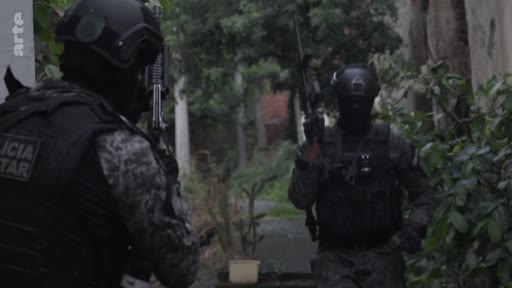
ARTE ReportageTwo armed individuals in full tactical gear, including helmets and vests, are standing in a narrow, overgrown alleyway. The person on the left, seen from the back, wears a vest with the word "POLICIA" visible on the back, while the person on the right, facing the viewer, holds a rifle. Both are dressed in dark camouflage uniforms and appear to be in a tense, alert state. The scene is set in a dimly lit, outdoor environment with green foliage and a concrete wall in the background, suggesting a secluded, possibly urban or rural location. The image has a documentary or news report style, with a tight framing focusing on the two figures and a natural, slightly grainy lighting.
74%
00:17:26
Brésil : la revanche des mères
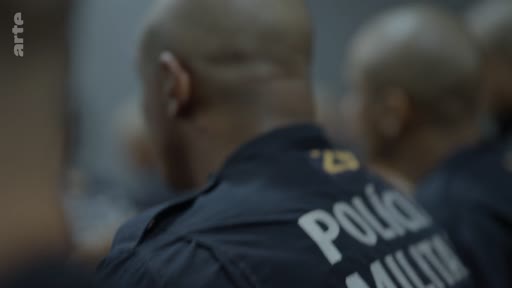
ARTE ReportageThis is a close-up, over-the-shoulder shot of two men in dark blue uniforms with "POLICIA MILITAR" written in white on the back. The man in the foreground is bald, and the man behind him is also bald. They are both wearing dark uniforms, and the man in the foreground is looking forward. The setting appears to be indoors, possibly a courtroom or a police station, with a blurred background. The lighting is soft and even, and the image has a documentary feel.
74%
00:12:29
Mexique : la guerre des cartels
A close-up shot shows two police officers in dark uniforms, one holding a large, black assault rifle. The officer in the foreground is wearing a black balaclava and has a patch on their left sleeve, while the second officer is partially visible behind them. Both appear to be in a tense, serious situation, with the foreground officer's hand gripping the rifle's handle. The setting is outdoors, possibly a street or a public area, with a blurred background that suggests a city environment. The image is a still from a documentary or an archive footage, with a shallow depth of field that focuses on the officers and their equipment.
image
Sémantique · image
(10)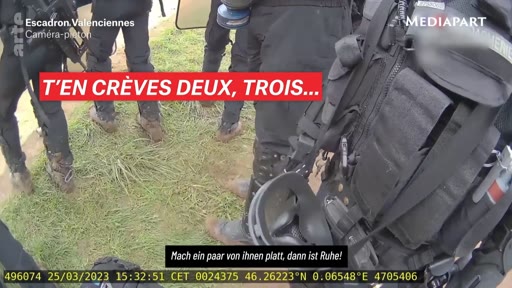
79%
00:04:29
Le dessous des images
Sous l'uniforme, la caméra est-elle un garde-fou ?
79%
00:10:47
ARTE Regards
Marchés de Noël : comment les sécuriser ?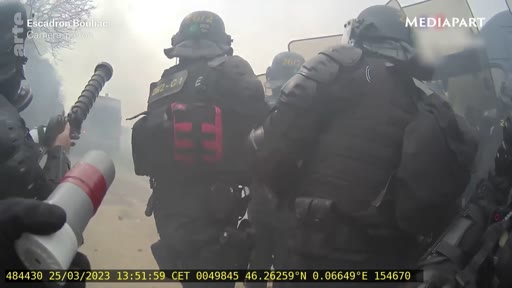
78%
00:05:51
Le dessous des images
Sous l'uniforme, la caméra est-elle un garde-fou ?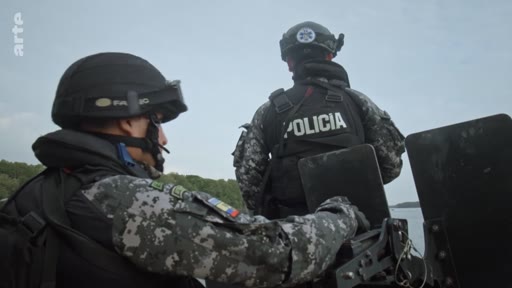
78%
00:04:37
Equateur : en proie au narcotrafic
ARTE Reportage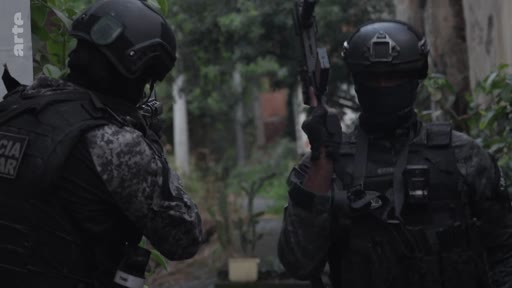
78%
00:14:27
Brésil : la revanche des mères
ARTE ReportageTwo soldiers in full camouflage gear and helmets are standing in a wooded area. The soldier on the left is wearing a black tactical vest with a patch that reads "CIA" and has a tactical flashlight. The soldier on the right is holding a rifle. The scene is outdoors in a natural setting with trees and foliage, suggesting a forest or jungle environment. The lighting is natural, with soft, diffused light, and the image has a documentary or archive feel, with a close-up framing focusing on the soldiers.
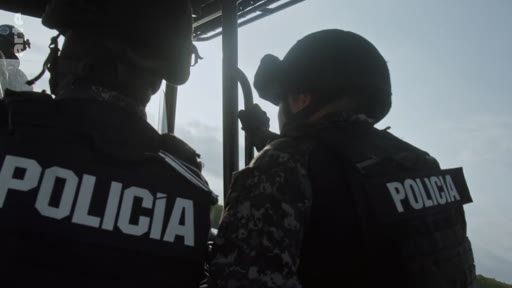
78%
00:04:40
Equateur : en proie au narcotrafic
ARTE Reportage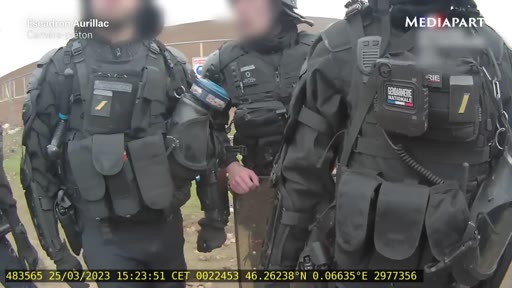
78%
00:02:24
Le dessous des images
Sous l'uniforme, la caméra est-elle un garde-fou ?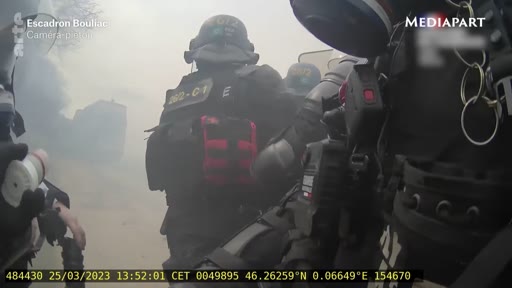
78%
00:05:53
Le dessous des images
Sous l'uniforme, la caméra est-elle un garde-fou ?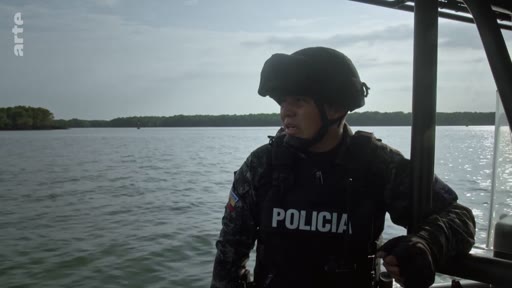
78%
00:04:33
Equateur : en proie au narcotrafic
ARTE Reportage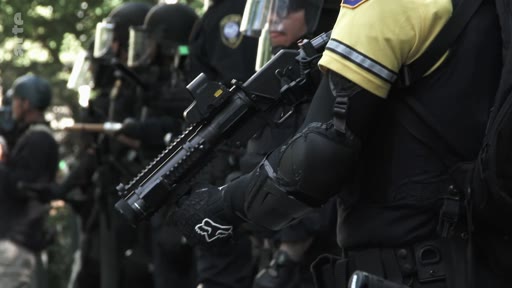
78%
00:26:21
La corruption : un mal nécessaire ?
42 - La réponse à presque toutsearchentraînement opérationnel police militaire Brésil
description
Sémantique · description
(10)76%
00:12:47
Brésil : la revanche des mères
ARTE ReportageA group of police officers in camouflage uniforms and tactical gear are inside a military vehicle. The officers are wearing helmets and vests with "POLÍCIA MILITAR" written on the back. One officer is raising his arm, while others are holding weapons and looking forward. The scene is set outdoors in front of a large building with arched windows, suggesting a public square or government building. The lighting is natural, indicating it is daytime. The image has a documentary or news report style, with a clear focus on the officers and their actions.
74%
00:15:18
Brésil : la revanche des mères
ARTE ReportageTwo police officers in camouflage uniforms and tactical gear stand in a paved area next to a black pickup truck. The truck is marked "POLÍCIA MILITAR" and "ÁREA" and has the number "52-3959" on its rear. The officers are standing near a white wall with "POLÍCIA CIVIL" written on it. The scene is set outdoors in the daytime, with a building and a parked car visible in the background. The image is a still from a documentary-style video, with a medium shot framing the officers and the truck. The lighting is natural, and the overall tone is serious.
73%
00:52:42
Justice à Vegas
Misérable solitude (1/2)A man in a tan police uniform is sitting in a room, looking at the camera with a serious expression. He is wearing a white undershirt and has a microphone on his shoulder. The background is a plain wall with a floral arrangement on the left. The screen has text in French, including "Prochainement" (Next) at the top, and credits for the video's production. The setting appears to be an indoor interview or press conference. The visual style is documentary, with a straightforward framing and natural lighting.
73%
00:22:22
ARTE Regards
Un petit Las Vegas à la frontière tchèqueA man in a military uniform is cleaning a rifle with a cloth. He is standing in a classroom or workshop, with a tripod and a table with papers in the background. The scene is indoors, with natural light coming in from the window. The visual style is documentary, with a close-up shot focusing on the man's hands and the rifle.
73%
00:15:13
Brésil : la revanche des mères
ARTE ReportageTwo men in military camouflage uniforms stand beside a black pickup truck marked "POLÍCIA MILITAR" (Military Police) and the number "52-3959". The man on the right, with a bald head and a beard, is holding a clipboard and looking at the man on the left, who is wearing a black beanie and has a serious expression. The truck is parked in an outdoor area with a yellow and white building in the background. The scene is shot in a documentary style with a close-up framing and natural lighting.
73%
00:06:37
Brésil : la revanche des mères
ARTE ReportageTwo police officers in full tactical gear are seen from behind, with one officer in a camouflage uniform and a helmet, and the other in a black uniform with "POLICIA MILITAR" written on the back, both standing in front of a large armored vehicle. The scene is set outdoors during the day, with the officers appearing focused and ready. The visual style is documentary, with a close-up framing and natural lighting.
73%
00:16:41
Brésil : la revanche des mères
ARTE ReportageA close-up shot focuses on the back of a person's military uniform, showing a black patch with the name "CHOQUE" and a larger patch with the emblem "PUEBLA" and a crossed rifle and sword. The person is wearing a digital camouflage uniform, and the background is blurred, showing other figures in similar attire. The scene is set outdoors, likely in a military or police environment, with natural light. The visual style is documentary, with a tight framing and natural lighting.
72%
00:30:09
28 minutes samedi
Racisme, Israël/Liban, "Guernica" (11/04/2026)A news anchor in a blue shirt is speaking on a news broadcast, with a split screen showing soldiers in camouflage uniforms and helmets walking in formation outside a fenced area with barbed wire. The soldiers are carrying rifles and appear to be in a military setting, possibly a base or training ground. The scene is outdoors during the day, with overcast lighting. The visual style is that of a news report, with a documentary feel, and the frame includes a French caption at the bottom.
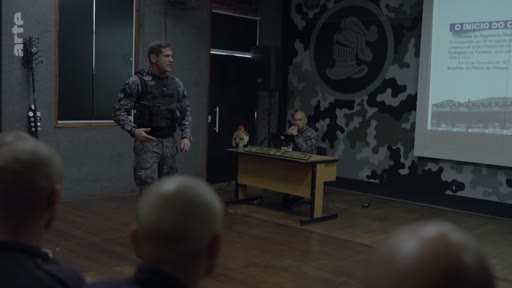
72%
00:17:03
Brésil : la revanche des mères
ARTE ReportageA man in a camouflage uniform stands on a wooden stage, facing an audience of several people whose backs are to the camera. He is standing with his hands on his hips, looking forward. A second man in a similar uniform sits at a desk, facing the audience. The setting is an indoor room with a large screen displaying a presentation in Portuguese. The room has a dark, military-themed wall with a large emblem and a guitar leaning against the wall. The lighting is focused on the speaker and the screen, with the audience in shadow. The visual style is documentary, with a straightforward framing and natural lighting.
72%
00:13:10
Nigeria : le fléau des enlèvements
ARTE ReportageA man in a black police uniform with a name tag reading "MARSIR KASSANI" stands in the foreground, looking toward the camera. He is surrounded by several other men in similar uniforms, and a blurred figure of a man in a grey shirt stands to his right. The scene appears to be outdoors, with a building and green trees in the background. The lighting is natural daylight. The video is a documentary-style interview, with a close-up framing on the police officer and a subtitle in Polish, "W każdym istnieją," which translates to "In every case there are."
image
Sémantique · image
(10)78%
00:15:15
Brésil : la revanche des mères
ARTE ReportageA police officer in camouflage uniform stands to the left of a black military pickup truck, which has "POLICIA MILITAR" and "CHOQUE" written on its back. The truck is parked in a paved lot in front of a building with a white tiled wall and a yellow stripe. A silver car is parked behind the truck. The scene is set during the day under natural light, with a documentary-style, wide-angle shot capturing the scene.
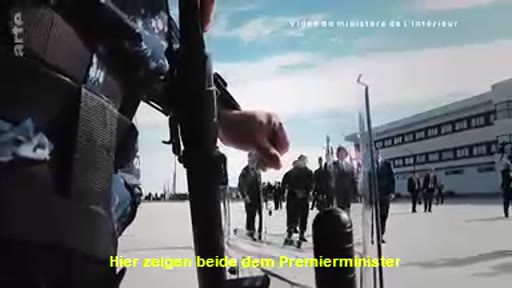
78%
00:28:01
Géorgie : l’État contre le peuple
A low-angle shot from a police officer's perspective shows a group of men in formal black suits standing in a paved outdoor area in front of a large, modern building. The officer, wearing a tactical vest and holding a rifle, is in the foreground, with his hand on the rifle's stock. The men in the background appear to be waiting or observing. The scene is bright and sunny, with a clear blue sky. The video is a documentary-style shot with a natural, unfiltered look, and the framing is tight on the officer's body and the rifle, with the men in the background slightly out of focus.
78%
00:17:03
Brésil : la revanche des mères
ARTE ReportageA man in a camouflage uniform stands on a wooden stage, facing an audience of several people whose backs are to the camera. He is standing with his hands on his hips, looking forward. A second man in a similar uniform sits at a desk, facing the audience. The setting is an indoor room with a large screen displaying a presentation in Portuguese. The room has a dark, military-themed wall with a large emblem and a guitar leaning against the wall. The lighting is focused on the speaker and the screen, with the audience in shadow. The visual style is documentary, with a straightforward framing and natural lighting.
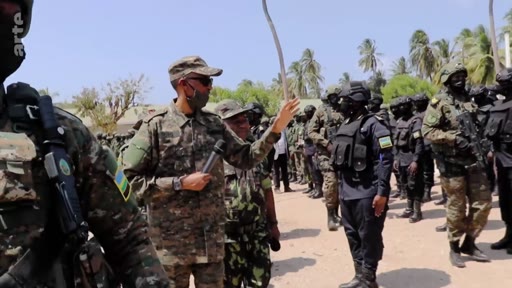
78%
00:17:57
Rwanda : la diplomatie militaire
ARTE Reportage77%
00:15:18
Brésil : la revanche des mères
ARTE ReportageTwo police officers in camouflage uniforms and tactical gear stand in a paved area next to a black pickup truck. The truck is marked "POLÍCIA MILITAR" and "ÁREA" and has the number "52-3959" on its rear. The officers are standing near a white wall with "POLÍCIA CIVIL" written on it. The scene is set outdoors in the daytime, with a building and a parked car visible in the background. The image is a still from a documentary-style video, with a medium shot framing the officers and the truck. The lighting is natural, and the overall tone is serious.
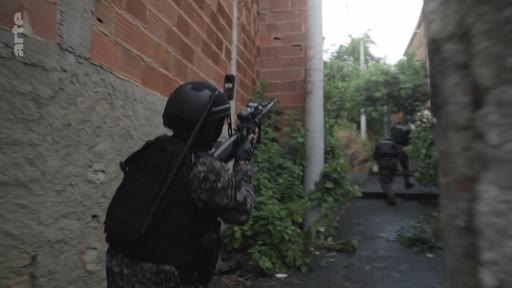
77%
00:14:09
Brésil : la revanche des mères
ARTE ReportageA person in a black tactical vest and helmet, with a camouflage-patterned shirt, is holding a rifle and aiming it forward. Another person in similar gear is visible in the background, also holding a rifle and moving through a narrow alleyway between brick buildings. The scene is set outdoors in a narrow, overgrown alleyway with brick walls and greenery, suggesting a residential or urban environment. The image is a still from a documentary-style video, with a naturalistic lighting and a tight, angled framing that focuses on the person in the foreground.
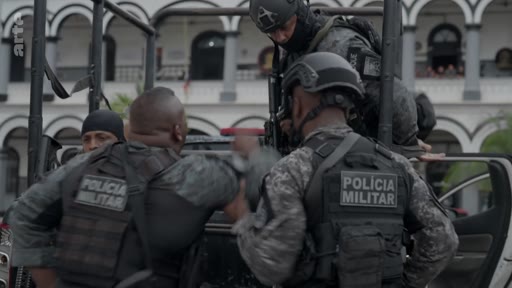
77%
00:12:46
Brésil : la revanche des mères
ARTE ReportageA group of armed police officers in camouflage uniforms and tactical gear are gathered on the back of a military vehicle. The officers, including one with a helmet and a black balaclava, are in a tense, focused posture, with one officer looking down at another. The setting is an outdoor urban environment, with a large, ornate building featuring arched windows and columns in the background. The scene is shot in a documentary style with a medium shot framing the group, and the lighting is natural, suggesting it is daytime.
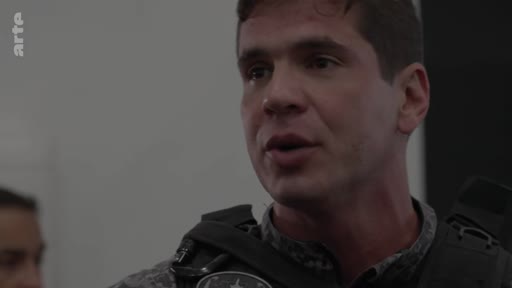
77%
00:12:17
Brésil : la revanche des mères
ARTE ReportageA close-up shot of a man in a military uniform, likely a soldier, with a serious expression, speaking. He is wearing a camouflage uniform with a visible insignia on his shoulder. The setting appears to be indoors, possibly a room with a plain background, and the lighting is soft and even. The image is a still from a documentary or interview, with a slight blur on the background and a watermark for "Arte" in the top left corner.
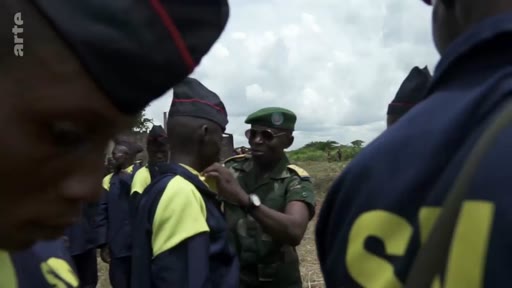
77%
00:20:22
RDC : les gangs de Kinshasa (2022)
ARTE Reportage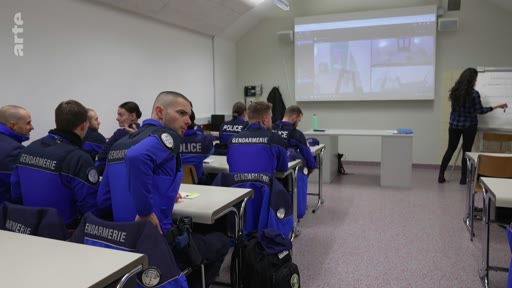
77%
00:10:51
ARTE Regards
Suisse : la police à l'école des psysSujet 4
Reconstruction et mémoire chrétienne à Mossoul
searchéglises détruites Mossoul reconstruction
description
Sémantique · description
(10)
78%
00:33:04
Dans Gaza
This is a documentary-style, wide-angle shot from a moving vehicle, showing a devastated urban landscape. The scene is outdoors, likely in the middle of the day, under a grey, overcast sky. The main focus is on a row of severely damaged and collapsed buildings, with the remnants of a mosque visible in the background. The people in the frame are not clearly visible, but the presence of a few individuals can be inferred from the context of the scene. The visual style is realistic, with natural lighting and a slightly blurred foreground, suggesting the camera is moving through the area.

78%
00:32:58
Dans Gaza
This is a still from a documentary, likely an archive footage, showing a wide shot of a war-torn city. The scene is set in an urban area with severely damaged buildings, including a collapsed structure in the center, and a mosque with a white dome visible in the background. The sky is overcast and gray, suggesting an overcast day. The foreground shows a road and some dry, overgrown vegetation. The people are not visible in the frame. The visual style is documentary, with a wide, horizontal framing, natural lighting, and a realistic, unembellished aesthetic.
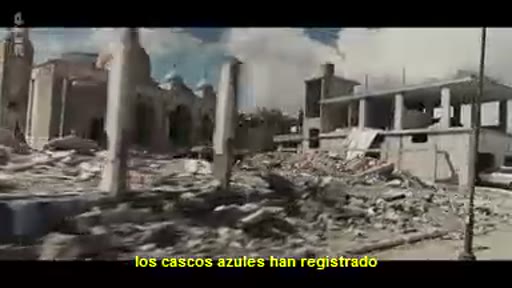
78%
00:52:09
Liban : anatomie d'une guerre
This is a documentary-style, wide-angle shot of a war-torn urban landscape. The scene is set in a destroyed city, with rubble and debris covering the ground and a partially destroyed mosque with blue domes in the background. The sky is partly cloudy, and the lighting is natural daylight. The camera is moving quickly, creating a sense of chaos and urgency. There are no people visible in the frame, so the focus is on the destruction and the environment.
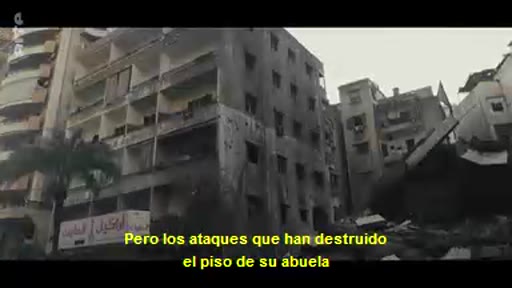
77%
00:28:52
Liban : anatomie d'une guerre
This is a documentary-style frame depicting a war-torn urban environment. The scene is set in a city with severely damaged, multi-story buildings, many of which are crumbling and partially collapsed. The buildings are in a state of disrepair, with broken windows and exposed interiors. A sign in Arabic is visible on the lower left, indicating the location is in a city in the Middle East. The lighting is flat and overcast, suggesting it is daytime, and the overall mood is somber and bleak.
77%
00:56:47
Israël, les ministres du chaos
This is a documentary-style, wide-angle shot of a war-torn street in a city, likely in the Middle East. The scene is set in the aftermath of conflict, with buildings heavily damaged and rubble covering the ground. A few people are visible in the background, one of whom is wearing a red shirt and appears to be standing near a damaged building. The lighting is flat and natural, suggesting it is daytime. The visual style is realistic and unembellished, capturing the grim reality of the situation.
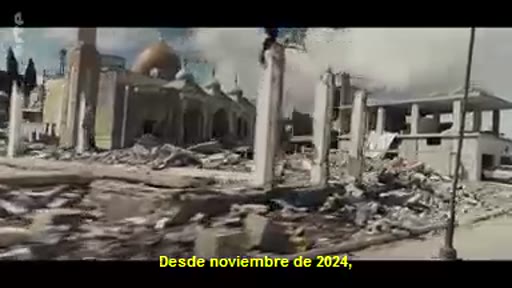
77%
00:52:08
Liban : anatomie d'une guerre
This is a documentary-style, wide-angle shot of a war-torn urban area, likely in a Middle Eastern city. In the foreground, a large pile of rubble and debris dominates the frame, with the remnants of a mosque and other buildings in the background. The scene is set during the day under a cloudy sky. The camera is moving, as indicated by the motion blur in the foreground, and the people are not visible in the frame.

77%
00:33:00
Dans Gaza
This is a documentary-style, wide-angle shot of a war-torn urban landscape. In the foreground, a road with a red and white curb separates the viewer from a devastated city. The background features a large, heavily damaged multi-story building, with a prominent, collapsed section. To the right, a white mosque with a dome and minaret stands out against the grey, overcast sky. The scene is set in a ruined city, likely in a conflict zone, with the weather appearing overcast and bleak. The visual style is realistic and documentary, with a wide framing and natural lighting.
77%
00:12:08
Liban : anatomie d'une guerre
This is a still from a documentary, showing a wide shot of a war-torn urban environment. The scene is dominated by the ruins of a building, with a collapsed structure in the foreground and a damaged, broken building in the background. The lighting is harsh and bright, suggesting it is daytime. The people are not visible in the frame. The visual style is documentary, with a high-angle shot and a gritty, realistic aesthetic.
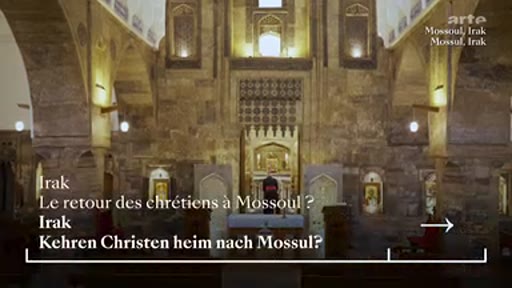
76%
00:00:05
Irak : le retour des chrétiens à Mossoul ?
ARTE ReportageThis is a still from a documentary-style video, likely an interview or archive footage, showing the interior of a mosque in Mossoul, Iraq. A single person, a man in a dark, simple shirt and trousers, is seated in the center of the frame, facing the camera. The setting is a large, ornate mosque with stone walls, intricate tilework, and a high, arched ceiling. The lighting is warm and focused, highlighting the central area. The text overlay in French and Arabic indicates the topic is about Christians returning to Mossoul.

76%
00:33:02
Dans Gaza
This is a still image from a documentary-style video, likely an archive or news footage, capturing a scene of destruction in a city. In the foreground, a road and a small, weathered structure are visible. Behind them, a large, multi-story building is heavily damaged, with its roof and upper floors collapsed. The scene is set in a city under a grey, overcast sky, with a mosque and a minaret visible in the distance. The people are not clearly visible in the frame, but the overall atmosphere suggests a scene of aftermath and loss. The visual style is documentary, with a wide, static shot that captures the scale of the destruction.
image
Sémantique · image
(10)79%
00:52:09
Liban : anatomie d'une guerre
This is a documentary-style, wide-angle shot of a war-torn urban landscape. The scene is set in a destroyed city, with rubble and debris covering the ground and a partially destroyed mosque with blue domes in the background. The sky is partly cloudy, and the lighting is natural daylight. The camera is moving quickly, creating a sense of chaos and urgency. There are no people visible in the frame, so the focus is on the destruction and the environment.
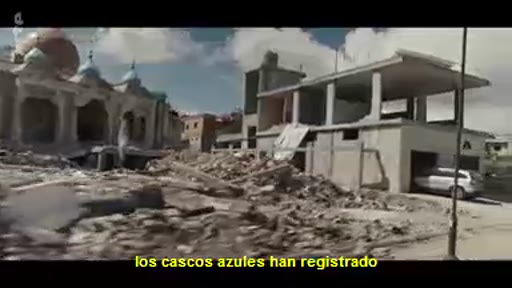
79%
00:52:10
Liban : anatomie d'une guerre
This is a documentary-style, wide-angle shot of a devastated urban area, likely a city in the Middle East, with a large, partially destroyed mosque on the left and a modern, unfinished building on the right. The ground is littered with rubble and debris, and a white car is parked in the background. The scene is set during the day under a partly cloudy sky. The visual style is realistic and gritty, with a handheld, documentary feel, and the framing is a wide shot that captures the scale of the destruction.
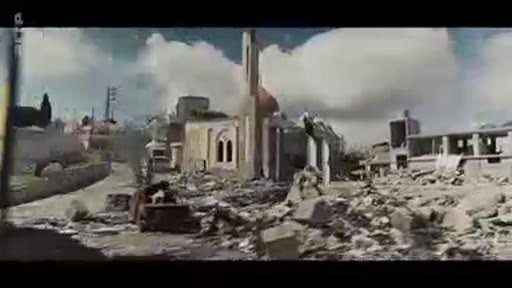
78%
00:52:05
Liban : anatomie d'une guerre
This is a documentary-style frame from an interview or archive footage, showing a wide shot of a ruined town. The scene is outdoors, with a prominent mosque and other buildings in the background, surrounded by rubble and debris. A few people are visible in the foreground, including a man in a dark jacket and a woman in a light-colored top, both appearing to be in distress. The lighting is natural daylight, and the camera is positioned at a low angle, looking across the rubble.
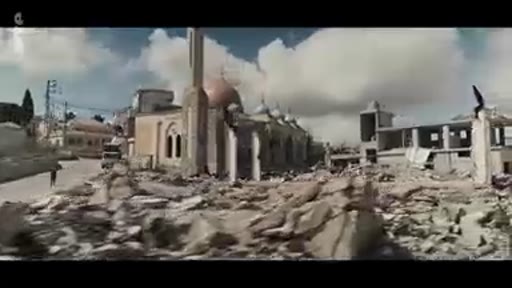
78%
00:52:06
Liban : anatomie d'une guerre
A man in a dark, long-sleeved shirt and dark pants walks across a rubble-strewn street in a destroyed urban area. In the background, a mosque with a prominent minaret and domes stands amidst the wreckage, with other buildings in ruins. The scene is set outdoors during the day under a partly cloudy sky. The visual style is documentary, with a wide, low-angle shot that captures the scale of destruction and the solitary figure navigating the debris.
78%
00:52:08
Liban : anatomie d'une guerre
This is a documentary-style, wide-angle shot of a war-torn urban area, likely in a Middle Eastern city. In the foreground, a large pile of rubble and debris dominates the frame, with the remnants of a mosque and other buildings in the background. The scene is set during the day under a cloudy sky. The camera is moving, as indicated by the motion blur in the foreground, and the people are not visible in the frame.
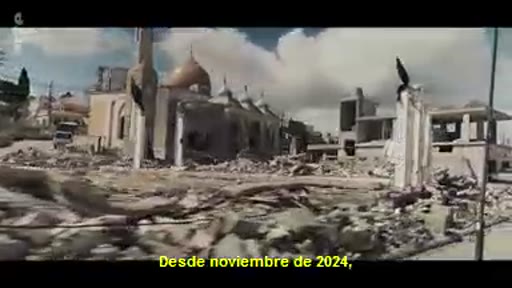
78%
00:52:07
Liban : anatomie d'une guerre
This is a documentary-style frame from an interview or archive footage, showing a war-torn town. The scene is outdoors, with a large, damaged mosque and surrounding buildings in ruins. The ground is covered in rubble, and several people are visible in the background, some standing near the wreckage. The people are dressed in everyday clothing, and their expressions suggest distress and concern. The lighting is natural daylight, and the camera is positioned at a low angle, looking across the debris.
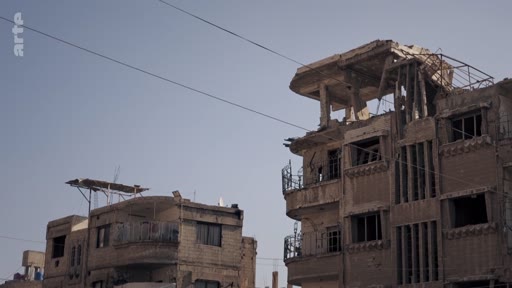
78%
00:06:46
Syrie : Damas, le goût de la liberté
(2025)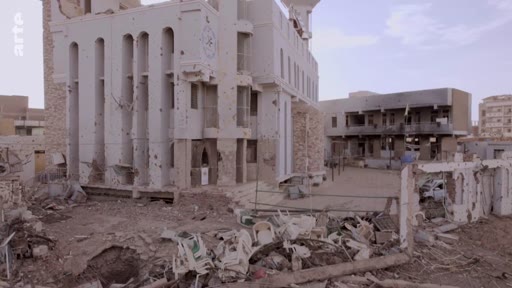
78%
00:06:58
Soudan : la guerre oubliée
ARTE Reportage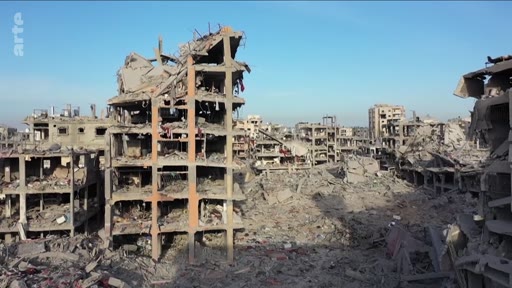
78%
00:10:10
Solution à deux États : quelle crédibilité ?

78%
00:32:59
Dans Gaza
This is a documentary-style, wide-angle shot from a moving vehicle, showing a devastated urban landscape. In the foreground, a paved road and a small white building are visible, while the background is dominated by heavily damaged and collapsed apartment buildings. Smoke rises from the ruins, and a minaret is visible in the distance, suggesting a Middle Eastern location. The scene is set during the day under an overcast sky, with the lighting appearing natural and diffused. The frame is framed by the vehicle's window, and the overall visual style is realistic and observational, capturing the aftermath of a disaster.
searchManuscrit chrétien ancien préservation restauration
description
Sémantique · description
(10)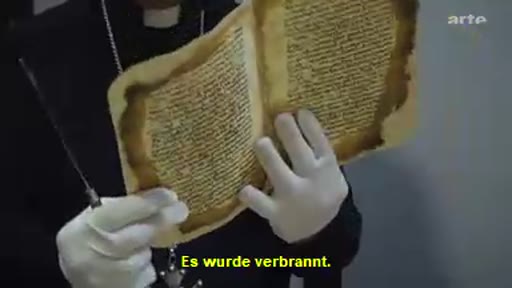
78%
00:19:13
Irak : le retour des chrétiens à Mossoul ?
ARTE ReportageA person wearing a black clerical robe, a white clerical collar, and white gloves is holding an open, aged, yellowed manuscript with handwritten text. The person is holding the book with both hands, and a thin, dark object, possibly a pen or a small staff, is held in their left hand. The setting appears to be indoors, with a plain, neutral-colored wall in the background. The lighting is soft and even, highlighting the texture of the manuscript and the person's hands. The image has a documentary or archival feel, with a close-up framing that focuses on the book and the person's hands.

78%
00:19:46
Irak : le retour des chrétiens à Mossoul ?
ARTE ReportageThis is a close-up, static shot of an old, yellowed book with handwritten text in a script that appears to be ancient or non-Latin. The book is open, and the page is angled slightly, showing the text and the worn, brittle edges of the paper. The image is a still frame from a documentary or archival footage, with a shallow depth of field that blurs the background and focuses on the text. The lighting is soft and even, highlighting the texture of the paper and the script. There are no people visible in the frame.
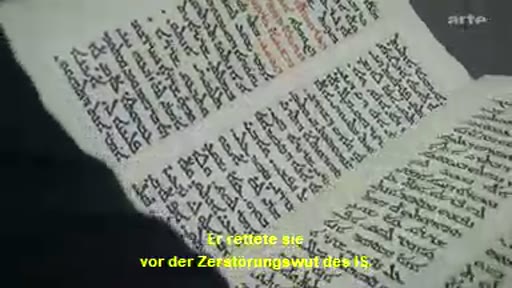
78%
00:18:45
Irak : le retour des chrétiens à Mossoul ?
ARTE ReportageThis is a close-up, static shot of a person's hands holding an open, aged book with handwritten text in a script that appears to be a non-Latin alphabet. The book is displayed in a museum or archive setting, with the hands and the book occupying the central focus. The lighting is soft and even, highlighting the texture of the paper and the ink. The visual style is documentary, with a tight framing that emphasizes the details of the text and the hands.

78%
00:19:12
Irak : le retour des chrétiens à Mossoul ?
ARTE ReportageA person wearing a dark robe, white gloves, and a silver cross necklace holds an ancient, yellowed manuscript with black script. The person's hands are carefully holding the open book, which appears to be a religious text, possibly a Bible or a similar holy book. The setting is a plain, neutral-colored room with soft, even lighting, suggesting an indoor, controlled environment. The image is a close-up, documentary-style shot with a tight framing on the hands and the manuscript.

78%
00:18:49
Irak : le retour des chrétiens à Mossoul ?
ARTE ReportageA close-up shot shows a person's hands holding and turning a page of an ancient, handwritten manuscript. The text is written in a black, cursive script on a yellowed, aged parchment. The person is wearing a dark, long-sleeved garment. The scene is set indoors, with a soft, even light illuminating the manuscript. The visual style is documentary, with a tight framing focusing on the text and hands, and the image has a slightly grainy quality.

77%
00:18:41
Irak : le retour des chrétiens à Mossoul ?
ARTE ReportageA close-up shot shows a person's hand holding an open, ancient-looking book with black script on a light-colored page. The book is open to a page with text written in a script that appears to be a form of ancient writing, possibly a religious or historical text. The person's hand is visible on the left, wearing a dark, possibly black, sleeve. The lighting is soft and focused on the book, highlighting the texture of the paper and the script. The background is dark and out of focus, suggesting an indoor setting. The image has a documentary feel, with a focus on the details of the text and the act of reading.
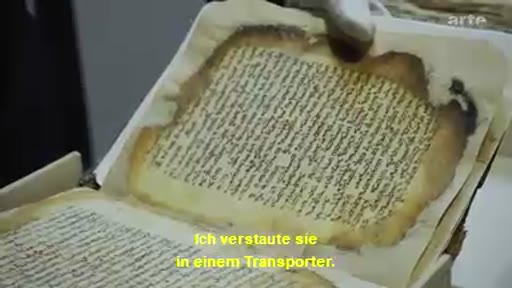
77%
00:19:52
Irak : le retour des chrétiens à Mossoul ?
ARTE ReportageA close-up shot shows a person's gloved hand holding an ancient, heavily damaged manuscript. The paper is yellowed and burnt at the edges, with rows of cursive script in a dark ink. The person is wearing a dark-colored garment, and their hand is positioned to hold the open book. The setting appears to be indoors, with a plain, neutral background and soft, even lighting. The visual style is documentary, with a tight framing focused on the book and the hand, emphasizing the historical and fragile nature of the artifact.
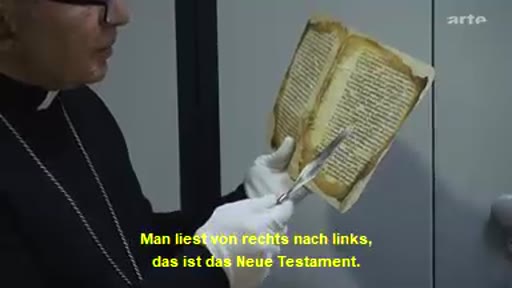
77%
00:19:18
Irak : le retour des chrétiens à Mossoul ?
ARTE ReportageA man, likely a religious figure given his clerical collar and white gloves, is carefully examining a very old, yellowed manuscript with a small knife. He is holding the book open with one hand and using the knife to gently scrape or inspect the text. The scene is set indoors, with a plain, modern-looking wall in the background, suggesting a museum or archive setting. The lighting is even and bright, highlighting the details of the manuscript and the man's focused expression.
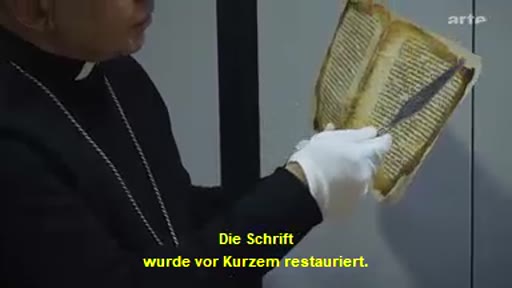
77%
00:19:16
Irak : le retour des chrétiens à Mossoul ?
ARTE ReportageA man in a black clerical robe with a white clerical collar and a white-gloved hand holds an ancient, yellowed manuscript. He is examining the book with a feather quill, which is placed on the page. The scene is indoors, with a plain, light-colored wall and a dark vertical line in the background. The image is a close-up, side-angle shot with soft, even lighting, suggesting a documentary or archival style.
77%
00:19:54
Irak : le retour des chrétiens à Mossoul ?
ARTE ReportageA close-up shot shows a person's hand holding a thin, metallic tool, carefully tracing the lines of a very old, yellowed parchment scroll. The scroll is open, revealing dense, black script in a scriptural language, and the paper is visibly worn and damaged with dark, burnt areas. The person is wearing a dark, possibly black, garment. The setting appears to be an indoor museum or archive, with a white surface and a wooden frame holding the scroll. The lighting is soft and focused, highlighting the texture of the parchment and the script. The visual style is documentary, with a tight framing that emphasizes the ancient text and the careful examination.
image
Sémantique · image
(10)81%
00:19:12
Irak : le retour des chrétiens à Mossoul ?
ARTE ReportageA person wearing a dark robe, white gloves, and a silver cross necklace holds an ancient, yellowed manuscript with black script. The person's hands are carefully holding the open book, which appears to be a religious text, possibly a Bible or a similar holy book. The setting is a plain, neutral-colored room with soft, even lighting, suggesting an indoor, controlled environment. The image is a close-up, documentary-style shot with a tight framing on the hands and the manuscript.
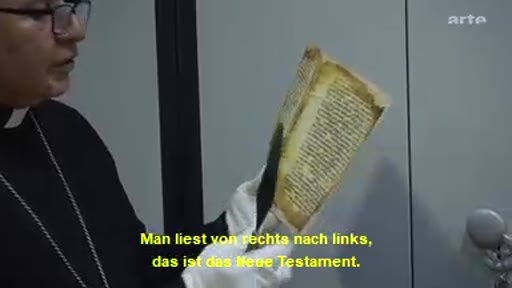
80%
00:19:21
Irak : le retour des chrétiens à Mossoul ?
ARTE ReportageA man in a black clerical shirt and white gloves holds an ancient, yellowed book with a black pen. He is wearing glasses and a clerical collar, and his expression is one of concentration. The scene is set indoors against a plain gray wall, with a door handle visible on the right. The lighting is even and bright, typical of a documentary or archival footage.
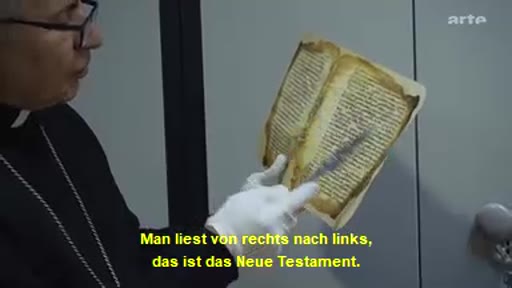
80%
00:19:20
Irak : le retour des chrétiens à Mossoul ?
ARTE ReportageA man, likely a priest given his black clerical collar and glasses, is shown in profile holding a very old, yellowed, and damaged book. He wears white gloves and is carefully examining the book with a small, sharp tool, possibly a scalpel, which he is using to gently scrape or inspect the pages. The setting appears to be an indoor, sterile environment, possibly a museum or archive, with a plain grey wall and a door visible in the background. The lighting is even and clinical, suggesting a documentary or archival style of filming.
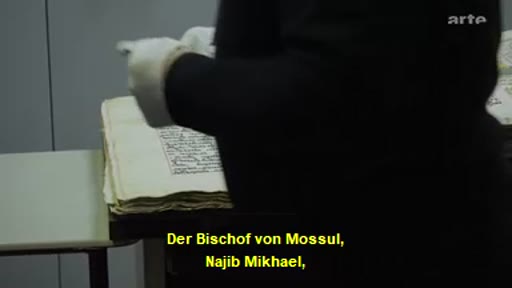
79%
00:18:35
Irak : le retour des chrétiens à Mossoul ?
ARTE ReportageA person wearing a black jacket and white gloves is carefully handling an old, yellowed book with handwritten text. The person is standing in a dimly lit, indoor space, likely a museum or archive, with a plain white wall in the background. The scene is a close-up, focusing on the person's hands and the book, with a shallow depth of field that blurs the background. The lighting is soft and focused, highlighting the book and the person's hands.

79%
00:03:18
Karambolage
Les flics / La chanson des Nibelungen79%
00:19:18
Irak : le retour des chrétiens à Mossoul ?
ARTE ReportageA man, likely a religious figure given his clerical collar and white gloves, is carefully examining a very old, yellowed manuscript with a small knife. He is holding the book open with one hand and using the knife to gently scrape or inspect the text. The scene is set indoors, with a plain, modern-looking wall in the background, suggesting a museum or archive setting. The lighting is even and bright, highlighting the details of the manuscript and the man's focused expression.

79%
00:19:24
Irak : le retour des chrétiens à Mossoul ?
ARTE ReportageA man, likely a priest given his black clerical collar and white gloves, is holding an ancient, heavily charred manuscript. He is wearing glasses and appears to be examining the text with a focused expression. The setting is indoors, with a plain, neutral-colored wall in the background, suggesting a formal or archival environment. The image is a close-up, documentary-style shot with soft, even lighting.
79%
00:19:13
Irak : le retour des chrétiens à Mossoul ?
ARTE ReportageA person wearing a black clerical robe, a white clerical collar, and white gloves is holding an open, aged, yellowed manuscript with handwritten text. The person is holding the book with both hands, and a thin, dark object, possibly a pen or a small staff, is held in their left hand. The setting appears to be indoors, with a plain, neutral-colored wall in the background. The lighting is soft and even, highlighting the texture of the manuscript and the person's hands. The image has a documentary or archival feel, with a close-up framing that focuses on the book and the person's hands.
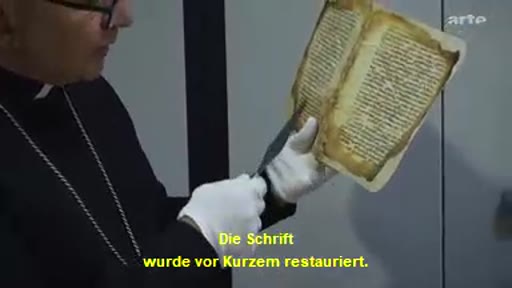
79%
00:19:17
Irak : le retour des chrétiens à Mossoul ?
ARTE ReportageA man in a black clerical robe, white gloves, and glasses is holding a worn, yellowed manuscript with a knife, carefully cutting the edge of the page. He is standing in a plain, modern room with a grey wall and a dark vertical panel. The image is a close-up, side-angle shot with soft, even lighting, typical of a documentary or archival footage.

79%
00:19:25
Irak : le retour des chrétiens à Mossoul ?
ARTE ReportageA man in a black clerical shirt and white gloves holds a weathered, yellowed manuscript in his hands. He wears glasses and a silver chain, and his expression is serious as he looks down at the ancient-looking document. The scene is indoors, with a plain wall and a dark frame visible in the background. The image has a documentary feel, with a close-up framing and soft, even lighting.
searchMonseigneur Najeeb Michaeel cathédrale Mossoul
description
Sémantique · description
(10)79%
00:00:05
Irak : le retour des chrétiens à Mossoul ?
ARTE ReportageThis is a still from a documentary-style video, likely an interview or archive footage, showing the interior of a mosque in Mossoul, Iraq. A single person, a man in a dark, simple shirt and trousers, is seated in the center of the frame, facing the camera. The setting is a large, ornate mosque with stone walls, intricate tilework, and a high, arched ceiling. The lighting is warm and focused, highlighting the central area. The text overlay in French and Arabic indicates the topic is about Christians returning to Mossoul.
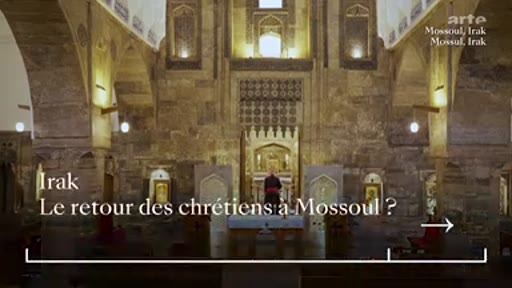
77%
00:00:04
Irak : le retour des chrétiens à Mossoul ?
ARTE ReportageA person in a red shirt stands in the center of a large, ornate mosque in Mossoul, Iraq. The interior is dimly lit with warm, golden light, highlighting the intricate stone architecture and arched ceilings. The person appears to be speaking or presenting, as suggested by the text overlay "Le retour des chrétiens à Mossoul?" (The return of Christians to Mossoul?). The scene is a documentary-style interview or archive footage, with a static, wide-angle shot capturing the central figure and the grandeur of the mosque.
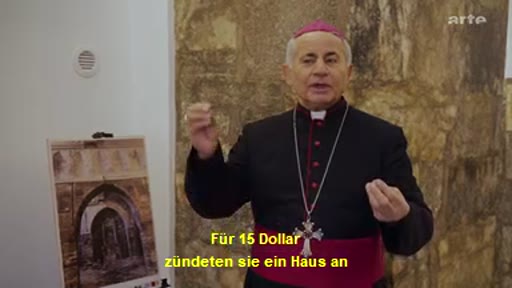
75%
00:00:34
Irak : le retour des chrétiens à Mossoul ?
ARTE ReportageA man, likely a Catholic bishop, is speaking in a room with a stone wall and a picture of a church arch on a wall. He is wearing a black cassock, a red sash, a red zucchetto, and a silver cross necklace. He is gesturing with his hands as he speaks. The scene is indoors, with soft, even lighting. The style is documentary, with a medium shot framing the man from the waist up.
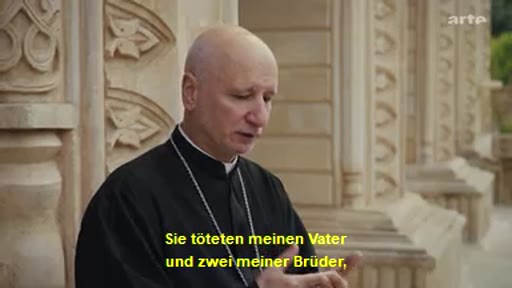
75%
00:09:20
Irak : le retour des chrétiens à Mossoul ?
ARTE ReportageA bald man in a black clerical robe with a silver chain is speaking and gesturing with his hands. He is standing in front of a stone building with ornate carvings. The scene is outdoors during the day, with natural light illuminating the man and the building. The image is a documentary-style interview shot, framed to focus on the man's upper body and face, with a shallow depth of field blurring the background.
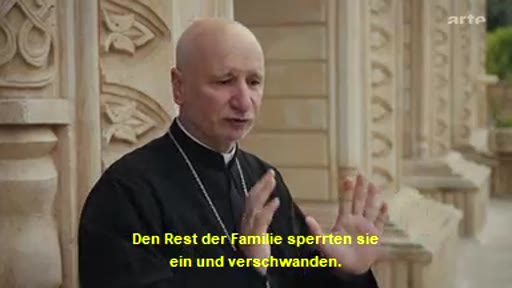
75%
00:09:26
Irak : le retour des chrétiens à Mossoul ?
ARTE ReportageA bald man in a black clerical robe with a silver chain around his neck is speaking and gesturing with his hands. He appears to be in a courtyard or open area with a stone building featuring ornate carvings in the background. The scene is filmed in natural daylight with soft, even lighting. The image is a documentary-style interview shot, framed closely on the man, with a shallow depth of field blurring the background.
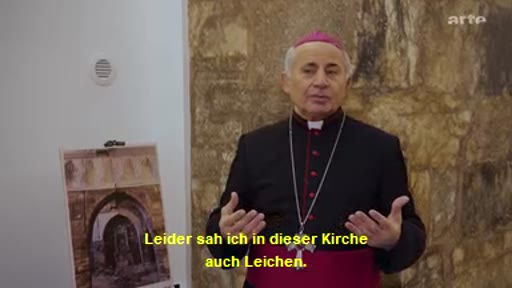
75%
00:00:44
Irak : le retour des chrétiens à Mossoul ?
ARTE ReportageA man, likely a priest, stands in a room with a stone wall and a white wall with a picture of a stone archway. He is wearing a black cassock, a red sash, a white clerical collar, a pink zucchetto, and a large silver cross necklace. He is gesturing with both hands as he speaks. The scene is indoors, with soft, even lighting. The video is a documentary-style interview, with a medium shot framing the man from the waist up.
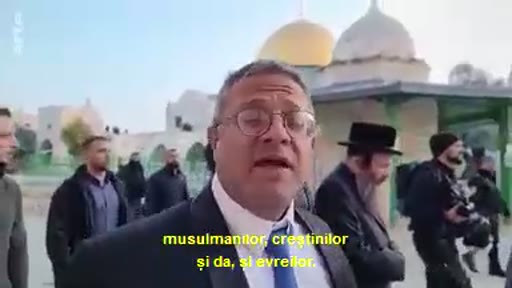
75%
00:48:11
Israël, les ministres du chaos
A man in a dark suit, white shirt, and blue tie, wearing glasses, is speaking directly to the camera. He is standing in front of a group of people, including several men in dark clothing and one man in a black hat and long beard, who appear to be part of a religious procession. The setting is outdoors in front of a large, historic building with a prominent golden dome, suggesting a location in Israel. The scene is filmed in natural daylight with a clear blue sky. The visual style is documentary, with a close-up framing focusing on the man speaking, and the lighting is bright and even.
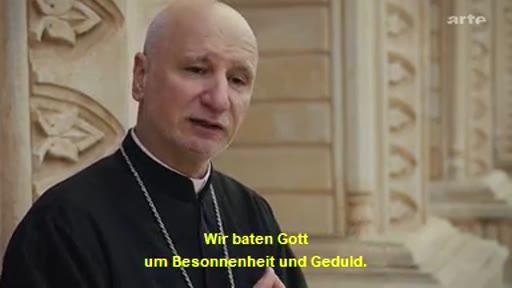
75%
00:09:39
Irak : le retour des chrétiens à Mossoul ?
ARTE ReportageA bald man with a grey beard, wearing a black clerical collar and a silver chain, is speaking. He is standing in front of a stone building with ornate carvings. The scene is indoors, with soft, natural lighting. The image is a still from a documentary, with a close-up framing and a slightly blurred background.
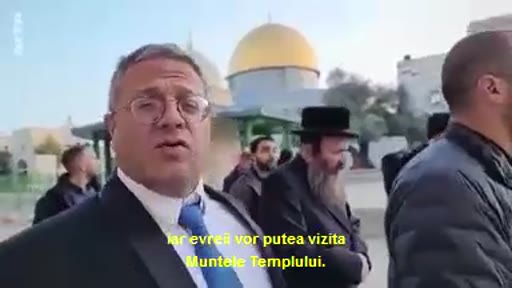
75%
00:48:18
Israël, les ministres du chaos
A man in a dark suit, white shirt, and blue tie, wearing glasses, is speaking to the camera. He is standing in an outdoor plaza in front of a large, golden-domed building, likely a mosque or synagogue. Other men are present in the background, including one in a black hat and long beard, and another in a dark jacket. The scene appears to be a documentary or interview, with a close-up framing of the man speaking, and natural lighting under a clear sky.
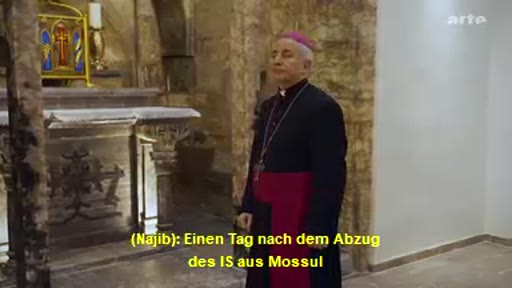
74%
00:00:22
Irak : le retour des chrétiens à Mossoul ?
ARTE ReportageA man, likely a Catholic bishop, stands in a church interior. He is wearing a black cassock, a red stole, and a purple zucchetto, and his expression is solemn. He is standing in front of an altar with a golden icon and a candle. The setting is a stone-walled church with a stone altar and a stone column. The lighting is soft and natural, suggesting it is daytime. The visual style is documentary, with a medium shot framing the man from the waist up.
image
Sémantique · image
(10)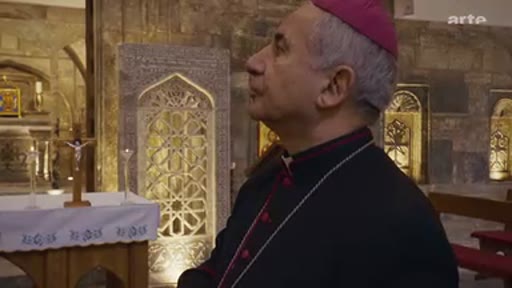
76%
00:00:47
Irak : le retour des chrétiens à Mossoul ?
ARTE ReportageA man, likely a Catholic priest, is shown in profile, wearing a black cassock, a red zucchetto (cap), and a white cord. He has gray hair and is looking upwards and to his right. He is standing in a church interior, with ornate stone walls, a large arched window with intricate carvings, and a wooden altar with a white cloth and a crucifix. The lighting is warm and focused on the priest and the altar, suggesting an indoor, possibly late afternoon or evening, setting. The image is a still from a documentary, with a close-up framing and naturalistic lighting.
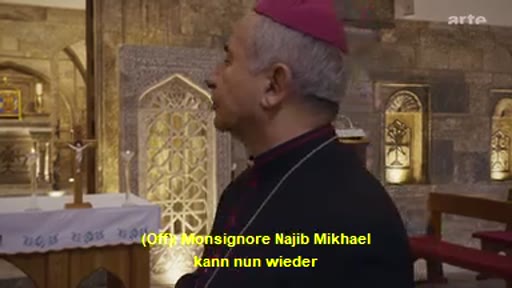
76%
00:00:48
Irak : le retour des chrétiens à Mossoul ?
ARTE ReportageA man with grey hair, wearing a black cassock and a red zucchetto, is shown in profile, looking to the left. He is seated in a church, with a stone altar and ornate, illuminated arched windows in the background. The setting appears to be a dimly lit, traditional church interior, with warm lighting highlighting the stone walls and the altar. The scene is a close-up, focusing on the man's profile, with a shallow depth of field blurring the background.
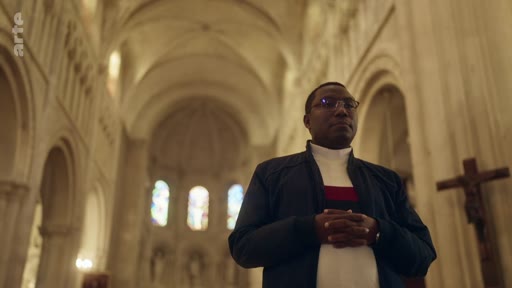
76%
00:59:08
Célibat des prêtres, le calvaire de l'Église
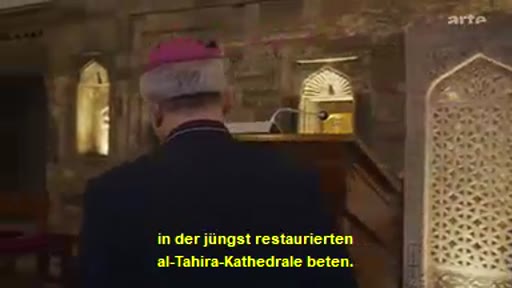
75%
00:00:53
Irak : le retour des chrétiens à Mossoul ?
ARTE ReportageA man, seen from behind, wearing a dark suit and a pinkish-red clerical hat, stands at a wooden podium in a stone-walled room. He is facing a small, illuminated golden object on the podium, possibly a religious artifact or a small shrine. The room has arched windows and a decorative, intricately carved wooden screen. The scene is lit by warm, artificial light, suggesting an indoor, possibly religious, setting. The visual style is documentary, with a static, medium shot framing the man and the podium.
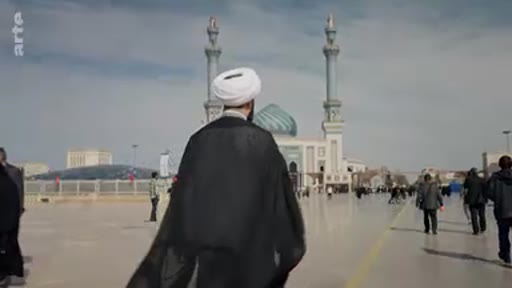
75%
00:11:00
Iran : le mollah, les femmes et le voile
A man wearing a white turban and a black robe walks away from the camera across a large, paved courtyard. He is surrounded by other people, some walking and others standing, in front of a large mosque with two tall minarets and a blue dome. The scene is outdoors on a bright, sunny day with a partly cloudy sky. The video is a documentary-style shot, likely from an interview or archive footage, with a wide, over-the-shoulder framing and natural, even lighting.
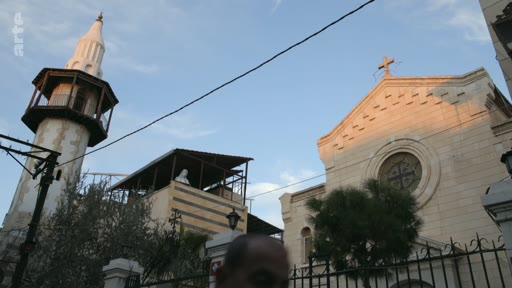
75%
00:35:20
Syrie, à l’épreuve du pouvoir
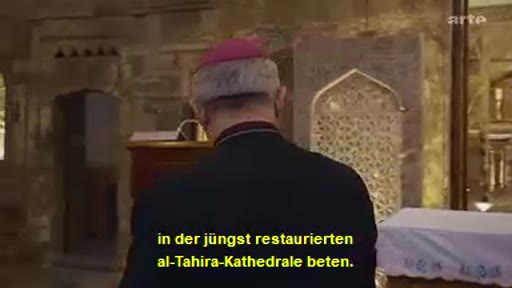
75%
00:00:52
Irak : le retour des chrétiens à Mossoul ?
ARTE ReportageA man with grey hair, wearing a black suit and a red zucchetto, is seen from behind, standing in a dimly lit, ornate stone church. He is facing a wooden lectern and a carved stone wall with an arched, intricate design. The setting appears to be a solemn, indoor space, likely a church or cathedral, with warm, golden lighting. The image is a still from a documentary, with a close-up framing focusing on the man's back and the architectural details of the interior.
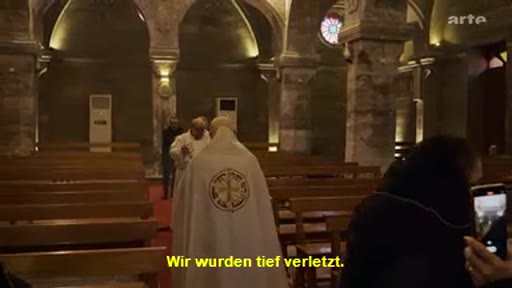
75%
00:04:49
Irak : le retour des chrétiens à Mossoul ?
ARTE ReportageA man in a white robe with a circular emblem on the back is walking down a central aisle in a large, dimly lit church. He is being followed by another man in a white robe, and a third man in a white shirt is standing behind them. A woman in a dark coat is on the right, holding a smartphone and recording the scene. The church has high arched ceilings, stone pillars, and wooden pews. The lighting is warm and focused on the central aisle. The scene is in a documentary-style, candid shot with a wide framing.
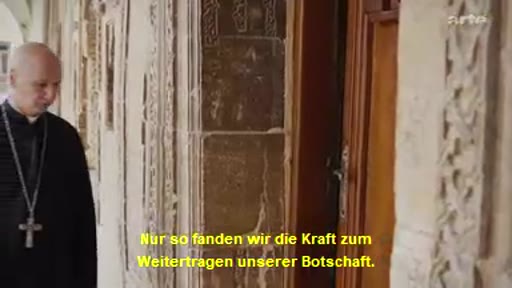
75%
00:09:45
Irak : le retour des chrétiens à Mossoul ?
ARTE ReportageA bald man in a black cassock and a silver cross necklace walks slowly down a stone corridor, his expression somber. The setting is an old, ornate stone building with intricate carvings and a wooden door, suggesting a church or monastery. The scene is shot in a documentary style with natural lighting, focusing on the man as he moves through the space.
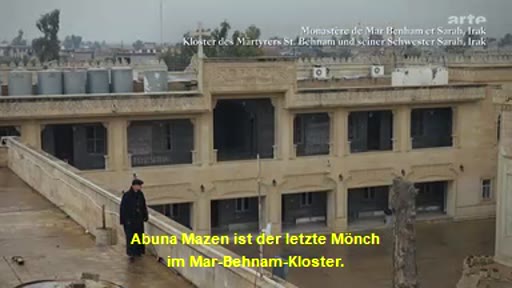
75%
00:08:53
Irak : le retour des chrétiens à Mossoul ?
ARTE ReportageA lone man in a dark, long black robe stands on a wet rooftop, looking down at the courtyard below. The building is a large, light-colored stone structure with multiple arched windows and a flat roof, and the surrounding area is wet and muddy. The scene is set in a courtyard of a monastery in Iraq, with a large stone pillar and a distant cityscape visible. The image is a still from a documentary, with a wide, high-angle shot and natural, overcast lighting.
Sujet 5
Vie quotidienne et exil des chrétiens d'Irak
searchfamille irakienne réfugiée église Kurdistan
description
Sémantique · description
(10)75%
00:00:05
Irak : le retour des chrétiens à Mossoul ?
ARTE ReportageThis is a still from a documentary-style video, likely an interview or archive footage, showing the interior of a mosque in Mossoul, Iraq. A single person, a man in a dark, simple shirt and trousers, is seated in the center of the frame, facing the camera. The setting is a large, ornate mosque with stone walls, intricate tilework, and a high, arched ceiling. The lighting is warm and focused, highlighting the central area. The text overlay in French and Arabic indicates the topic is about Christians returning to Mossoul.
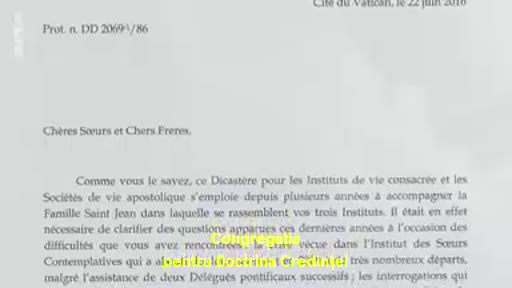
73%
00:52:08
Religieuses abusées, l'autre scandale de l'Église
This is a document, a letter from the Vatican dated July 22, 2016, addressed to the "Sœurs et Chers Frères" (Sisters and Dear Brothers). The letter, written in French, discusses the challenges faced by the Sisters of the Holy Family of Saint Jean, particularly the difficulties in clarifying the questions that arose during the last three years. The text mentions the crisis in the Institute, the need for assistance from two Pontifical Delegates, and the ongoing interreligious tensions. The document is a formal, official letter, likely from a religious or ecclesiastical source, with a standard letterhead and formal formatting.
73%
01:31:24
Religieuses abusées, l'autre scandale de l'Église
This is a screenshot of a French-language text, likely from a documentary or interview, discussing a list of "témoin" (witnesses) who have been persecuted by the Catholic Church. The text lists several individuals, including Sœur Anna Zolnier, Sœur Veronique Marguerite, and Sœur Pierre Vignon, who are described as having been victims of abuse. The text is presented in a formal, documentary-style format with a clear, readable font and a structured layout, indicating it is part of a larger narrative or report.
72%
00:00:04
Irak : le retour des chrétiens à Mossoul ?
ARTE ReportageA person in a red shirt stands in the center of a large, ornate mosque in Mossoul, Iraq. The interior is dimly lit with warm, golden light, highlighting the intricate stone architecture and arched ceilings. The person appears to be speaking or presenting, as suggested by the text overlay "Le retour des chrétiens à Mossoul?" (The return of Christians to Mossoul?). The scene is a documentary-style interview or archive footage, with a static, wide-angle shot capturing the central figure and the grandeur of the mosque.
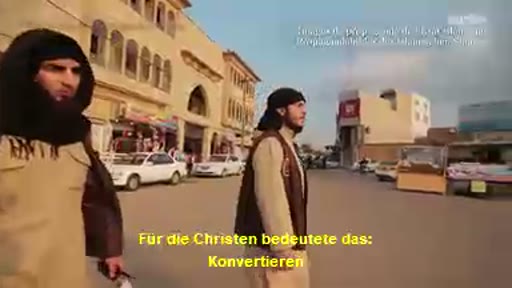
72%
00:01:52
Irak : le retour des chrétiens à Mossoul ?
ARTE ReportageThis is a still from a documentary-style video, likely an interview or archive footage, showing two men standing on a street in a Middle Eastern city. The man on the left wears a black headscarf and a beige jacket, while the man on the right wears a black headscarf, a brown vest over a light-colored shirt, and a light-colored robe. Both men appear serious and are looking off to the side. The setting is an outdoor street with a large, yellowish building with arched windows in the background, and several cars are parked along the street. The lighting is natural, suggesting it is late afternoon or early evening. The text in the upper right corner is French and reads "Images de propagande de l'État islamique Propagandabilder des islamischen Staaten," which translates to "Images of Islamic State propaganda Propagandabilder des islamischen Staaten."

72%
00:49:16
Dans Gaza
This is a documentary-style frame from an interview or archive footage, showing a group of people in a refugee camp. The people are mostly men and women in dark, practical clothing, with one woman wearing a patterned headscarf. They are walking through muddy, uneven ground, with tents in the background. The scene is set in a temporary camp, likely during the day, with natural, diffused lighting. The text overlay identifies the location as "RAFAH" and "EXTREME SUD DE LA BANDE DE BAZA."
72%
00:26:59
Iran : le mollah, les femmes et le voile
This is a wide, outdoor shot of a public square or open area in a city, likely in Iraq, with a clear blue sky and a line of flags strung across the top of the frame. The scene is populated by a diverse group of people, including a man holding a child, a woman in a long black robe, and others in various casual clothing. The people appear to be walking or standing, suggesting a moment of daily life. The setting is an open, paved area with buildings in the background, and the time of day appears to be midday. The visual style is documentary, with a naturalistic framing and lighting.
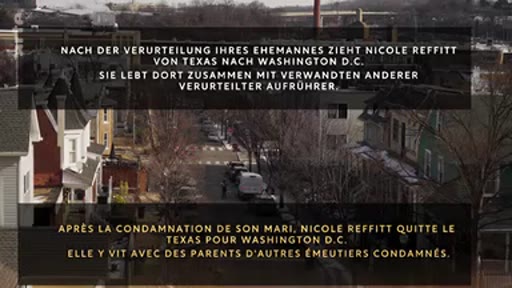
71%
00:29:00
Trump, mon père et moi
This is a still from a documentary-style video, likely an interview or news report, showing a residential street in a neighborhood in Washington, D.C. The scene features several people, including Nicole Reiffitt, who is described as leaving her home in Texas after her husband's conviction. She is seen with her parents and other family members, and they are dressed in everyday clothing. The setting is an urban neighborhood with houses, trees, and a street with parked cars, suggesting a residential area. The video is shot in a documentary style with a wide, over-the-shoulder framing, natural lighting, and a serious tone.
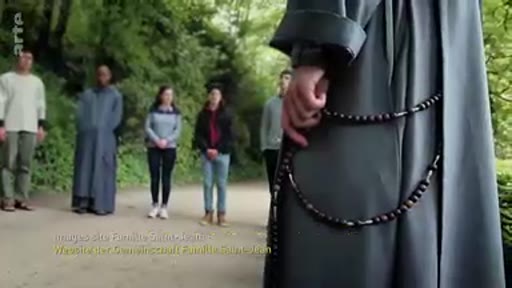
71%
00:41:34
Religieuses abusées, l'autre scandale de l'Église
A group of six people, including a man in a dark grey robe with a rosary, are standing in a wooded area. The man in the foreground is wearing a dark grey robe and has a rosary around his neck. The other people are dressed in casual clothing, including a white sweater, a blue robe, a grey jacket, and jeans. They are standing on a dirt path with trees and greenery in the background. The scene is filmed in natural daylight, with soft, even lighting. The image is a documentary-style shot with a close-up on the man in the robe, and the text overlay indicates the source is the "Famille Saint-Jean" community.
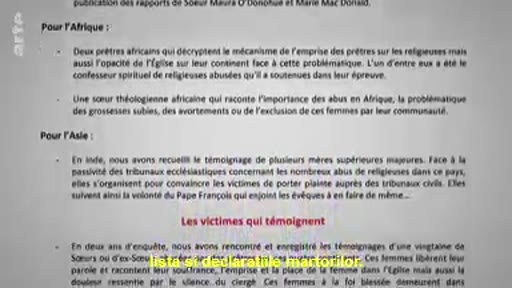
71%
01:31:31
Religieuses abusées, l'autre scandale de l'Église
This is a screenshot of a French-language text, likely from a news article or report, with a white background and black text. The text is divided into three sections, each with a heading in bold, followed by a paragraph of body text. The first section is titled "Pour l'Afrique," the second "Pour l'Asie," and the third "Les victimes qui témoignent." The text discusses the experiences of African and Asian women who have been victims of violence and abuse, particularly in the context of religious communities. The text is written in a formal, journalistic style, and the layout is typical of a news article. The text is not in a documentary, interview, or graphic style, but rather appears to be a direct transcription of a report.
image
Sémantique · image
(10)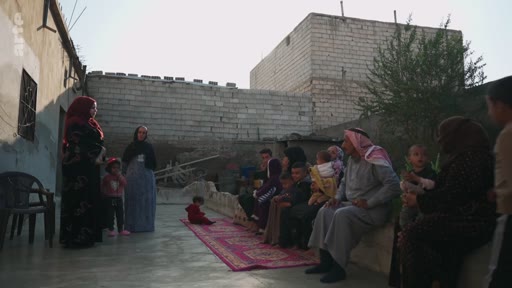
77%
00:06:43
Syrie - Liban : l'exil sans fin
ARTE Reportage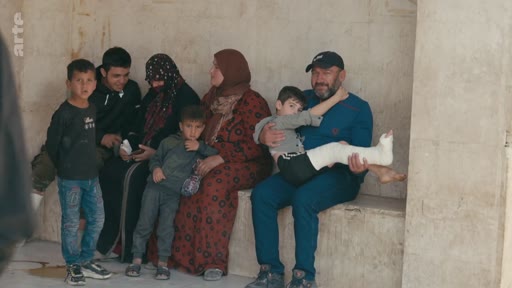
76%
00:12:35
ARTE Regards
Syrie : rentrer pour reconstruire le pays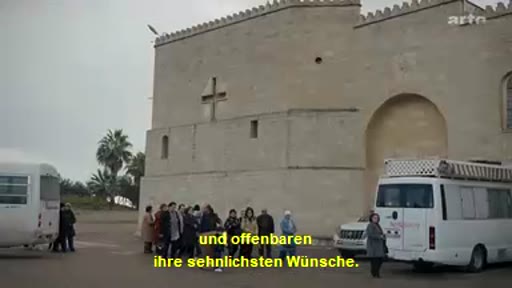
76%
00:11:10
Irak : le retour des chrétiens à Mossoul ?
ARTE ReportageA group of people, mostly dressed in dark, practical clothing, are gathered in a paved courtyard in front of a large, stone building with a cross on its wall. The group is standing in a loose circle, and several individuals are looking towards the building. On the right side of the frame, a white van is parked, and another white van is visible on the left. The scene is set outdoors on a cloudy day, with palm trees visible in the background. The image is a still from a documentary, with a naturalistic, slightly grainy quality and a wide, horizontal framing.
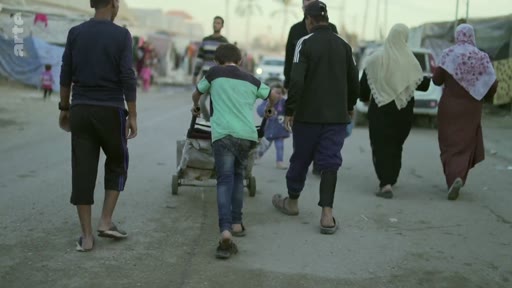
76%
00:09:49
Gaza : les enfants dans la guerre
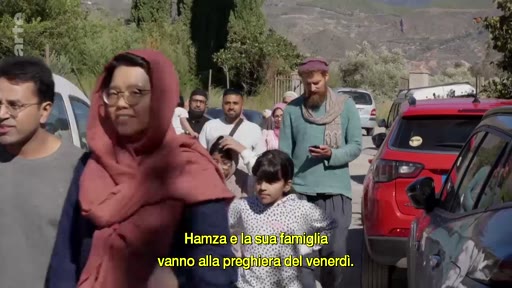
76%
00:19:18
ARTE Regards
Se convertir à l’Islam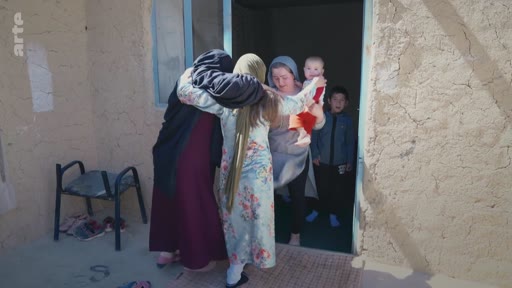
76%
00:37:22
La vie de Hawa
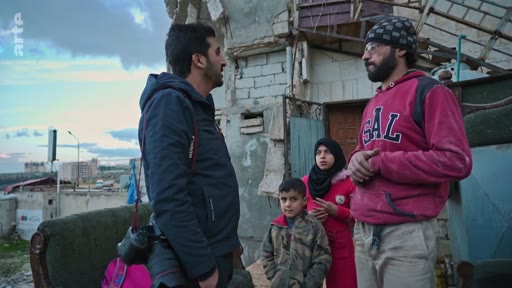
76%
00:05:20
Syrie : seuls face au séisme
(2024)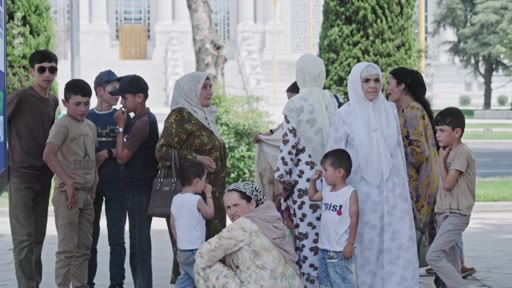
76%
00:00:25
Tadjikistan : l’islam sous surveillance
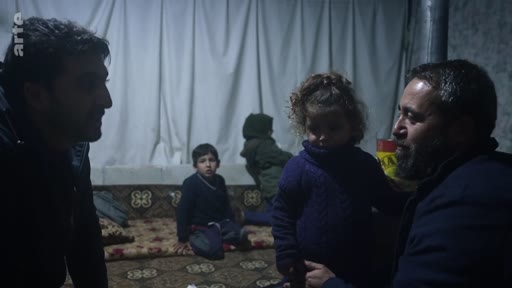
75%
00:16:50
Syrie : seuls face au séisme
(2024)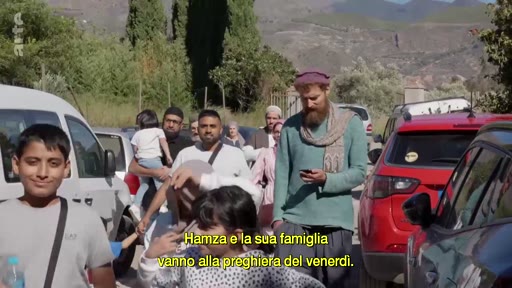
75%
00:19:19
ARTE Regards
Se convertir à l’Islamsearchclasse école Qaraqosh enfants retour
description
Sémantique · description
(10)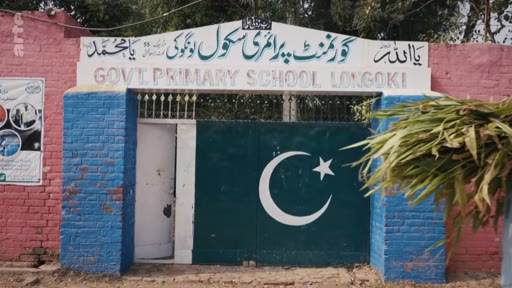
77%
00:08:02
Mon Pakistan
Le pays de la familleA group of children, dressed in simple, colorful clothing, are gathered in front of a school gate. The children are standing in a line, looking towards the camera with expressions of curiosity and anticipation. The school is a government primary school in Longoki, Pakistan, with a sign that reads "GOVT PRIMARY SCHOOL LONGOKI" and a flag of Pakistan painted on the gate. The scene is set outdoors during the day, with natural light illuminating the area. The visual style is documentary, with a straightforward framing and natural lighting.
77%
00:13:36
Irak : le retour des chrétiens à Mossoul ?
ARTE ReportageA group of children, mostly wearing maroon school uniforms, are entering a building. They are walking through a doorway, with some looking forward and others looking around. The setting appears to be an indoor school or community center, with Arabic text on signs and a poster on the wall. The lighting is bright and even, suggesting it is daytime. The image is a still from a documentary or interview, with a medium shot framing the children as they enter.
76%
00:12:25
Irak : le retour des chrétiens à Mossoul ?
ARTE ReportageA group of children, mostly wearing red hooded sweatshirts, are gathered in a school hallway, with some looking towards the camera and others moving forward. The children appear to be in a school setting, with a doorway leading into a classroom and posters with Arabic text on the walls. The scene is indoors, with natural light coming from the doorway, and the lighting is bright and even. The visual style is documentary, with a candid, unposed shot capturing a moment in the children's daily life.
76%
00:08:30
Mon Pakistan
Le pays de la familleA group of young boys in matching blue school uniforms stand in a classroom, with several of them looking forward and speaking. The classroom has a large blackboard with Urdu script on it, and the boys are standing in front of it. The scene is filmed in a documentary style with a natural, soft lighting and a wide, slightly tilted framing.
76%
00:08:24
Mon Pakistan
Le pays de la familleA group of young boys in blue school uniforms are standing in a classroom, smiling and looking towards the camera. The classroom has a blackboard with Arabic writing on it, and the boys appear to be in a joyful or excited mood. The scene is set indoors, likely in a school in Pakistan, with natural light coming in from the open door. The visual style is documentary, with a straightforward framing and natural lighting.
76%
00:33:30
Myanmar Diaries
Une bouteille à la merThis is a low-angle, handheld video shot in a documentary style, likely from an interview or archive footage. The scene is set outdoors on a dusty, unpaved road in a rural area, with a simple wooden house visible in the background. A group of people, mostly children in white uniforms, are walking away from the camera along the road. The lighting is natural daylight, and the shadows are long, suggesting it is either early morning or late afternoon. The camera is positioned at a low angle, capturing the children as they move away from the viewer.
76%
00:02:35
Inde-Chine : la revanche des filles
ARTE ReportageA group of children and a few adults are gathered on a dusty, unpaved road in a rural setting, likely a school or community area. The children, mostly wearing school uniforms and backpacks, are standing and interacting with the adults, who are dressed in casual clothing. The scene is outdoors during the day, with a hazy, overcast sky and trees in the background. The visual style is documentary, with a naturalistic framing and soft, even lighting.

75%
00:35:24
Dans Gaza
This is a documentary-style, wide-angle shot taken outdoors in a war-torn area. A group of children, dressed in simple clothing, stand in the foreground, looking towards a large, damaged military vehicle that is kicking up dust. The background shows a destroyed building and a barren landscape, suggesting a post-conflict environment. The scene is lit by natural daylight, and the framing is wide, capturing the children and the vehicle in a single, unedited shot.
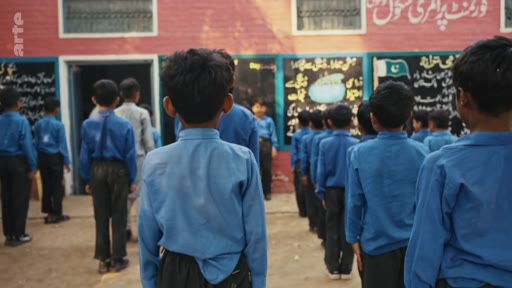
75%
00:08:32
Mon Pakistan
Le pays de la familleA group of young boys, all wearing matching blue school uniforms with dark pants, are standing in a line in front of a school building. The boys are facing away from the camera, looking towards the classroom doors and a chalkboard with Arabic writing. The scene is set outdoors in front of a red brick school building, with the time of day appearing to be midday. The image is a still from a documentary-style video, with a natural, unfiltered look and a wide, slightly tilted framing.
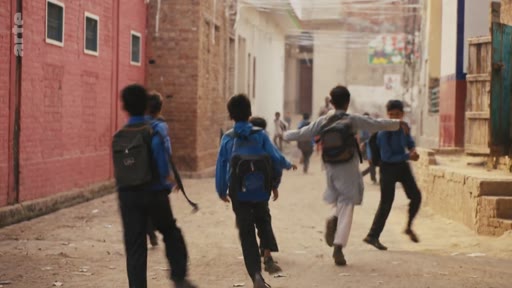
75%
00:14:45
Mon Pakistan
Le pays de la familleA group of children, mostly wearing blue school uniforms and backpacks, are running down a narrow, dusty alleyway in a residential area. The setting is an outdoor, urban environment with weathered brick buildings and a concrete path, suggesting a typical day in a school district. The scene is shot in a documentary style with a wide, over-the-shoulder shot, capturing the children's movement and the surrounding environment.
image
Sémantique · image
(10)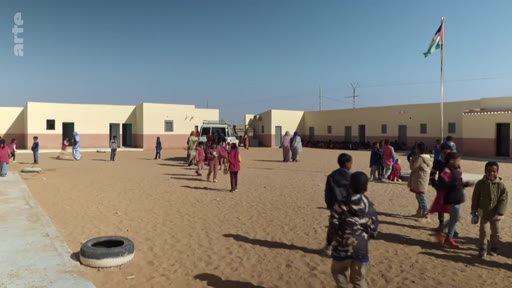
79%
00:18:26
Sahara occidental : les combattantes du désert
ARTE Reportage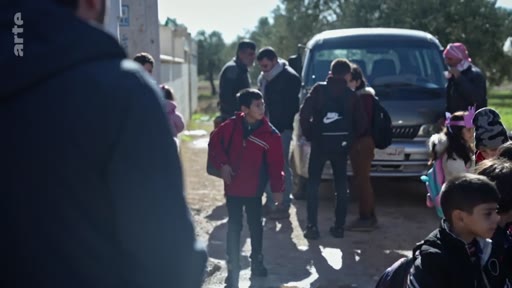
79%
00:22:36
Syrie : seuls face au séisme
(2024)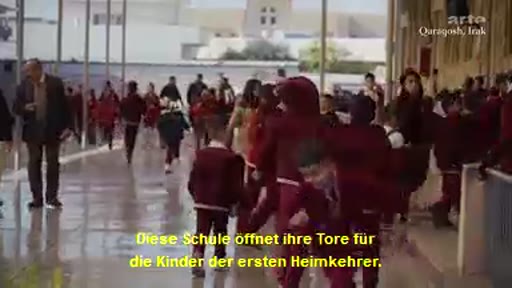
79%
00:12:22
Irak : le retour des chrétiens à Mossoul ?
ARTE ReportageA group of children in red school uniforms are walking down a wet, reflective walkway, with a man in a dark jacket and a white shirt standing on the left. The setting is an outdoor area of a school, with buildings and a white wall in the background. The scene is shot in a documentary style with natural lighting and a wide, slightly tilted framing.
79%
00:12:18
Irak : le retour des chrétiens à Mossoul ?
ARTE ReportageA group of children in red school uniforms are walking down a wet, reflective school corridor. They are moving in a line, with some children walking forward and others turning to look back. A few adults are present, including a man in a dark suit and a woman in a white headscarf and dark clothing. The setting is an outdoor school hallway, with buildings and trees visible in the background. The scene is shot in a documentary style with natural lighting and a wide, candid framing.
79%
00:12:20
Irak : le retour des chrétiens à Mossoul ?
ARTE ReportageA group of children in matching maroon school uniforms are walking through a school hallway, with some children smiling and others looking around. A man in a dark suit walks alongside them, and a few adults are visible in the background. The scene is set in a school corridor with a wet floor, suggesting it's raining or has recently rained. The image is a documentary-style, wide-angle shot with natural lighting and a slightly grainy quality.
79%
00:12:24
Irak : le retour des chrétiens à Mossoul ?
ARTE ReportageA group of young children, mostly wearing red school uniforms, are gathered in a doorway of a school. The children appear to be in a moment of transition, with some looking at the camera and others engaged in conversation. The setting is indoors, with a stone wall and a decorated doorway visible in the background. The scene is captured in a documentary-style, with a medium shot framing the children and the entrance, and natural lighting illuminating the space.
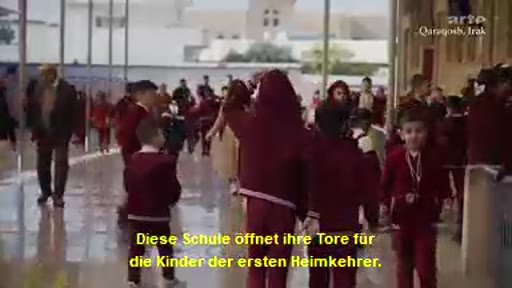
79%
00:12:21
Irak : le retour des chrétiens à Mossoul ?
ARTE ReportageA group of children in maroon school uniforms are walking through a school corridor, with a few adults in the background. The children appear to be in a state of motion, with one boy in the foreground looking back at the camera with a smile. The setting is an indoor school hallway with a reflective floor, and the background shows a building with a white facade and a clock tower. The scene is shot in a documentary style with natural lighting and a wide, eye-level framing.
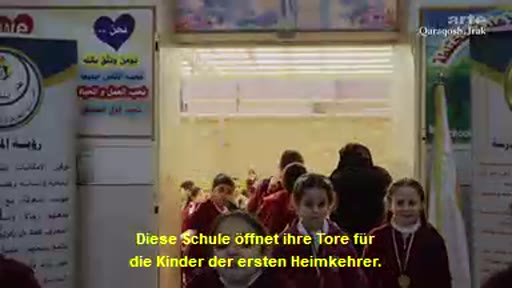
79%
00:12:23
Irak : le retour des chrétiens à Mossoul ?
ARTE ReportageA group of young girls in maroon school uniforms, some with medals around their necks, are walking through a school entrance. They are in a brightly lit indoor setting, likely a school hallway or entrance, with Arabic text on signs and posters on the walls. The camera is positioned at a low angle, capturing the girls as they move forward. The visual style is documentary, with a clear focus on the subjects and their environment.
79%
00:33:02
Syrie, à l’épreuve du pouvoir
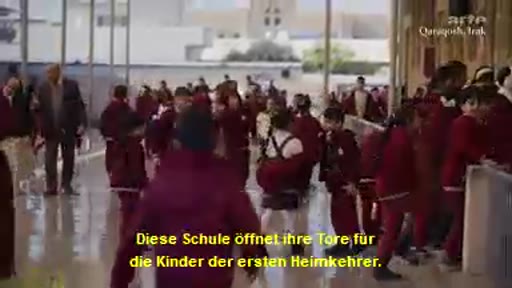
78%
00:12:19
Irak : le retour des chrétiens à Mossoul ?
ARTE ReportageA group of children in matching red school uniforms are walking through a school corridor, with a few adults in the background. The children appear to be in a state of motion, possibly walking or being led by an adult. The setting is an indoor school hallway with a polished floor, and the background shows a building with a traditional architectural style. The image is a documentary-style photograph with natural lighting, a wide-angle shot, and a focus on the children and their movement.
searchrestaurant Mossoul quartier chrétien vie
description
Sémantique · description
(10)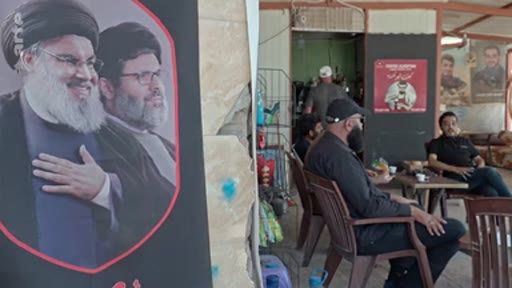
72%
00:17:22
Liban : la fin du Hezbollah ?
ARTE ReportageA group of men are sitting at tables in an outdoor café, with one man in a black shirt and cap looking at a phone. A large poster of two men in religious attire is on the left, and another poster is visible in the background. The setting appears to be a public space with a casual atmosphere, possibly in a Middle Eastern country. The lighting is natural, suggesting it is daytime. The image is a documentary-style photograph with a candid, unposed feel.
71%
01:04:29
Coexistence, mon cul !
A busy street scene in a Mediterranean town, likely in the afternoon, with people walking and interacting. A woman in a black jacket and a man in a helmet on a scooter are prominent in the foreground and midground. The setting is a narrow street with white buildings, shops, and outdoor seating, and the lighting is natural and bright. The visual style is documentary, with a candid, observational framing.
71%
00:04:59
Square Artiste
Barmak AkramThis is a still from a documentary film, likely an archive or interview, titled "MASSI: L'ENFANT DE KABOUL" by Barmak Akram. The scene is set in a cityscape, with a wide, slightly blurred aerial view of a densely populated urban area, possibly a neighborhood in Kaboul. The text "Square" is visible in the lower-left corner, indicating the location. The visual style is documentary, with a wide, slightly tilted framing and soft, natural lighting. The people in the frame are not clearly visible, but the overall atmosphere suggests a quiet, observational moment.
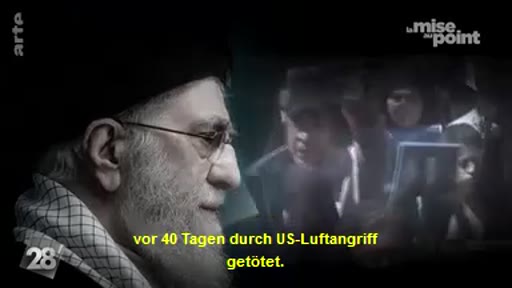
71%
00:15:14
28 minutes
Vieillesse et folie / Le peuple iranien sacrifié ? (09/04/2026)This is a still from a documentary-style video, likely an interview or archive footage, shot from a circular, ornate frame that suggests a window or a decorative border. The scene is set in a city, possibly in Iran, with a large, prominent banner on a building that reads "الله" (Allah) and features a religious figure. The setting is urban, with modern buildings, a traffic light, and a street with a few people. The lighting is natural, suggesting it is daytime, and the overall mood is observational and documentary. The people are mostly in the background, with one person in a white shirt and dark pants walking on the street, and others are visible but not clearly defined. The visual style is realistic, with a focus on capturing the environment and the people within it.
70%
00:58:11
Déchets toxiques, une bombe sous nos pieds
This is a still from a documentary-style interview, likely set in a rural French village. The scene is outdoors on a quiet street, with a large stone building and a church spire visible in the background. A few people are present, including a woman in a white shirt and a man in a dark jacket, both standing near the building. The lighting is natural and soft, suggesting it is daytime. The visual style is documentary, with a wide, static shot that captures the environment and the people in a realistic, unembellished manner.
70%
01:31:24
Religieuses abusées, l'autre scandale de l'Église
This is a screenshot of a French-language text, likely from a documentary or interview, discussing a list of "témoin" (witnesses) who have been persecuted by the Catholic Church. The text lists several individuals, including Sœur Anna Zolnier, Sœur Veronique Marguerite, and Sœur Pierre Vignon, who are described as having been victims of abuse. The text is presented in a formal, documentary-style format with a clear, readable font and a structured layout, indicating it is part of a larger narrative or report.
70%
00:05:55
Mon Pakistan
Le pays de la familleThis is an outdoor, street-level scene at a food stall in a busy, urban area, likely in the Middle East, captured in a documentary-style, wide-angle shot. Several men are gathered around the stall, with one man in a blue shirt cooking on a large, round, flat pan over a small stove, while others sit on wooden benches, eating or waiting. The setting is a narrow alleyway with a closed metal shutter on the right and a sign with Arabic script above the stall. The lighting is natural and bright, suggesting it is daytime. The visual style is realistic and unfiltered, typical of a documentary or interview footage.
70%
00:28:33
Sissi, nouveau pharaon d’Égypte
A man in a white robe sits on a purple stool on a sidewalk in front of a bookstore, while another man in a blue jacket stands nearby, seemingly in conversation with a woman in a long, light-colored robe. A small, orange bird is on the ground in front of the store. The scene is set in a bustling street in a city, with a storefront and a sign in Arabic visible. The lighting is natural and bright, suggesting it is daytime. The visual style is documentary, with a straightforward, unedited framing that captures the scene in a realistic, unfiltered manner.
70%
00:29:22
Espionnés par nos apps
A busy street scene in a European city, likely Paris, with people walking and sitting outside a pub named "Le Régine Chapeau." A man in a white shirt is in the foreground, out of focus, while others are visible in the background. The setting is outdoors on a street with buildings and a café, suggesting a daytime scene. The visual style is documentary, with a naturalistic framing and lighting.
70%
00:29:07
Espionnés par nos apps
A group of people are seated at outdoor tables in a bustling Parisian café, enjoying a meal and conversation. The scene is set on a sunny day in a busy street, with the café's green and white striped awning and a row of shops in the background. The people are dressed in casual, everyday clothing, and their expressions suggest they are relaxed and engaged in the social activity. The camera is positioned at a medium distance, capturing the group and the surrounding street scene.
image
Sémantique · image
(10)
75%
00:13:15
ARTE Regards
Sortir sa famille de Gaza à tout prix
74%
00:10:31
Qatar, une dynastie à la conquête du monde
74%
00:20:11
Syrie : Damas, le goût de la liberté
(2025)
74%
00:20:30
Syrie : les femmes sur tous les fronts
74%
00:06:13
ARTE Regards
Au secours des palais de Palerme
74%
00:15:14
ARTE Regards
Des prêtres gays brisent le silence
74%
00:19:35
ARTE Regards
Se convertir à l’Islam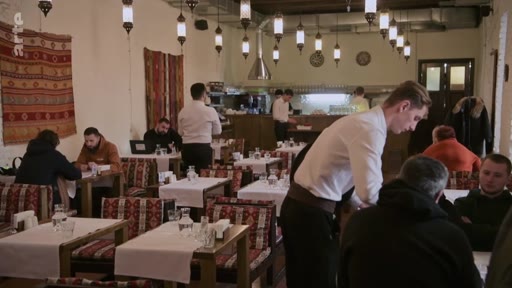
74%
00:11:54
Ukraine : un rêve de Crimée
ARTE Reportage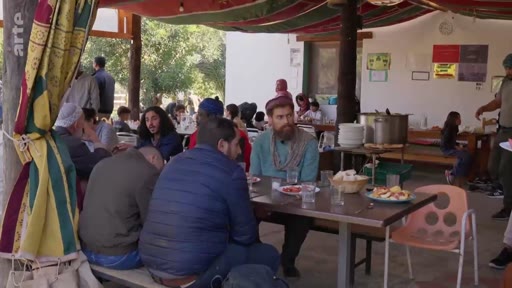
74%
00:20:07
ARTE Regards
Se convertir à l’Islam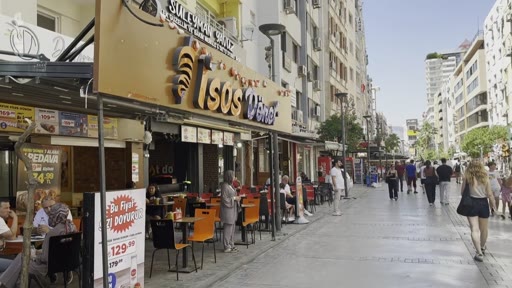
74%
00:14:16
ARTE Regards
Turquie : les défis de la communauté LGBTQ+Sujet 6
Rites, musique et traditions chrétiennes orientales
searchcérémonie baptême église chrétienne Irak
description
Sémantique · description
(10)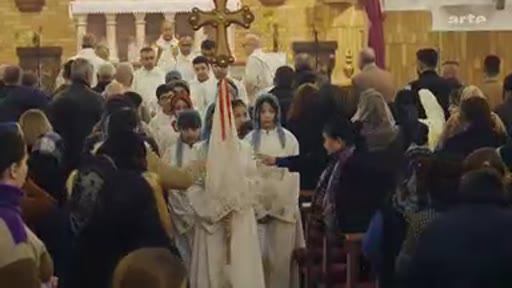
73%
00:17:51
Irak : le retour des chrétiens à Mossoul ?
ARTE ReportageA large group of people, mostly adults and children, are gathered inside a church. The adults are dressed in white and dark-colored robes, while the children wear white robes and blue headscarves. The main action is a religious ceremony, with a central figure holding a large cross and a banner, and a woman in a dark jacket extending her hand toward the child. The setting is a church interior with wooden pews, a golden cross on the altar, and a golden statue of a crucifix. The lighting is warm and natural, suggesting it is daytime. The visual style is documentary, with a wide-angle shot capturing the entire scene.
73%
00:00:05
Irak : le retour des chrétiens à Mossoul ?
ARTE ReportageThis is a still from a documentary-style video, likely an interview or archive footage, showing the interior of a mosque in Mossoul, Iraq. A single person, a man in a dark, simple shirt and trousers, is seated in the center of the frame, facing the camera. The setting is a large, ornate mosque with stone walls, intricate tilework, and a high, arched ceiling. The lighting is warm and focused, highlighting the central area. The text overlay in French and Arabic indicates the topic is about Christians returning to Mossoul.
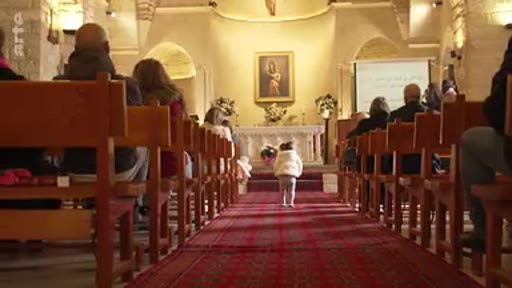
72%
00:08:01
Liban : un nouvel exode sous les bombes
ARTE ReportageA young child in a white coat walks down the center aisle of a church, moving away from the camera. The church is filled with wooden pews, and several people are seated on the left and right sides of the aisle. The setting is indoors, with stone walls and a red carpet. The lighting is warm and natural, suggesting it is daytime. The scene is captured in a documentary-style, wide-angle shot with a shallow depth of field, focusing on the child.
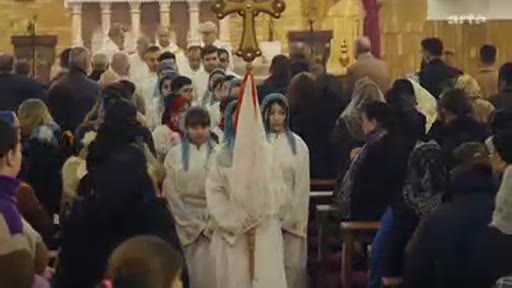
71%
00:17:53
Irak : le retour des chrétiens à Mossoul ?
ARTE ReportageA group of people are gathered inside a church, with several individuals in white robes and blue headscarves standing in the center, holding a large cross. The crowd is seated in wooden pews, and the setting is a well-lit, ornate church with a golden cross on the altar. The scene appears to be a formal religious ceremony or procession, with the people dressed in traditional attire and showing solemn expressions. The visual style is documentary, with a wide, eye-level shot capturing the entire scene.
71%
00:43:28
Religieuses abusées, l'autre scandale de l'Église
This is a documentary-style interview shot inside a church, showing a large congregation seated in the pews, facing a screen. The screen displays a priest in white robes, speaking at a podium. The setting is a large, ornate church with high vaulted ceilings, stained glass windows, and colorful banners hanging from the walls. The lighting is dim, with the screen providing the main source of illumination. The camera is positioned at the back of the church, capturing the audience and the screen.
71%
00:52:08
Religieuses abusées, l'autre scandale de l'Église
This is a document, a letter from the Vatican dated July 22, 2016, addressed to the "Sœurs et Chers Frères" (Sisters and Dear Brothers). The letter, written in French, discusses the challenges faced by the Sisters of the Holy Family of Saint Jean, particularly the difficulties in clarifying the questions that arose during the last three years. The text mentions the crisis in the Institute, the need for assistance from two Pontifical Delegates, and the ongoing interreligious tensions. The document is a formal, official letter, likely from a religious or ecclesiastical source, with a standard letterhead and formal formatting.
71%
00:32:37
Religieuses abusées, l'autre scandale de l'Église
A group of people are gathered inside a church, facing a priest who is standing at an altar. The priest is wearing a red robe and is holding a candle. The people are dressed in casual clothing, and their expressions are serious. The setting is a church with stone walls and a large cross on the wall. The lighting is dim, with the only source of light coming from the candle on the altar. The camera is positioned at the back of the church, looking towards the altar.
71%
00:40:38
Religieuses abusées, l'autre scandale de l'Église
This is a still from a documentary-style video, likely an archive or interview, showing a religious ceremony. Two men in white robes are in a church, with one man placing a blue cap on the head of another. The setting is indoors, with stone steps and a wooden lectern visible in the background. The lighting is dim and focused, highlighting the central figures. The image is grainy and has a vintage quality, suggesting it is from an older film or video.
70%
00:04:18
Irak : le retour des chrétiens à Mossoul ?
ARTE ReportageA group of men in religious vestments are performing a religious ceremony inside a church. The central figure, an older man in a white robe, is kneeling and appears to be receiving a blessing from another man in a white robe. A young boy stands beside them, observing. The setting is a church with stone walls, a large altar, and religious artwork on the wall. The scene is filmed in a documentary style with a wide shot, and the lighting is warm and focused on the central action.
70%
00:06:34
Chine-Philippines : la bataille de la mer
ARTE ReportageA group of people are gathered inside a church, walking down the aisle. A priest in a red and gold robe is in the center, flanked by two others, one in a white shirt and the other in a black shirt with "SURVIVAL" written on the back. The people are seated in wooden pews, and the church is filled with light from the stained glass windows. The camera is positioned at the back of the church, capturing the procession from behind. The lighting is warm and natural, with the light coming from the stained glass windows. The visual style is documentary, with a steady, handheld camera shot.
image
Sémantique · image
(10)
77%
00:24:03
ARTE Regards
Les Géorgiens, entre rêve européen et Russie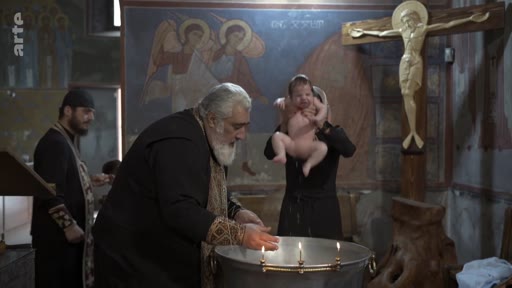
75%
00:23:58
ARTE Regards
Les Géorgiens, entre rêve européen et Russie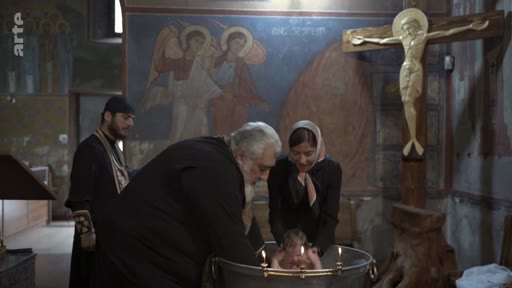
75%
00:23:59
ARTE Regards
Les Géorgiens, entre rêve européen et Russie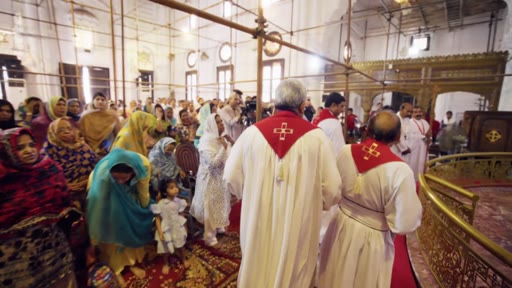
74%
00:45:56
Le Pakistan, une puissance nucléaire sous pression
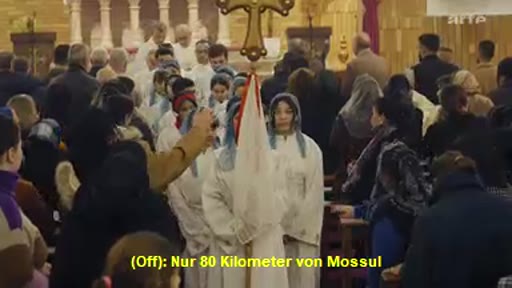
74%
00:17:54
Irak : le retour des chrétiens à Mossoul ?
ARTE ReportageA group of people are gathered inside a church, with several individuals in white robes and blue veils, suggesting a religious ceremony. A central figure in a white robe holds a large, ornate cross, while others in the congregation are seated and observing. The scene is set in a dimly lit, wooden interior with pews and a high altar, indicating a formal religious gathering. The visual style is documentary, with a handheld camera capturing the scene from a slightly low angle, emphasizing the solemnity of the moment.
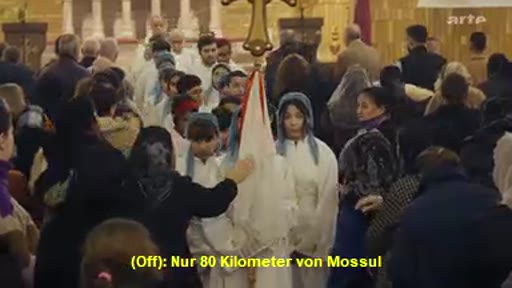
74%
00:17:56
Irak : le retour des chrétiens à Mossoul ?
ARTE ReportageA large group of people, mostly adults and children, are gathered indoors in a church or cathedral. The central focus is a group of three young women in white robes and blue veils, holding a large, ornate cross. The people are dressed in winter clothing, and their expressions are solemn and focused. The scene is lit by warm, artificial light, and the setting is a crowded, ornate interior with wooden pillars and a high ceiling. The visual style is documentary, with a wide, candid shot capturing the moment from a slightly elevated angle.
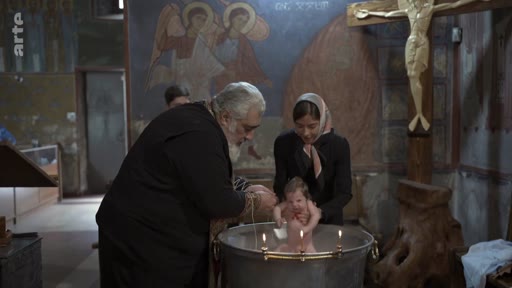
74%
00:23:55
ARTE Regards
Les Géorgiens, entre rêve européen et Russie74%
00:17:51
Irak : le retour des chrétiens à Mossoul ?
ARTE ReportageA large group of people, mostly adults and children, are gathered inside a church. The adults are dressed in white and dark-colored robes, while the children wear white robes and blue headscarves. The main action is a religious ceremony, with a central figure holding a large cross and a banner, and a woman in a dark jacket extending her hand toward the child. The setting is a church interior with wooden pews, a golden cross on the altar, and a golden statue of a crucifix. The lighting is warm and natural, suggesting it is daytime. The visual style is documentary, with a wide-angle shot capturing the entire scene.
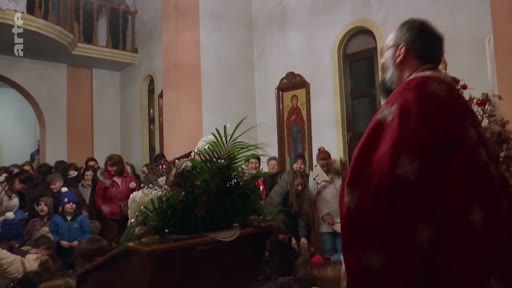
74%
00:11:35
Ex-Yougoslavie : les colombes yougoslaves (2023)
ARTE Reportage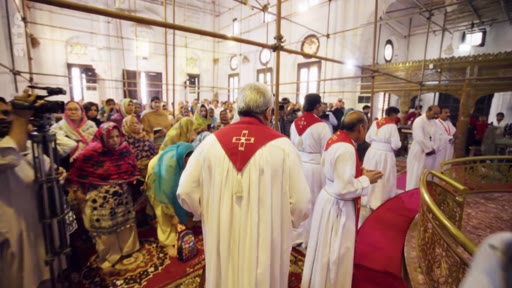
74%
00:45:55
Le Pakistan, une puissance nucléaire sous pression
searchsculpteur artisan bas-relief monastère Behnam
description
Sémantique · description
(10)
73%
00:10:48
Religieuses abusées, l'autre scandale de l'Église
A close-up shot of a stone altar in a dimly lit, stone-walled room, with a statue of a robed figure standing to the left. The altar features a carved relief depicting a religious scene with several figures. The lighting is subdued, with a soft, warm glow highlighting the central relief, while the surrounding area remains in shadow. The scene appears to be a quiet, contemplative moment in a religious or historical setting.
72%
00:15:31
Religieuses abusées, l'autre scandale de l'Église
A statue of a man in a white and blue religious robe stands in a dimly lit, stone-walled room, likely a church or chapel. He is holding a set of golden rosaries and has a solemn, contemplative expression. To his right is a large, ornate, carved wooden sculpture. The scene is a still, close-up shot, with soft, warm lighting highlighting the statue and the intricate details of the sculpture. The overall style is documentary, with a focus on the statue and its surroundings.
72%
00:15:24
Un jeune homme de bonne famille
This is a close-up, low-angle shot of a weathered stone relief depicting a bearded man, likely Jesus, with a crown of thorns, being carried by another figure. The image is viewed through a grid-like, translucent overlay, suggesting a window or a protective barrier. The scene is set in a dimly lit, indoor environment, possibly a church or a museum, with a muted, cool color palette. The visual style is documentary, with a grainy texture and soft, diffused lighting.
72%
00:04:54
Japon : Fukushima, eaux toxiques
This is a still frame from a documentary-style interview, showing a close-up of a window sill. On the sill, there are several small, carved figurines, including a man in a traditional robe, a small statue, and a basket with rolled scrolls. The scene is set indoors, with the window revealing a bright, out-of-focus outdoor view. The lighting is soft and natural, suggesting it is daytime. The camera is positioned to the side, with the window frame partially obscuring the view.
72%
01:33:29
Religieuses abusées, l'autre scandale de l'Église
This is a still frame from a documentary or interview, likely a French-language program, as indicated by the text. The screen displays a list of production credits on the left, including the CNC, LCP, and various broadcasters like RTBF and SRF. On the right, a classical stone statue of an angel is visible, its wings spread and holding a book. The image is dark and atmospheric, with a soft, focused light on the statue, suggesting a formal and serious tone. The framing is a close-up, with the text and statue occupying the left and right sides of the screen, respectively.
72%
00:04:28
Un jeune homme de bonne famille
A man in a blue jacket stands with his back to the camera, looking at a large, dark stone carving that features two prominent, circular eyes. The scene is set in a dimly lit, outdoor environment, with the man and the carving illuminated by a soft, natural light filtering through trees. The image has a dark, cinematic quality, suggesting a documentary or interview-style footage.
72%
00:16:08
Apolonia, Apolonia
A still frame from a documentary-style video, likely an interview or archive footage, shows a stone sculpture of a person in a crouched position, with their head resting on their hands. The sculpture is in the foreground, on a stone pedestal, in a courtyard with a fountain and large arched windows in the background. The scene is lit by soft, warm light from the windows, suggesting late afternoon or early evening. The setting is an outdoor courtyard, possibly within a historic building, with no people visible in the frame.
72%
00:21:28
Mon Pakistan
Le pays de la diversitéA man in a light-colored, long-sleeved shirt and trousers stands in a courtyard, his hands clasped in prayer. He is in a courtyard with a small shrine to the right, featuring a blue-skinned deity statue and a red curtain. The setting appears to be a temple or a religious site, with a white wall and a doorway in the background. The lighting is natural and even, suggesting it is daytime. The image is a documentary-style photograph, likely an archive or interview shot, with a medium shot framing the man and the shrine.
72%
01:33:32
Religieuses abusées, l'autre scandale de l'Église
This is a still from a documentary or interview, likely a French-language program, featuring a stone statue of an angel on the right side of the frame. The background is dark, with the logos and text for SRF, RTS, and VTM, along with the production details for "Sternstunde Religion" and "Radio Télévision Suisse," indicating a religious or spiritual theme. The lighting is focused on the statue and the text, creating a solemn and serious atmosphere.
72%
01:33:24
Religieuses abusées, l'autre scandale de l'Église
This is a still from a film credit sequence, likely an interview or documentary. The frame shows a dark blue background with white text listing the names of the people involved, including the director, producers, and other contributors. On the right, a stone statue of an angel is visible, with its head turned to the side. The lighting is soft and focused on the statue, while the text is clearly legible. The overall visual style is that of a professional, documentary-style production.
image
Sémantique · image
(10)
76%
00:01:18
Inde : le temple de la discorde
ARTE Reportage
76%
00:01:29
Inde : le temple de la discorde
ARTE Reportage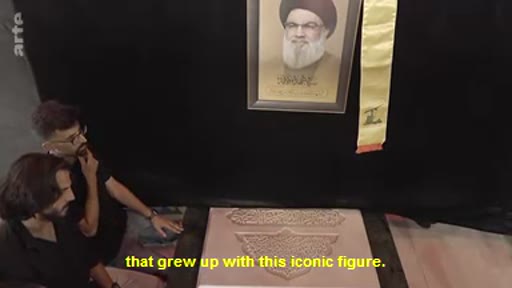
75%
00:00:43
Liban : la fin du Hezbollah ?
ARTE ReportageTwo men are seated on the floor in a dimly lit room, looking at a framed piece of art on a table. The man on the left, wearing a black t-shirt and glasses, has his hand on his chin and is looking down at the artwork. The man on the right, also in a black t-shirt, is looking at the artwork with a thoughtful expression. The artwork is a large, ornate piece of Islamic art, possibly a calligraphy or a geometric design, on a light-colored surface. Behind them, a framed portrait of a man with a white beard and a black turban is mounted on a black wall. A yellow ribbon hangs from the wall to the right of the portrait. The room appears to be indoors, with a dark, simple background. The lighting is focused on the artwork and the men, creating a somber and contemplative atmosphere. The image is a still from a documentary or interview, with a close-up framing that emphasizes the artwork and the men's expressions.
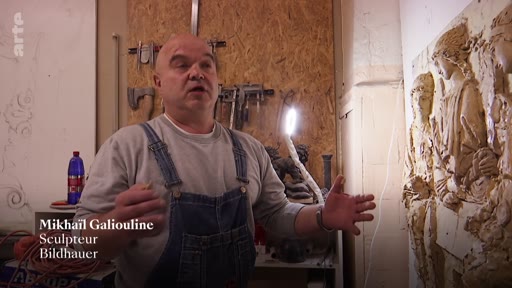
75%
00:07:40
Russie : retour dans un pays en guerre
ARTE Reportage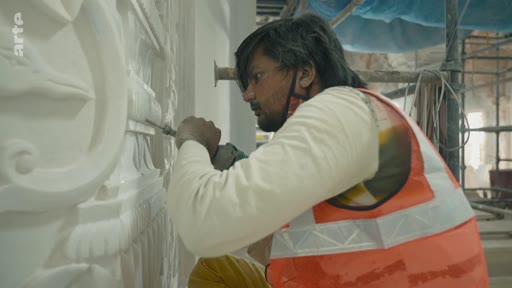
75%
00:02:29
Inde : le temple de la discorde
ARTE Reportage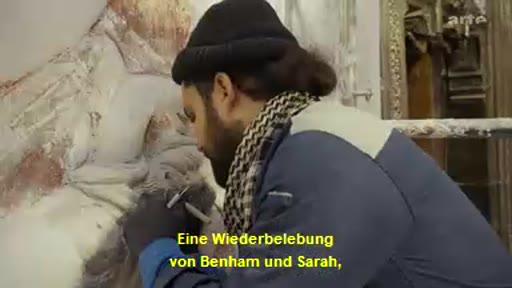
75%
00:10:28
Irak : le retour des chrétiens à Mossoul ?
ARTE ReportageA man with a beard, wearing a black beanie, a blue jacket with a white panel, and a black-and-white checkered scarf, is working on a large, white, textured stone sculpture. He is using a small tool to carefully apply a substance to the surface of the sculpture. The setting appears to be an indoor, possibly historical or religious, space with stone walls and a wooden beam visible in the background. The lighting is soft and natural, suggesting it is daytime. The image is a documentary-style shot, likely from an interview or archive footage, with a close-up framing focusing on the man and his work.
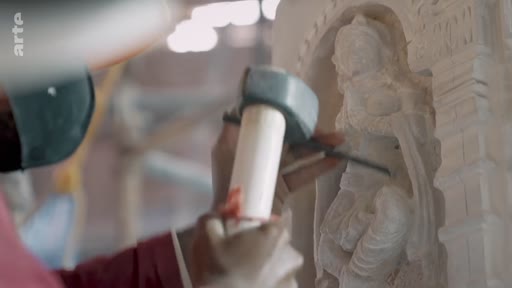
75%
00:01:30
Inde : le temple de la discorde
ARTE Reportage
75%
00:19:36
Inde-Chine : la revanche des filles
ARTE ReportageThis is a close-up, low-angle shot of a stone statue's reflection in a shallow pool of water. The statue is carved in a light-colored stone and is seen from the back, with its head and shoulders visible. The water is calm, and the reflection is clear, showing the statue's form against a pale, overcast sky. The setting appears to be outdoors, possibly in a courtyard or garden, with the stone structure surrounding the water. The lighting is soft and diffused, suggesting an overcast day. The image has a documentary feel, with a focus on the stillness and reflection.
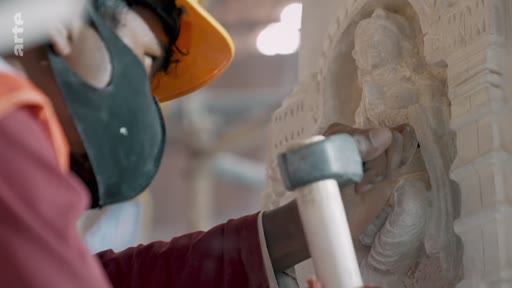
75%
00:01:32
Inde : le temple de la discorde
ARTE Reportage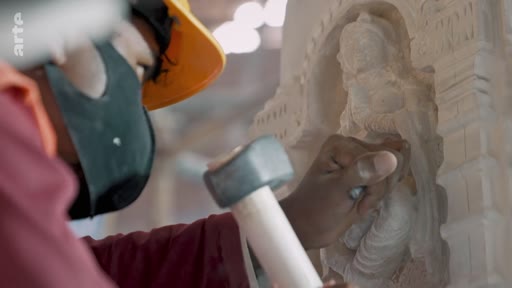
75%
00:01:31
Inde : le temple de la discorde
ARTE Reportagesearchgroupe musique traditionnelle irakienne
description
Sémantique · description
(10)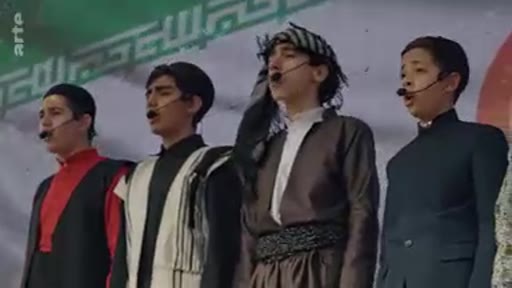
75%
00:09:09
Iran : le mollah, les femmes et le voile
Four young men are standing in a line on a stage, singing with their mouths open. They are dressed in traditional attire, including a black and white striped vest, a brown robe with a black belt, a dark green jacket, and a black head covering. They are all wearing small microphones. The background is a large banner with Arabic text. The scene is indoors, likely during the day, with even lighting. The image is a still from a documentary or interview, with a close-up framing focusing on the four singers.
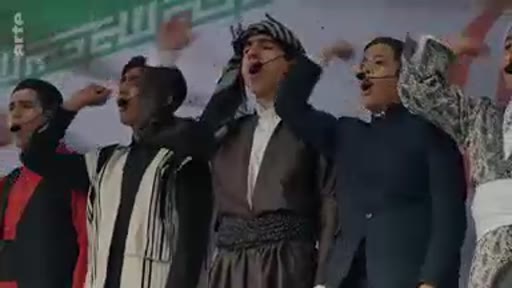
74%
00:09:12
Iran : le mollah, les femmes et le voile
A group of five young men are performing on a stage, singing and raising their arms in unison. They are dressed in traditional attire, with some wearing black and white striped shirts, a brown robe with a black belt, and a black headscarf. They are all wearing microphones and appear to be singing with emotion. The stage is indoors, with a large screen in the background displaying Arabic text. The lighting is bright and focused on the performers. The image is a still from a documentary-style video, with a close-up framing and natural lighting.
74%
00:18:03
Irak : le retour des chrétiens à Mossoul ?
ARTE ReportageThis is a still from a documentary-style interview or archive footage, likely from a Kurdish region, showing a group of people standing in a covered outdoor corridor at night. The people are dressed in dark, heavy winter clothing, suggesting cold weather, and appear to be engaged in a serious conversation. The setting is a stone-paved, arched corridor with pillars and a potted plant, illuminated by artificial lighting. The camera is positioned at a medium distance, capturing the group from the side, with the text "Erbil, Kurdistan irakî" visible in the upper right corner.
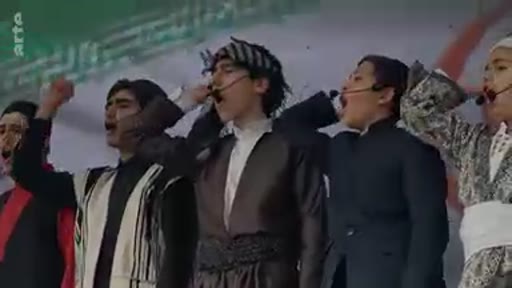
73%
00:09:13
Iran : le mollah, les femmes et le voile
A group of five young men are performing on a stage, singing with their mouths open and raising their arms in the air. They are dressed in traditional attire, with some wearing dark jackets and others in patterned robes. The setting is an indoor stage with a large screen in the background displaying a green and white banner with Arabic script. The lighting is bright and even, typical of a stage performance. The camera is positioned at a medium distance, capturing the group from the waist up.
73%
00:18:02
Irak : le retour des chrétiens à Mossoul ?
ARTE ReportageThis is a still from a documentary, likely an interview or archive footage, showing a group of people standing in a covered outdoor area at night. The individuals, mostly women, are dressed in dark, heavy winter clothing, suggesting cold weather. They are gathered in a line, appearing to be waiting or conversing, with some looking towards the camera. The setting is an arched walkway with pillars and a low wall, illuminated by warm, artificial lighting from wall-mounted fixtures. The text in the upper right corner identifies the location as "Erbil, Kurdistan irakî" and the region as "Erbil, Autonome Region Kurdistan." The framing is a medium shot, capturing the group from the waist up, and the overall visual style is realistic and observational.
72%
00:28:32
ARTE Regards
Expatriés allemands : vieillir en Toscane ?A group of four people, including a man in a white shirt and black vest, a woman in a patterned top and jeans, and two others, are performing on a sunlit street. The man in the foreground is singing, while the others play instruments. The setting is an outdoor street scene with a yellow building, a small shop with a blue door, and a cart with goods. The lighting is bright and natural, suggesting it is daytime. The visual style is documentary, with a candid, handheld camera perspective.
72%
00:34:07
Myanmar Diaries
Une bouteille à la merThis is a low-resolution, handheld video clip from an interview or documentary, likely from the "arte" channel, showing a group of people walking along a dirt path. The people are dressed in traditional, colorful clothing, with a woman in the foreground wearing a patterned skirt and a dark top. The group appears to be moving forward, with some individuals carrying bags or baskets. The setting is outdoors on a sunny day, with trees and a structure visible in the background. The camera is positioned at a low angle, capturing the people from behind as they walk away from the viewer. The lighting is natural daylight, and the overall visual style is documentary, with a raw, unedited feel.
72%
00:01:37
ARTE Regards
Un petit Las Vegas à la frontière tchèqueA group of men in red vests and white shirts are walking in a line, carrying musical instruments and a flag. They are outdoors on a paved path in a park-like setting with trees and a building in the background. The scene is a documentary-style interview, with a medium shot framing the group from the front, and natural lighting.
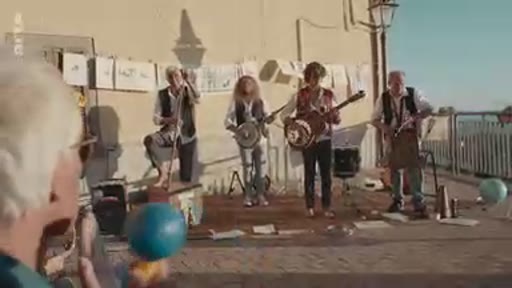
72%
00:00:13
ARTE Regards
Expatriés allemands : vieillir en Toscane ?A group of four musicians, dressed in casual, somewhat rustic attire, are performing on a wooden stage outdoors on a paved patio. The man on the far left is playing a long-necked instrument, possibly a banjo, while the others play guitars and a drum. The scene is set in a sunny, open-air environment with a building and a fence in the background. The camera is positioned in the foreground, showing the back of an older man's head and a blue ball, suggesting the viewer is part of the audience. The lighting is bright and natural, indicating it is daytime. The visual style is documentary, with a candid, unedited feel.
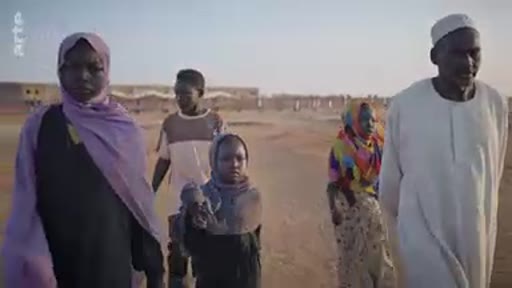
72%
00:16:11
Soudan : la mort aux trousses
ARTE ReportageA group of five people, including a man in a white robe and a woman in a colorful headscarf, stand in a dry, dusty landscape. The group appears to be of a rural, possibly African, origin, with the individuals dressed in traditional or everyday clothing. They are standing in a wide, open area with low buildings in the background, suggesting a rural settlement. The scene is shot in a documentary style with a natural, wide-angle framing and soft, natural lighting.
image
Sémantique · image
(10)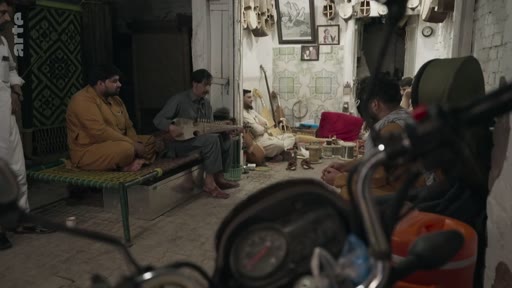
78%
00:07:10
Pakistan : les gardiens de la musique afghane
ARTE Reportage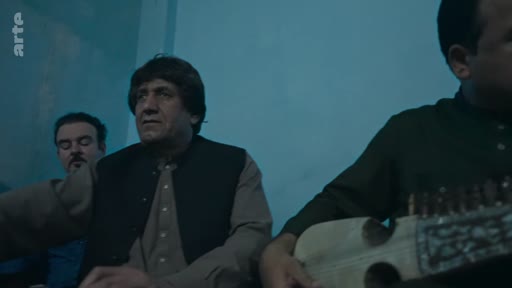
77%
00:20:56
Pakistan : les gardiens de la musique afghane
ARTE Reportage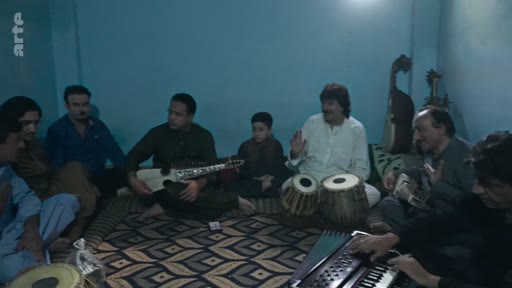
77%
00:20:41
Pakistan : les gardiens de la musique afghane
ARTE Reportage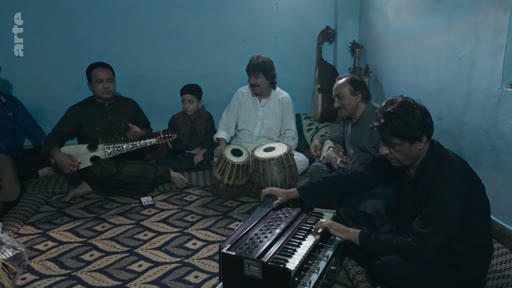
77%
00:20:43
Pakistan : les gardiens de la musique afghane
ARTE Reportage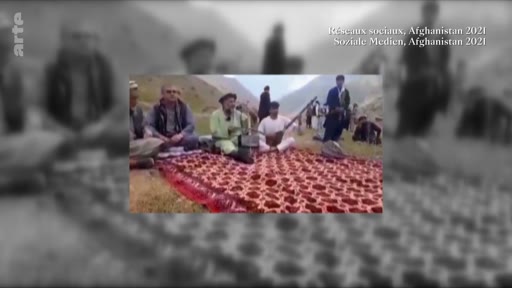
77%
00:03:59
Pakistan : les gardiens de la musique afghane
ARTE Reportage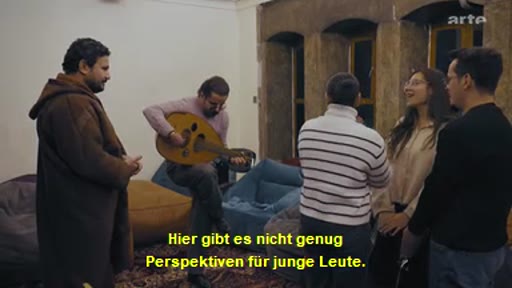
77%
00:17:29
Irak : le retour des chrétiens à Mossoul ?
ARTE ReportageA group of five people are gathered in a dimly lit, indoor room with stone walls and wooden doors. A man in a brown robe stands on the left, while another man in a pink shirt and glasses plays a traditional wooden lute. A woman in a beige top and a man in a black shirt stand on the right, smiling and listening. A man in a striped shirt stands in the center, facing the others. The room has a patterned rug and a blue couch, suggesting a casual, intimate setting. The scene is shot in a documentary style with natural lighting and a wide, candid framing.
77%
00:20:42
Pakistan : les gardiens de la musique afghane
ARTE Reportage
77%
00:29:42
ARTE Regards
Les médecins bénévoles de la mer Égée
76%
00:17:21
Irak : le retour des chrétiens à Mossoul ?
ARTE ReportageA group of five people are gathered in a dimly lit, indoor room with stone walls and wooden doors. A man in a striped shirt and a woman in a beige top are standing and facing each other, engaged in conversation. Another man in a brown hoodie stands to the right, while a man in a pink shirt sits on a blue couch playing a lute. The scene appears to be a candid moment from an interview or a documentary, with a soft, natural light illuminating the room. The camera is positioned at a medium distance, capturing the group from the back, focusing on their interaction.
76%
00:28:32
ARTE Regards
Expatriés allemands : vieillir en Toscane ?A group of four people, including a man in a white shirt and black vest, a woman in a patterned top and jeans, and two others, are performing on a sunlit street. The man in the foreground is singing, while the others play instruments. The setting is an outdoor street scene with a yellow building, a small shop with a blue door, and a cart with goods. The lighting is bright and natural, suggesting it is daytime. The visual style is documentary, with a candid, handheld camera perspective.